WORDS & PHOTOS: ALEX PRINS
The start of the airshow season typically heralds the beginning of summer, and the thought of a ‘Season Premiere’ in May conjures up images of warm weather and the threat of sunburn. This being the UK airshow season however, the week leading up to my first trip to Old Warden in the best part of a decade was one of diminishing optimism; every refresh of the weather app reinforced the news that this was to be a windy and chilly afternoon.
Despite the warning signs against it, I finally pulled the trigger on two tickets the morning prior, as the threat of rain had at least eased, and my thought process was simple: even if most of the Collection was grounded by the gusts, a day spent at Old Warden airfield is rarely a wasted trip. And so it turned out to be, as the early afternoon gloom and low cloud was quite literally blown away by the final hour, and through the bloody-minded determination of every pilot and ground crew volunteer, almost everything serviceable that was scheduled to fly, did so. While it might have been extremely chilly at times, it would have taken a cold heart not to have left that evening feeling a warm glow and a sense of fulfilment.
The Shuttleworth Collection has been quietly bucking the decline of the UK airshow scene in a variety of ways: its attendance numbers are up, the scale of international participation only seems to be on the rise, and the overall visitor experience continues to be subtly improved. The latter remains true, despite the fact that joining Ben Dunnell on the commentary mic again this year is This is Flight’s own Adam Landau – clearly even that isn’t enough to keep the masses away!
With a broader remit than some of the other Shuttleworth events, the Season Premiere lineup traditionally comprises of much of the Collection along with a few well-chosen visiting aircraft, but with a much less ambitious international reach than some of the mid-season events. Early season shows can often be succeptable to late-running winter maintenance, and unfortunately, in the week leading up to the show, we lost the Fokker D.VII and DR.I, along with Plane Sailing’s PBY-5A Catalina, Navy Wings’ Swordfish I and the Historic Aircraft Collection’s Hurricane XIIa. In their stead, we were treated to a few more types from the Collection, along with a Fairchild 24, Kennet Aviation’s AT-6D Texan, the Old Flying Machine’s iconic Spitfire IXb MH434 and Fighter Aviation Engineering’s Lockheed 12A Electra: these would prove to be more than adequate replacements and the latter two additions were arguably the standout displays of the day.
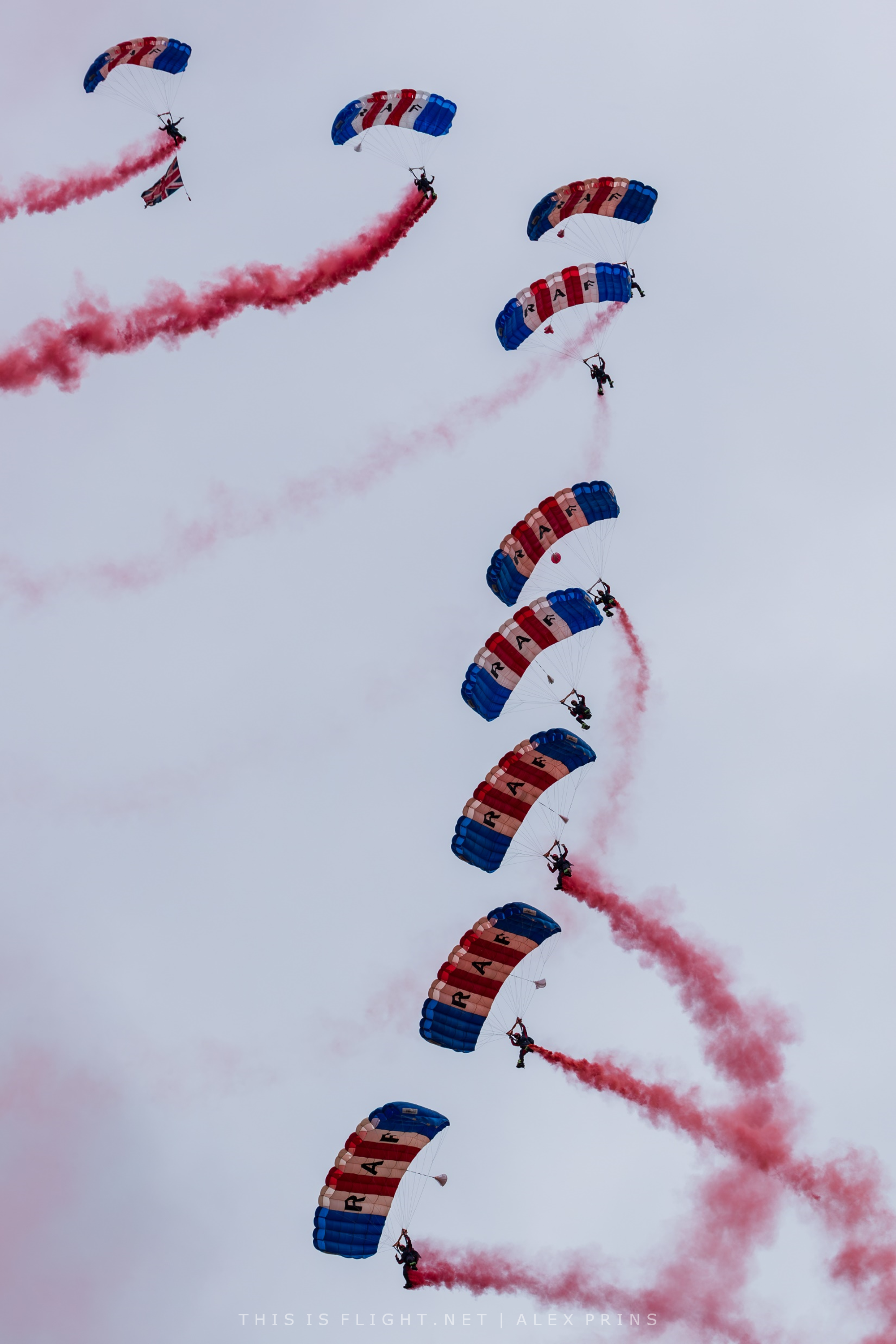
The Shuttleworth Collection’s summer of airshows was thus opened by the RAF Falcons parachute team, jumping low from their Do228 and battling the strong winds to still provide a commendable performance. In his first public airshow in the role, the team’s commentator valiantly tried to rouse the crowd with a high energy delivery that unfortunately didn’t play with the audience on the day, nor quite meshed with a Falcons low show, which is a brief and fairly uneventful affair. Apart from taking the microphone probably five minutes earlier than he ought to, his most egregious error was in continuing to outline the team’s various corporate sponsors while the de Havilland DH.88 Comet and Miles Hawk Speed Six took to the skies without warning. No doubt had it been possible, Ben and Adam could have alerted everyone that the aircraft were rolling from the right, and still have allowed the Falcons ample time to talk about who paid for their sunglasses.
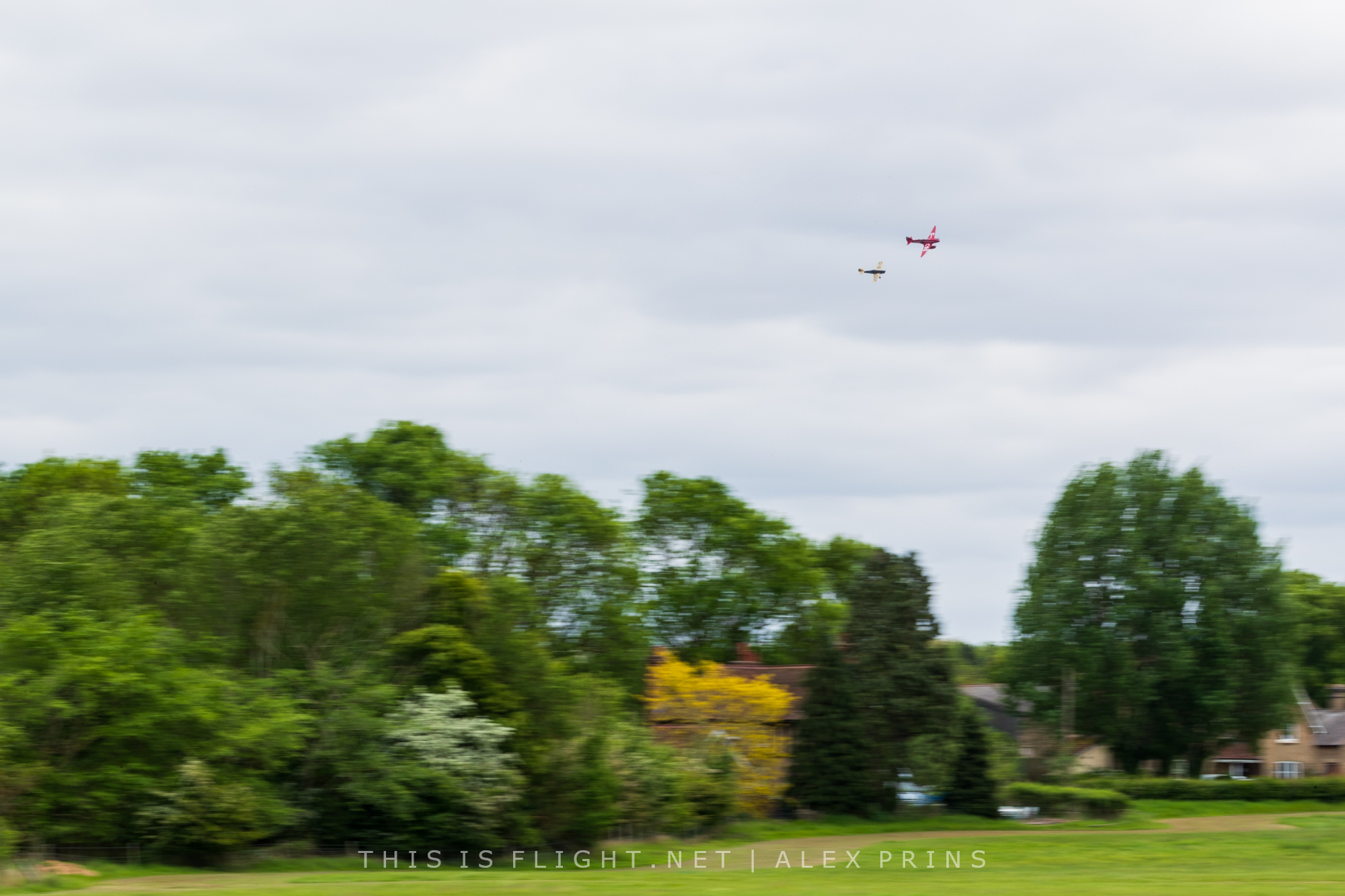
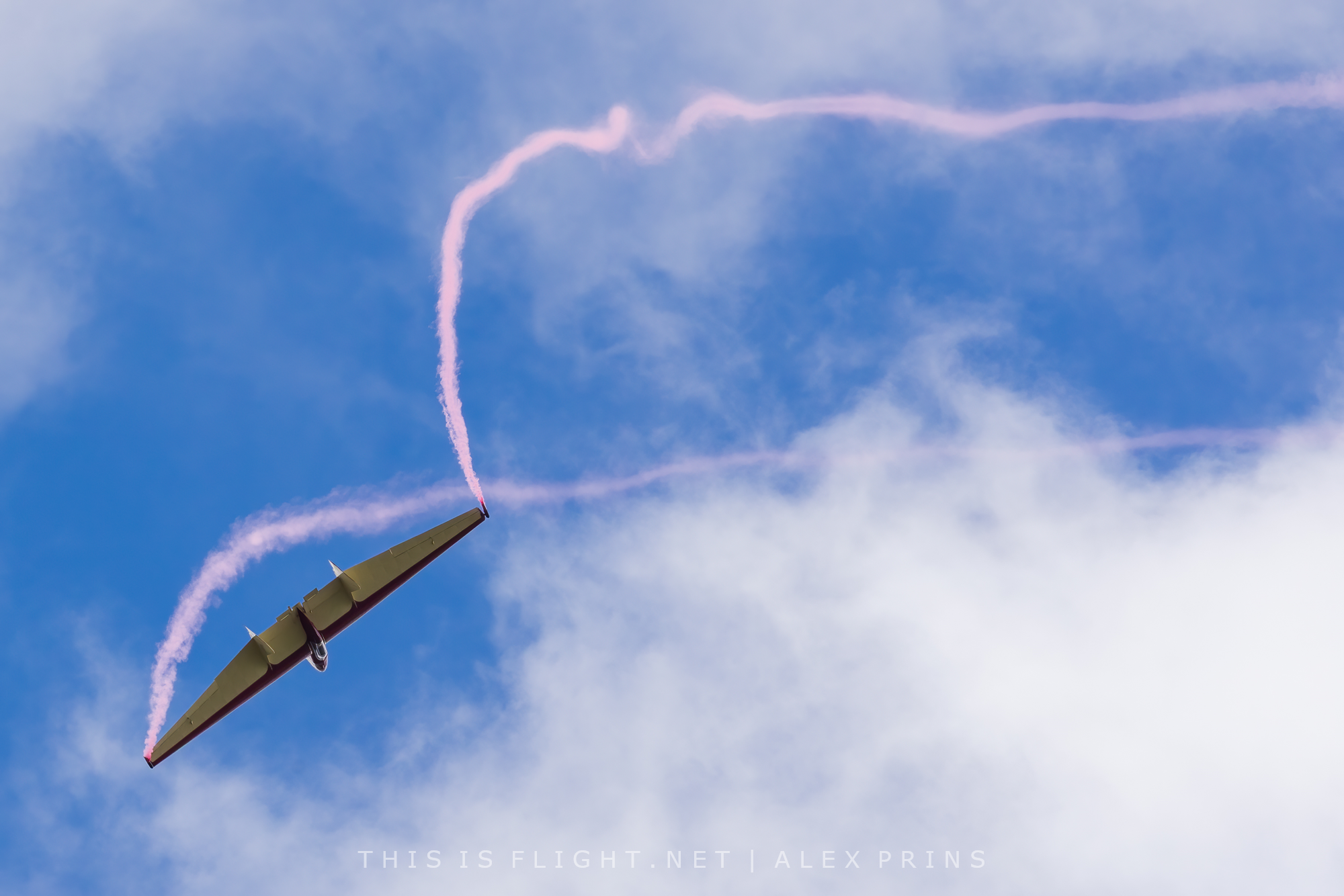
Once the Falcons had packed themselves away and the last strains of their karaoke ACDC soundtrack was faded down on the PA system, the flying display could truly commence. The Comet and Speed Six pair cut through the gloom in formation before being put through their paces individually. The former put in a remarkably sprightly showing despite the difficult weather conditions, which were in evidence as Dodge Bailey required three attempts to land his racer: no surprise given the type’s unforgiving landing characteristics even on a calm day! The interwar racers were followed by Si Davies in the Percival Provost, flying superbly in the joker slot for Alex Phillips in the Kirby Kite – his public display debut – who valiantly battled the strong south-westerly wind to make any headway along the crowdline. Later in the day, another glider display would follow, namely Graham Saw in the Fauvel AV.36.
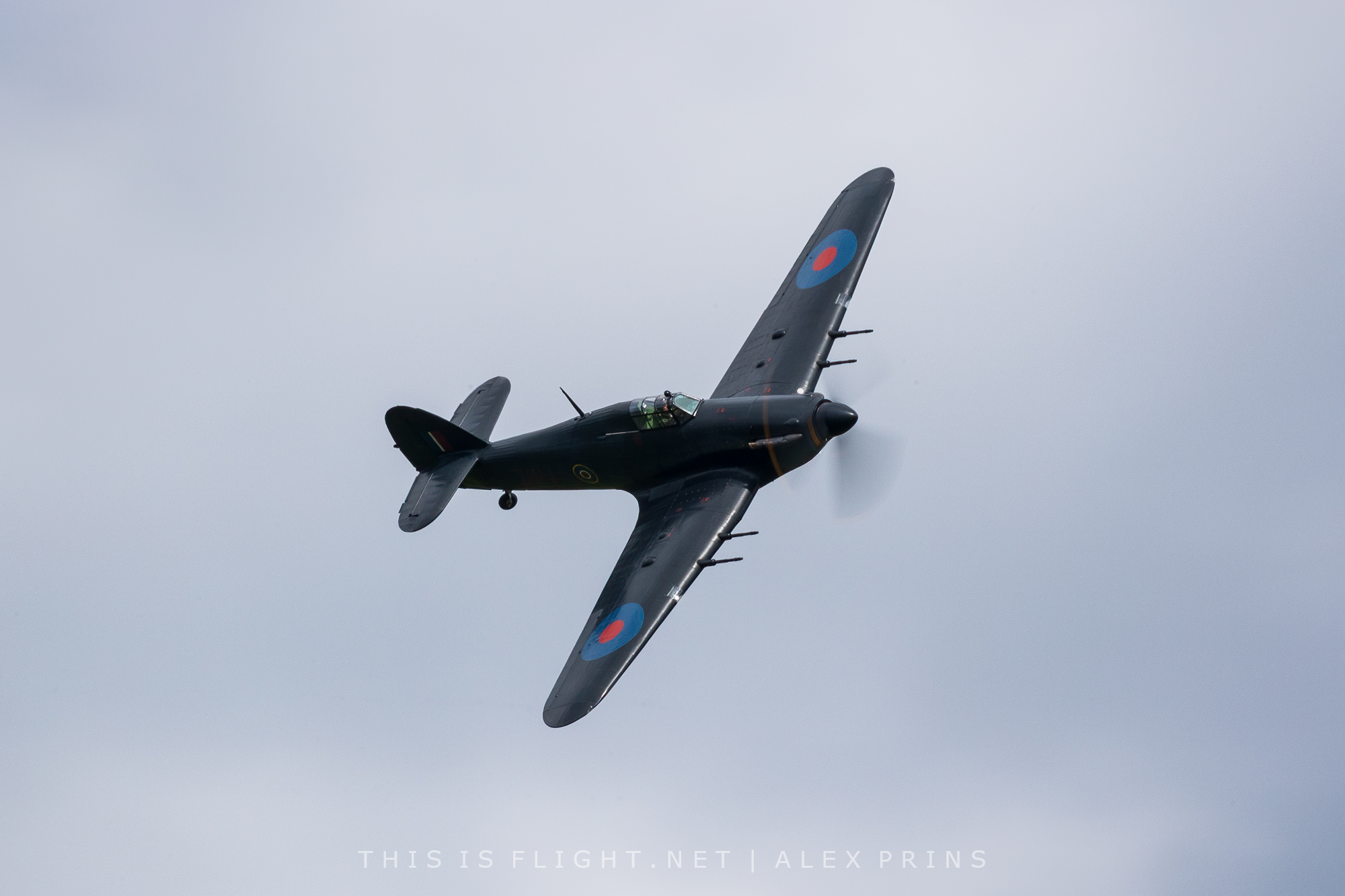
At this juncture, we were due to have been joined by the Battle of Britain Memorial Flight Dakota, however at lunchtime the news arrived that the aircraft was unserviceable, and would be deputised by Squadron Leader Mark Sugden in the Flight’s Hurricane IIc PZ865. Fears of an underwhelming solo, as has occasionally been the case with the BBMF at Old Warden, were immediately dismissed as Sugden blazed in low from the left for one of the better Memorial Flight topsides I can remember. Even the weather played ball, as some blue skies broke through the overcast to provide a backdrop for the all-black ‘night fighter’, and not for the last time on the day the crowd was superbly compensated by a late call up to the flying programme.
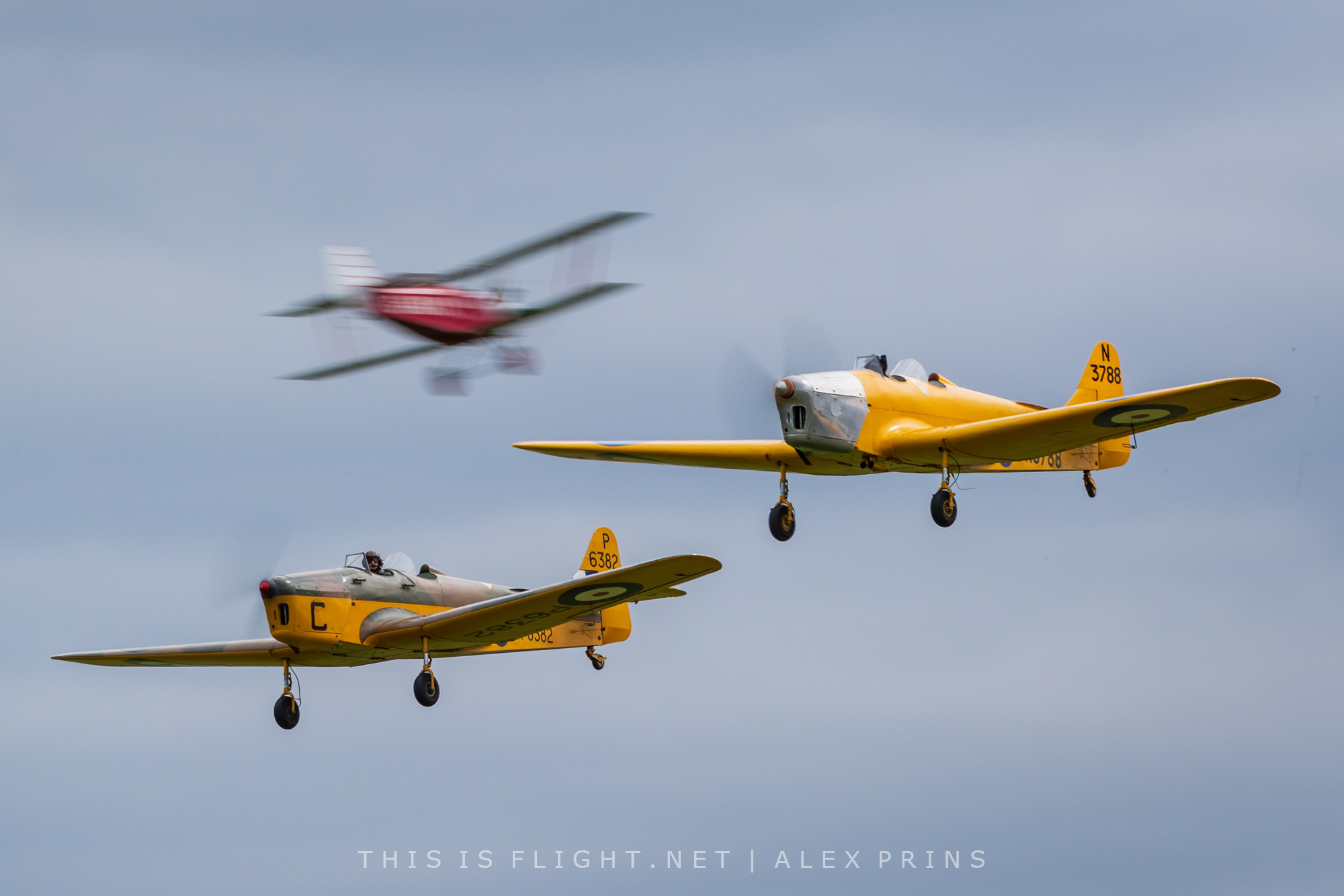
This brighter weather remained long enough to cast some watery light on a three-ship nod to the designs of FG Miles (a formation routine of two Miles Magisters and a Southern Marlet), followed by another dark-painted aircraft, as Steve Bakhtiari displayed his Xtreme Air XA-41. In what was technically Bakhtiari’s second public performance, but his first true airshow appearance, he put on a very accomplished display of unlimited aerobatics, well-supplemented by Adam’s energetic commentary.
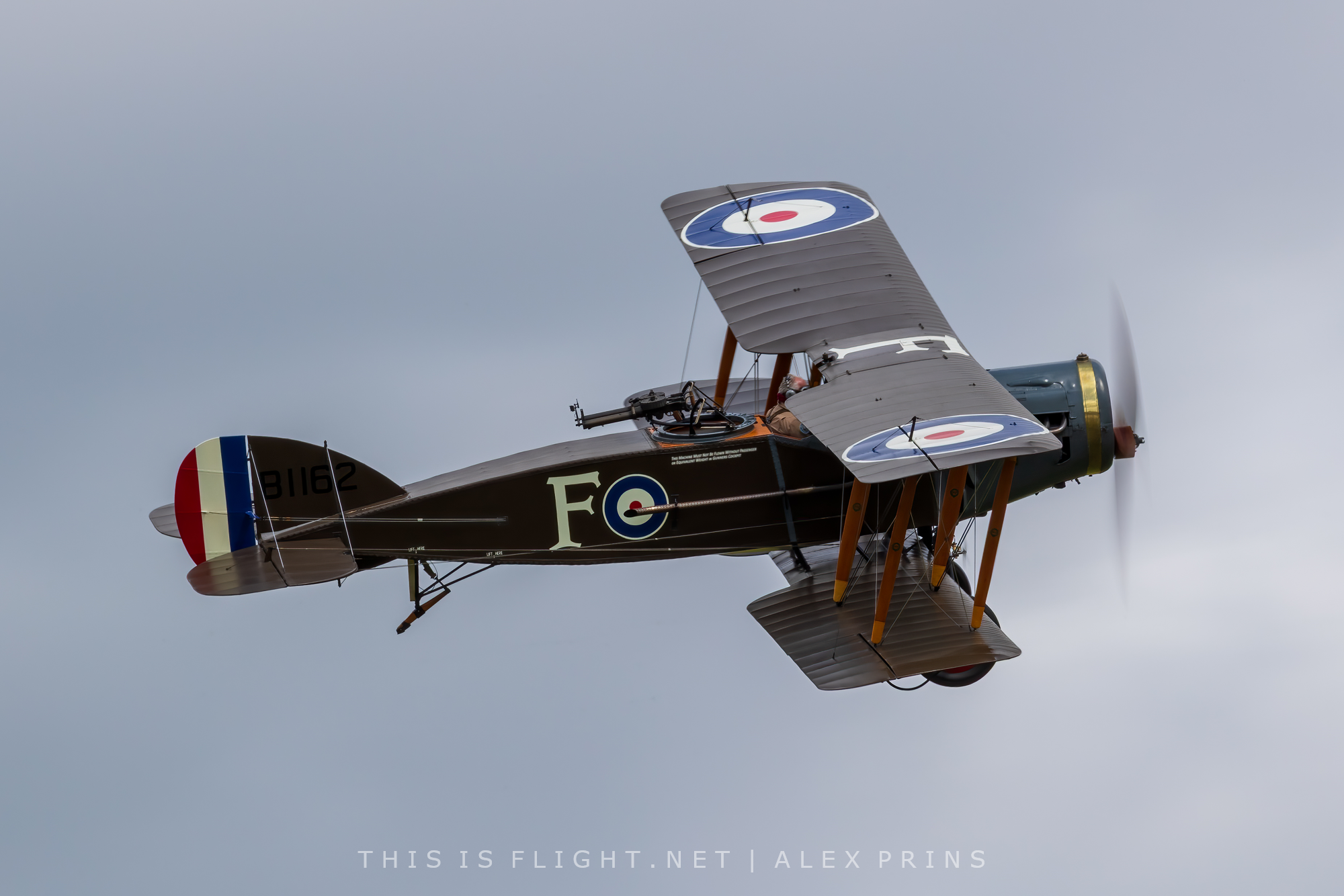
While the cloud base had been lifting in the preceding hour, the cool wind showed little sign of abating, and it would have been understandable for more than just the fragile Edwardians to have fallen by the wayside. Against these expectations however, we were treated to a trio of the Shuttleworth Collection’s fine centenarians. It remains staggering to me that these three aircraft all flew before the armistice, and the Royal Aircraft Factory SE5a’s genuine combat history in the First World War makes it one of the most historically significant airframes still airworthy anywhere in the world, in my opinion. For it to be airborne at all is a treat, so to see Richard Crocket gamely chasing Frank Chapman in the Bristol F2b despite the visible buffeting they were being subjected to, was a very visible feat of airmanship. Perhaps even more surprising was the sight of the Collection’s Avro 504k, which needed all 110 of its horsepower to make any forward progress at all.
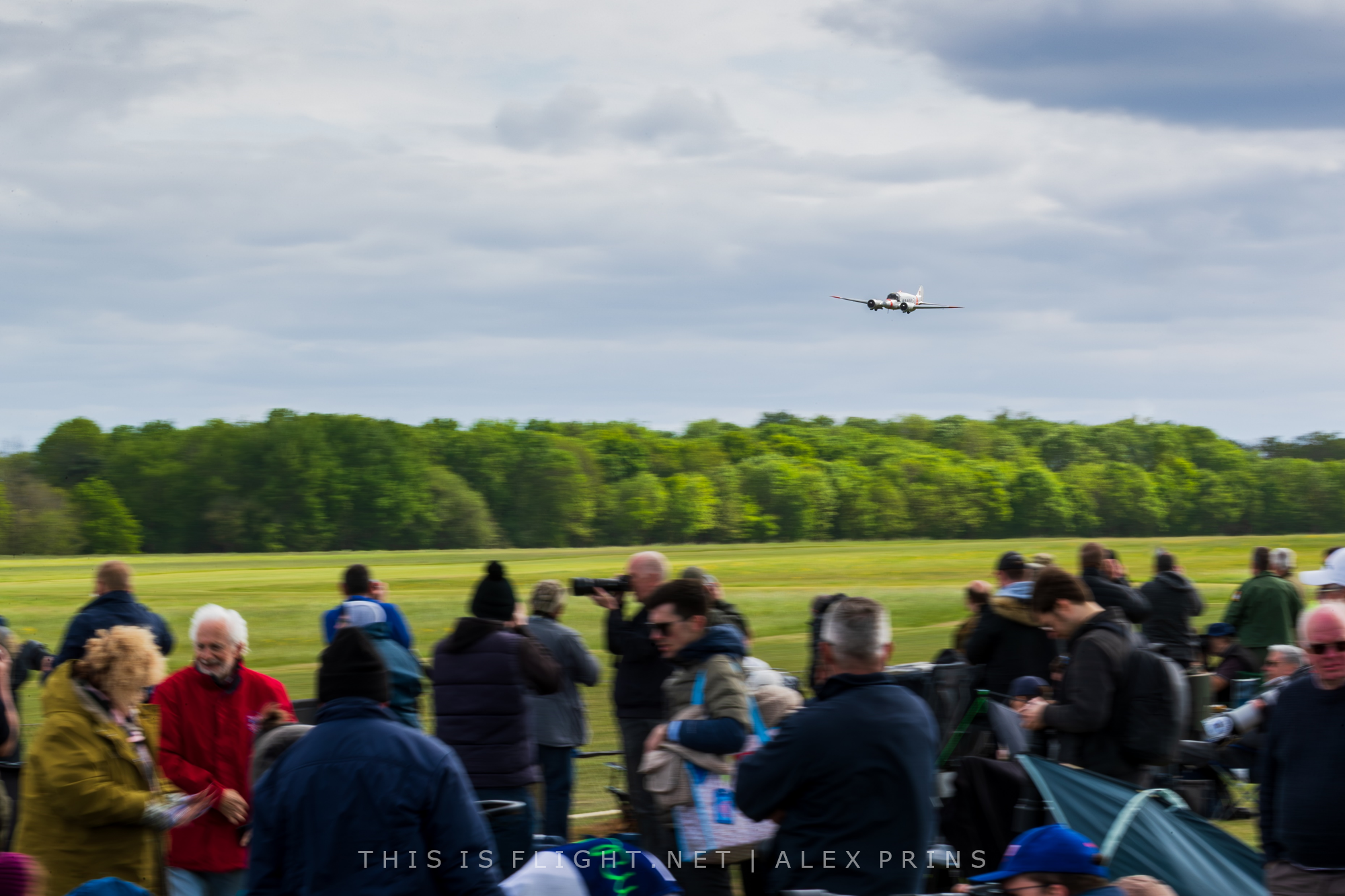
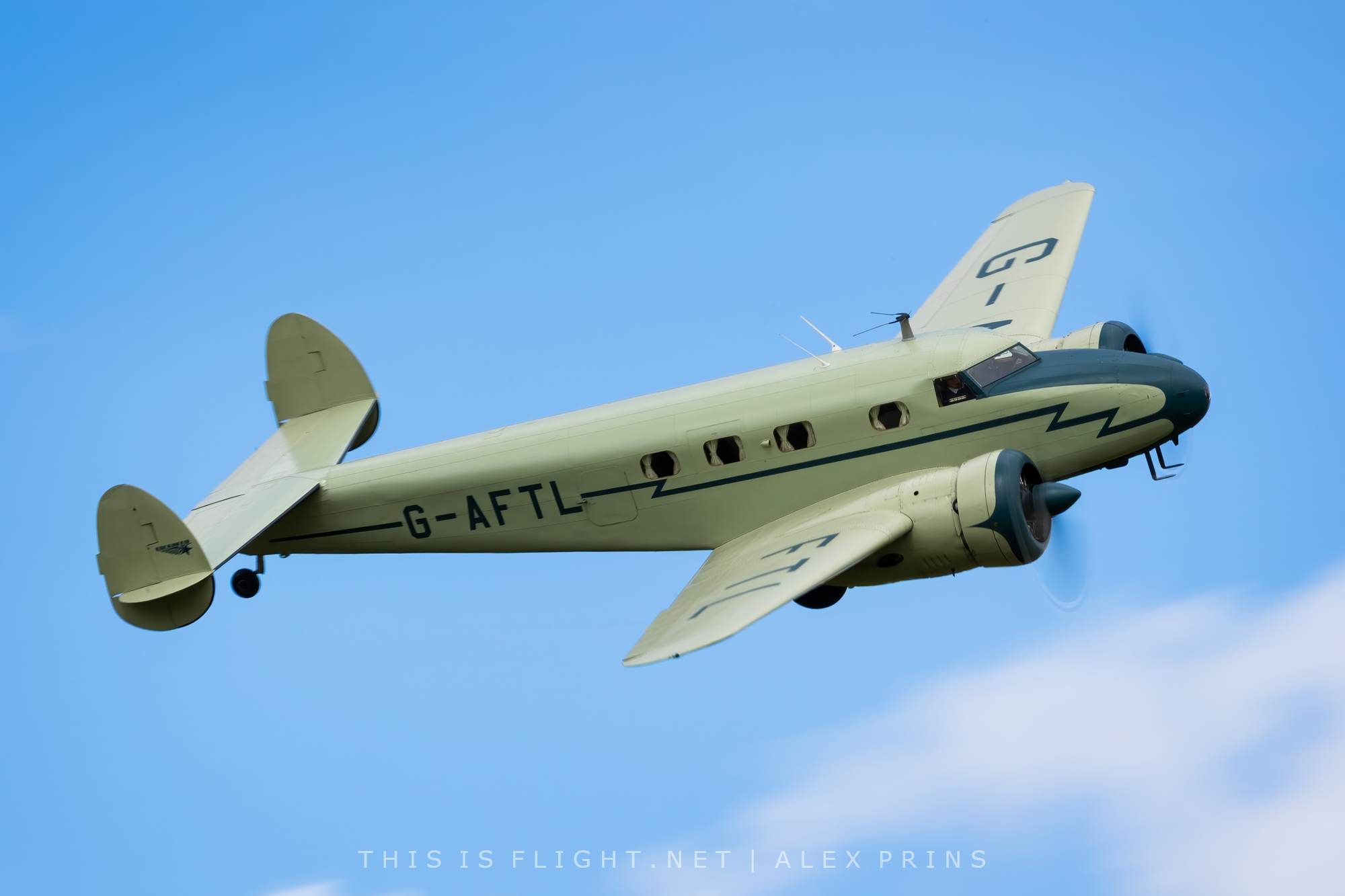
Unsurprisingly, the beefier twin-engined 1930s pair that followed fared much better against the conditions, as the visiting Lockheed Electra and Collection Avro Anson joined up for an enjoyable series of formation passes. While the Anson may be taken for granted as a traditionally superb display of vintage multi-engine flying, the Electra’s subsequent solo performance was a revelation for the entire occasion. Perhaps aptly for an aircraft with a history rooted in espionage, on paper an interwar utility aircraft might do little to raise the heart rate, but when wringed out by pilot Ben Cox at a low altitude over the airfield, this handsome aircraft made for an extremely memorable interlude.
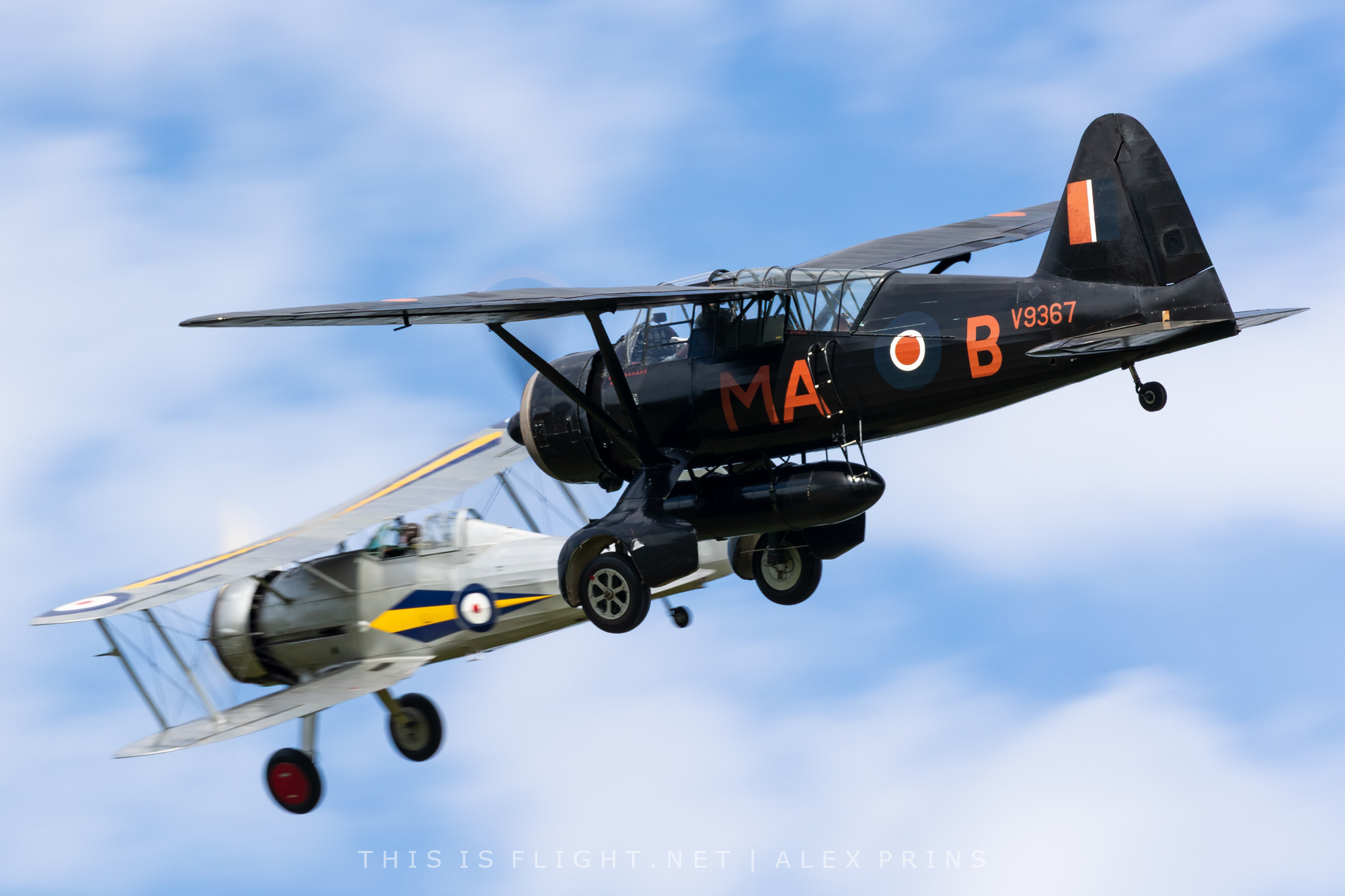
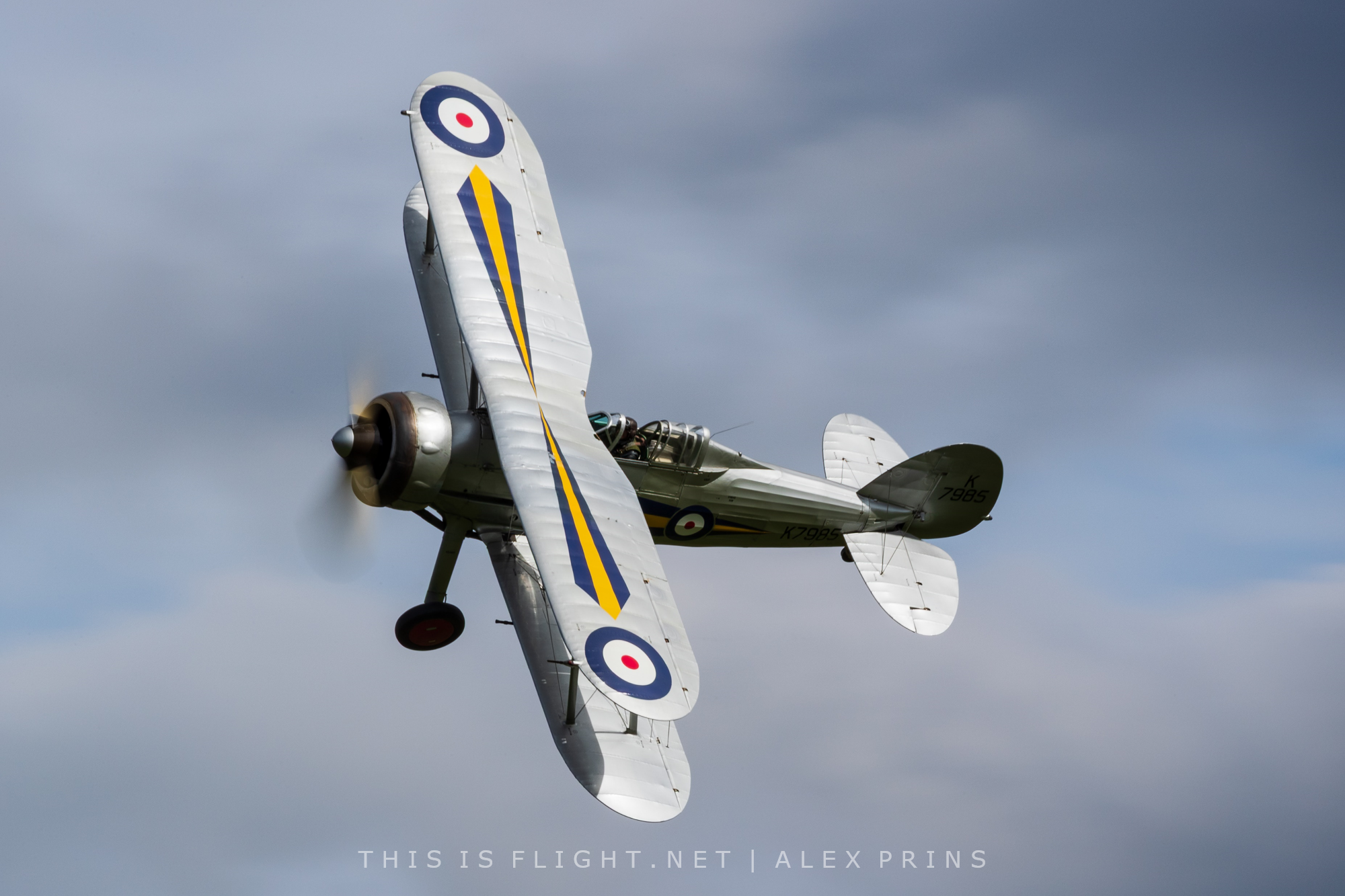
The traditional ‘barnstorming’ slot then provided a moment for the crowd to catch its collective breath, as the pilots spiritedly played at flour-bombing and limbo-ing between gusts. If the heart rate had been slowed by this respite, one could have been forgiven for dozing as the Desoutter I puttered through the air, in the vicinity of a visiting Fairchild 24. Mercifully, the volume was then turned up by the Bristol Mercury-powered formation of Westland Lysander IIIa and Gloster Gladiator I. Both stalwarts of the Collection are to be enjoyed on any given day, however the Gladiator at the hands of the collection’s deputy chief pilot, Peter Kosogorin, was truly a sight to behold. A combination of brute power and grace, the biplane spent the majority of its display tipped onto its wingtips, and its manoeuvrability between passes demonstrated why this interwar biplane remained resolutely in service well into the Second World War.
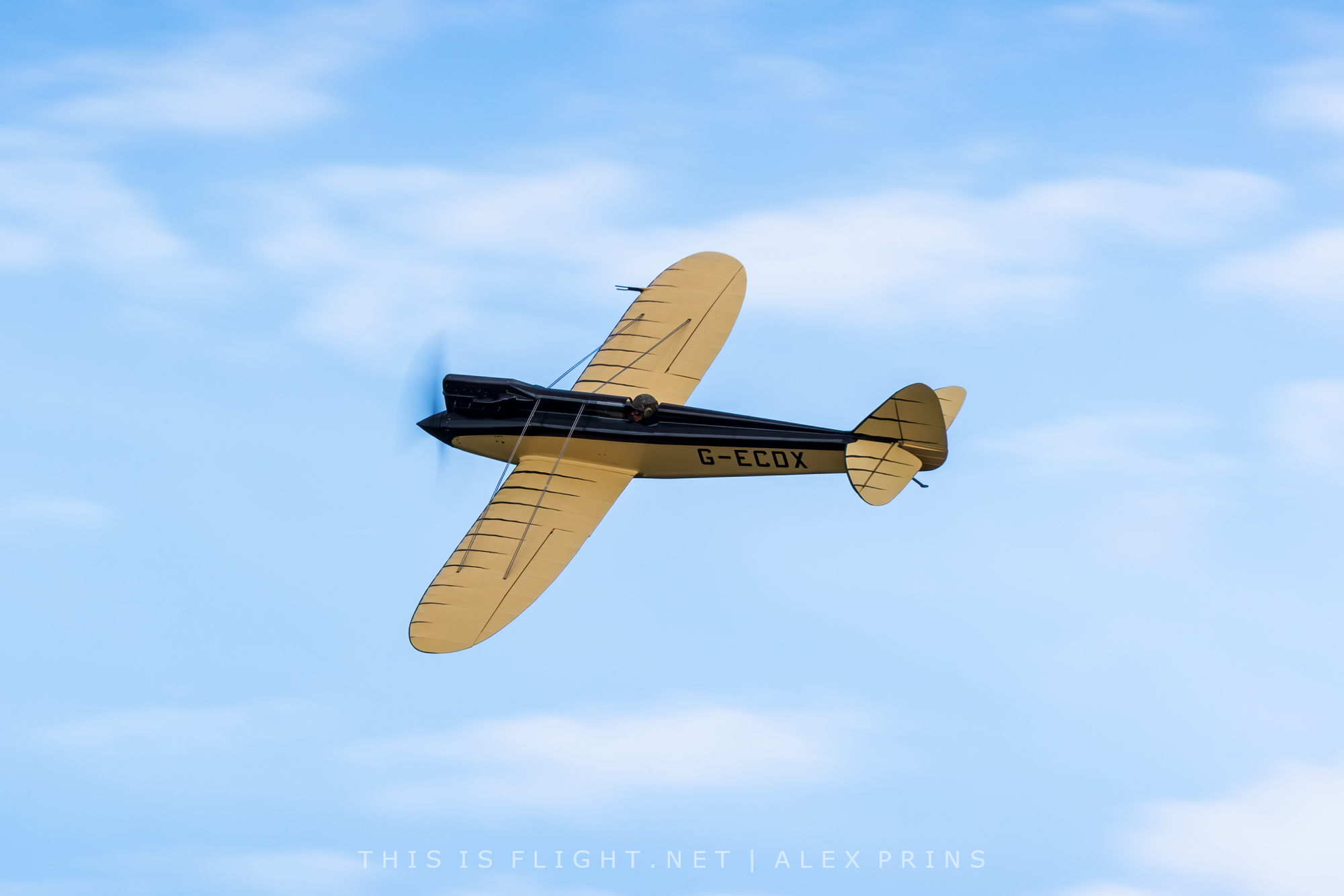
In a programme that continued to defy reasonable expectations, perhaps the most surprising sight was that of the Steve Jones’ immaculate de Havilland DH.71 Tiger Moth replica. The aircraft had cancelled its display at last year’s Season Premiere in far lesser wind, so for him to fly at all – let along in formation with the Comper Swift – was a commendable effort. In what was only the aircraft’s second public flight, it was quite remarkable to see the de Havilland racer tear across the treeline; Steve Jones, though hidden behind his Gipsy I engine, was clearly working extremely hard at the controls of a very twitchy aircraft, and it was undoubtedly one of the boldest demonstrations we will see at Old Warden this season.
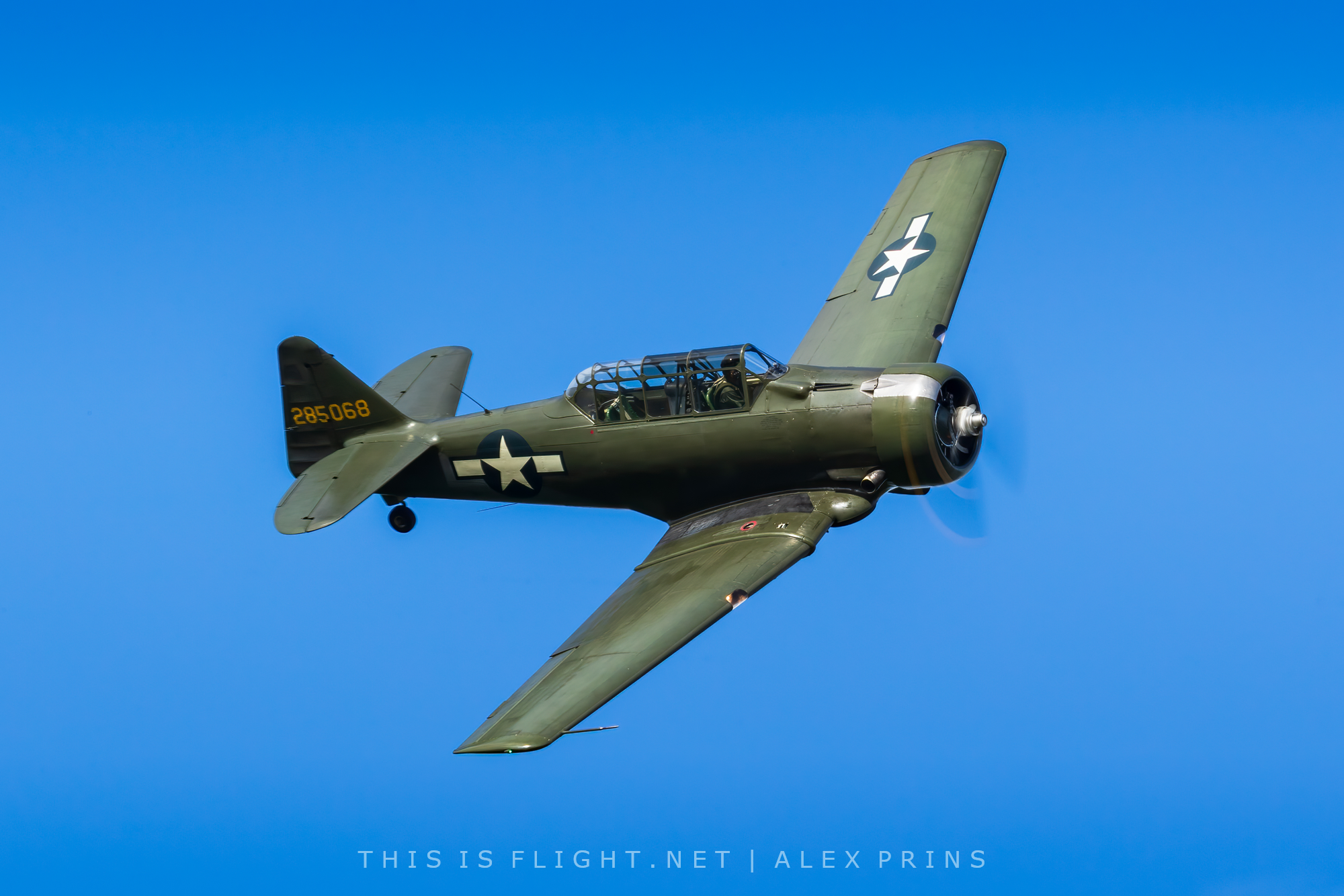
Much like the BBMF, Navy Wings’ contribution was a more stirring performance than might have been expected. Lt. Cdr. Chris Gotke, himself no stranger to bold airmanship, made another admirable substitution for the late loss of the group’s Swordfish, in Kennet Aviation’s AT-6D Texan. Perhaps a fitting punishment for the Navy’s failure once again to fulfil an airshow commitment is that Lt Cdr Gotke’s fine warbird display was in an aircraft emblazoned with the word ARMY on its underside! Serviceability by the visitors was clearly a theme for the day however, as the final aircraft due to arrive from beyond the airfield, Fighter Aviation Engineering’s Fury ISS, only made it as far as the hold before facing an unfriendly increase in oil temperature. As Ben Dunnell rightfully said over the PA, in the operation of such complex historic aircraft, caution is always the better part of valour, and the aeroplane returned uneventfully to Duxford.
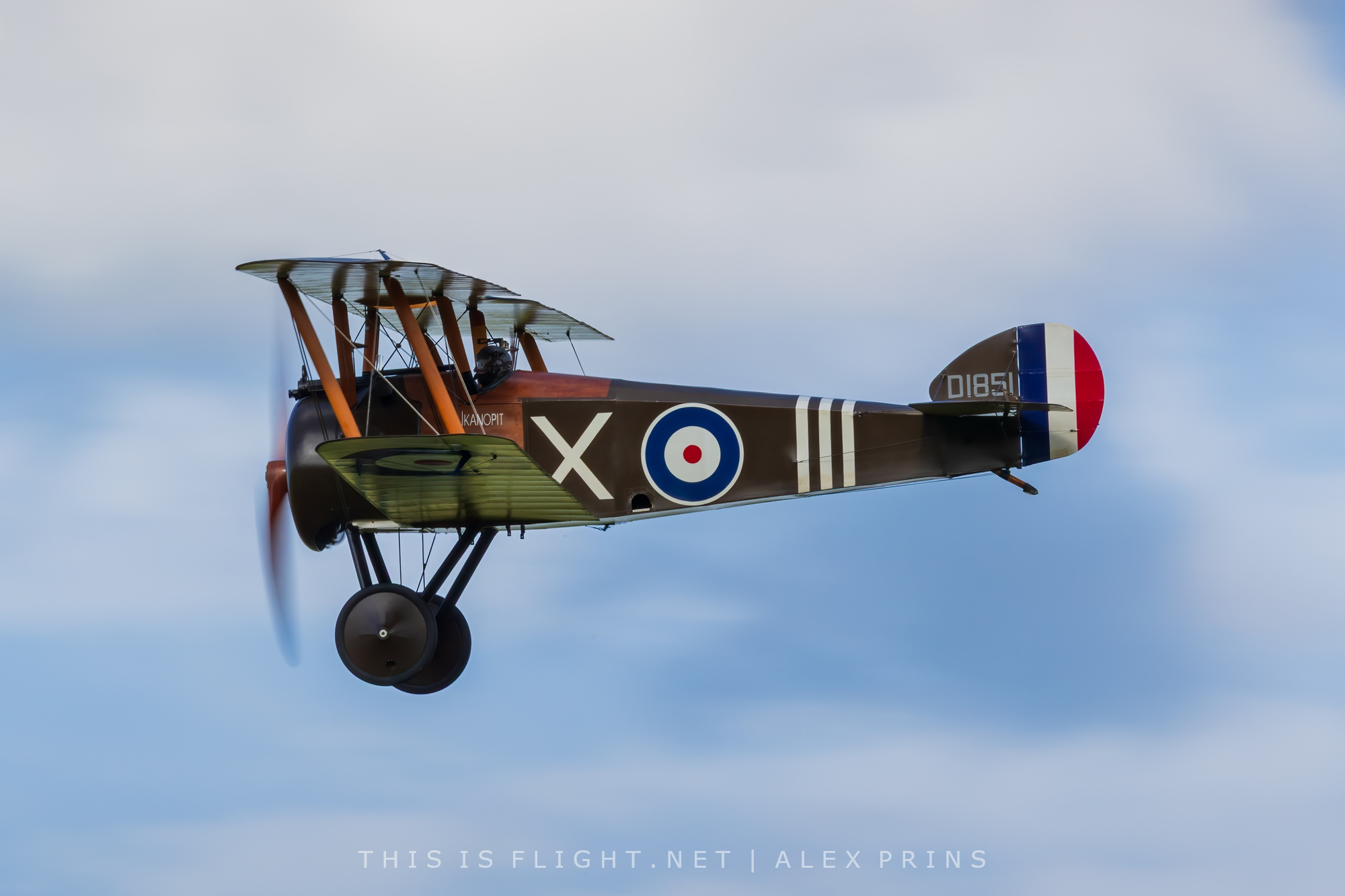
Extending into this unscheduled gap was to be a trio of First World War Sopwiths, however the Collection’s Pup was unable to complete the formation. The remaining duo of Sopwith Triplane and F.1 Camel was still notable however, for the latter was making its first airshow appearance since completing a 5-year engine rebuild. Although these aircraft are “only” reproductions, they have been constructed with such fine attention to detail that the late Sir Thomas Sopwith declared the Triplane to be a ‘late production model’. As with all those before, the winds definitely contributed to keeping the aircraft higher and further than maybe they have been seen previously, but once again this was a case of well-earned experience on the part of the Collection pilots, in their role as custodians of such exquisite museum pieces.
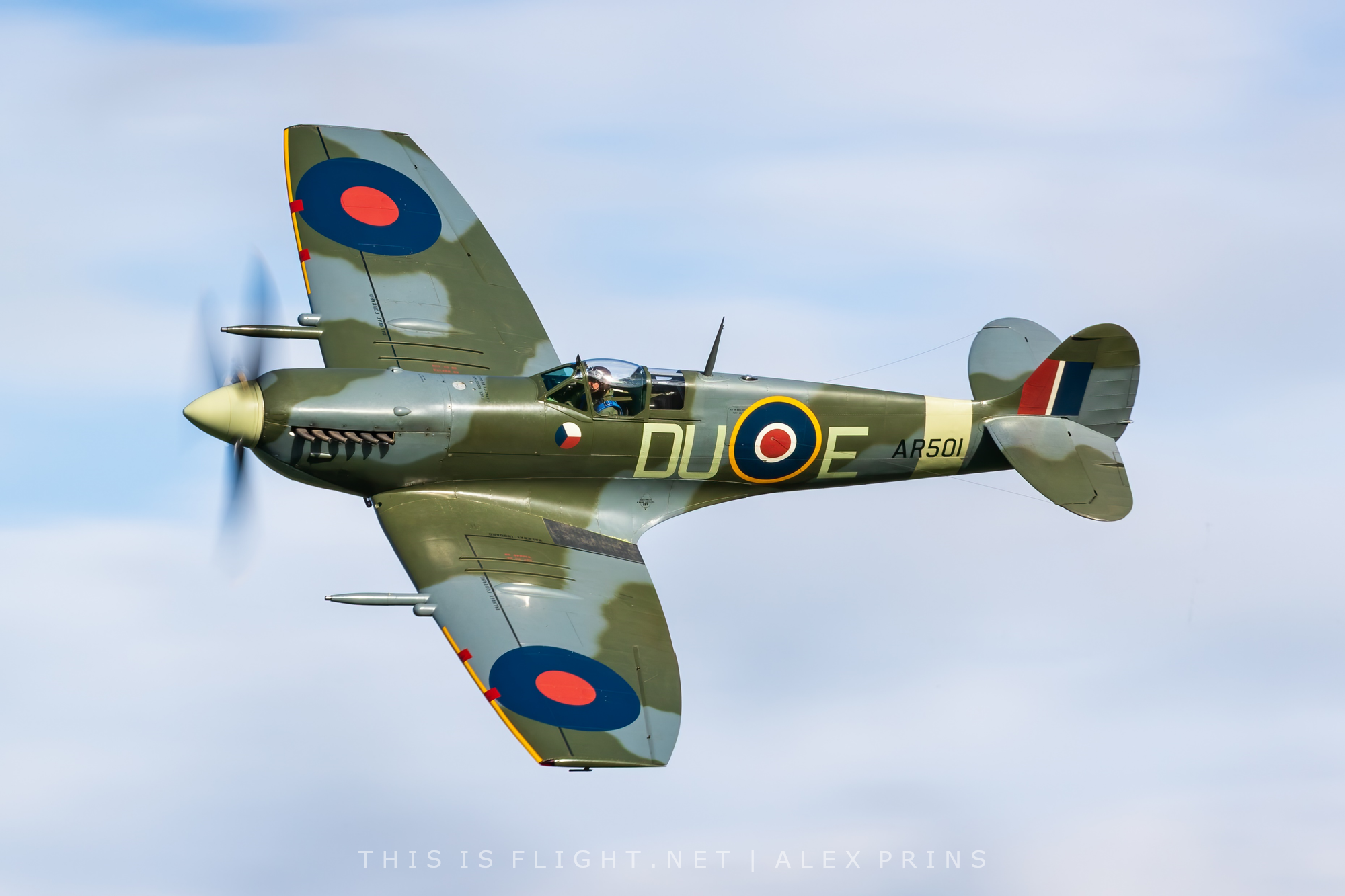
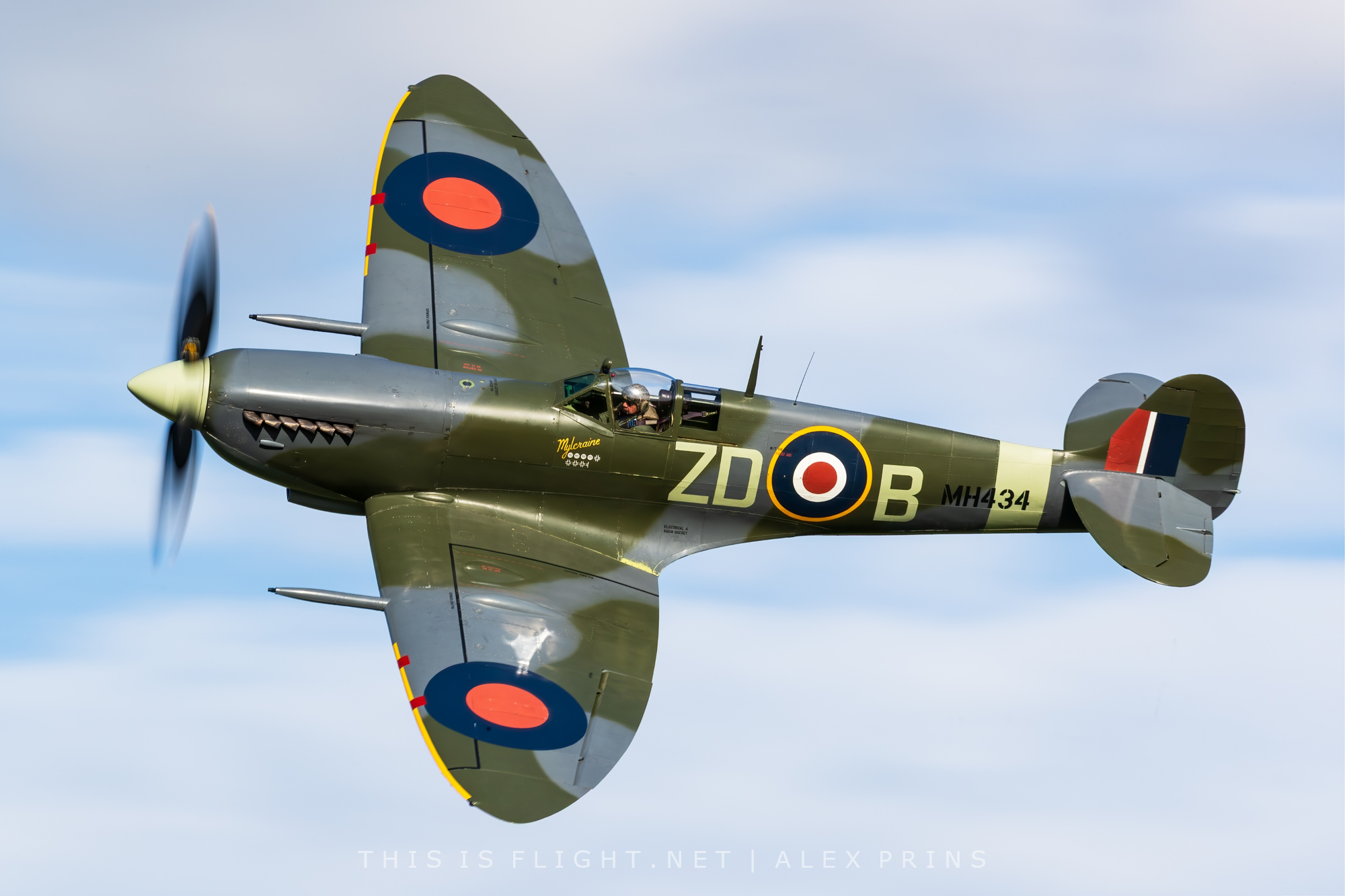
For some, the preceding four hours might simply have been a prelude for the Premiere’s curtain call, as the Shuttleworth Collection’s Spitfire Vc, AR501, took to the sky alongside the OFMC’s Spitfire IXb, MH434. In what will be a significant year for the Spitfire, especially at Old Warden, the two-ship formation and aerobatic sequence was a quarter hour of the most picturesque aviation one could hope to enjoy. While their series of opposition crosses might have been hampered by the winds, the back-to-back extended solos were a real sight for sore eyes.
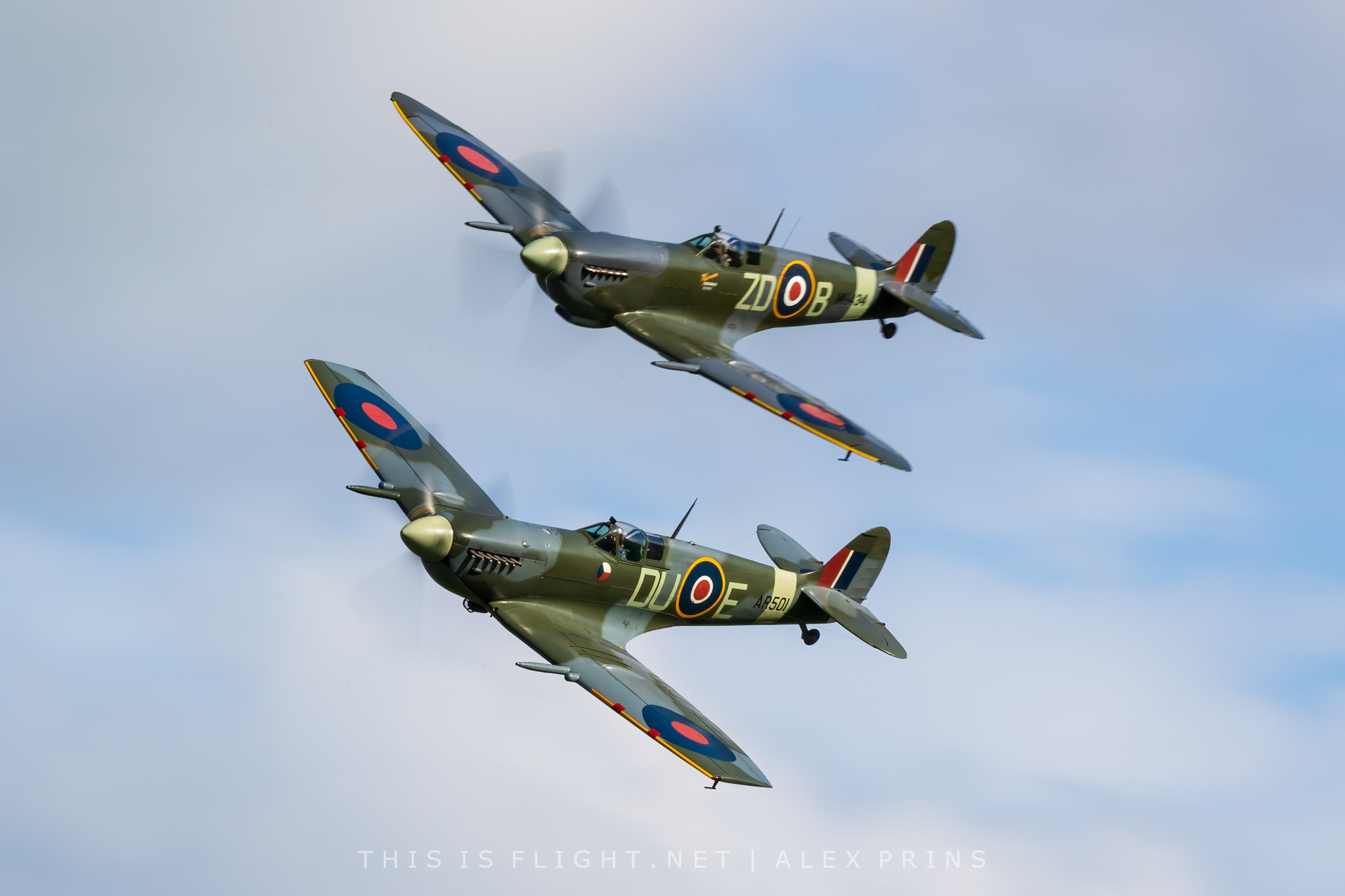
Closing out his first airshow as Shuttleworth’s chief pilot, Paul Shakespeare flew an extremely accomplished display in AR501, providing the perfect blend of gentle aerobatics and arcing topsides. Notably, this was also AR501’s first display since having been returned to its traditional clipped wing configuration over the winter. After AR501 vacated, the stage was set for Stu Goldspink’s solo finale in MH434. Beginning with high aerobatics, before working lower and closer in a crescendo of Merlin noise, this most iconic airframe could not have been more elegantly presented. As one friend quite rightly summarised on social media afterwards, “to most she is just a Spitfire, to some she is THE Spitfire”.
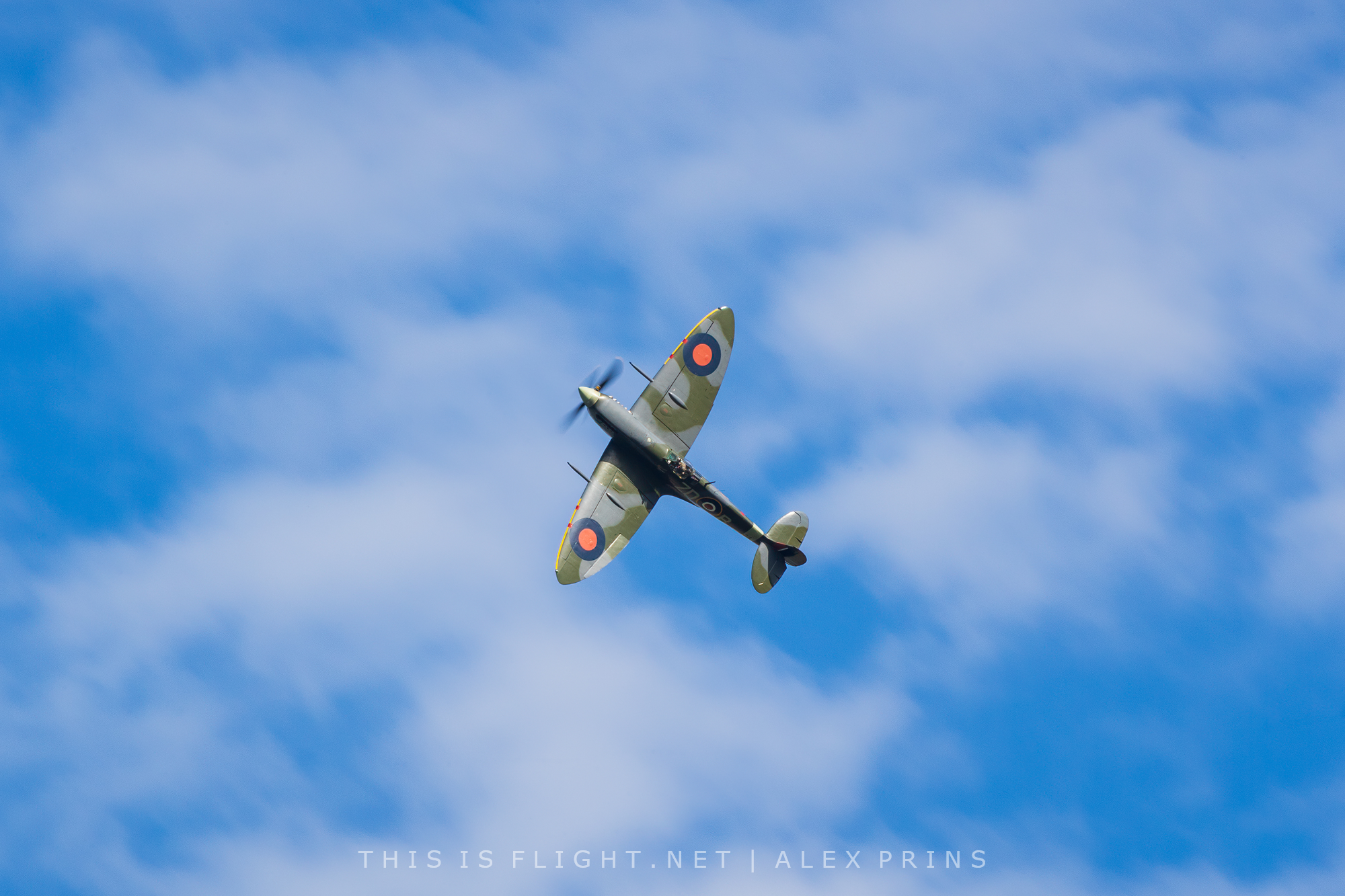
To enjoy MH434 against a picture-perfect Old Warden backdrop at the end of an unexpectedly full flying programme was an unforgettable experience. Indeed, as Goldspink neared the end of his display, I found myself looking over my shoulder at the one remaining bank of cumulus that threatened to literally cloud his final, perfect, topside pass. Right on cue though, the sun burst through and flawlessly lit a closing flypast of which photos do not do justice!
It is quite likely, given the Spitfire gathering planned for the Shuttleworth Summer Airshow, that this might not even be the best display of the type that we will be treated to at Old Warden this year; yet the fact remains that if I were to never see another, I could be quite content having seen that most beautiful Spitfire, flown in that most beautiful setting, after that most fortuitous programme of flying. What could have been a washout, or even a blowout, was instead a triumph of Shuttleworth’s character and resolve, and this was merely crowned by the closing set-piece. Throughout the day there had been stunning triumphs by unexpected stars, and this bodes well for another bumper season for the Collection. I also learned a life lesson, when questioning my journey to Bedfordshire only the day before: an afternoon at Old Warden is never a wasted trip!