WORDS: ADAM LANDAU | PHOTOS: ALEX PRINS
Air Legend, held at the historic airfield of Melun – Villaroche, often feels like it slips under the radar. It rarely features on anybody’s airshow bucket list, but this relatively young show was one of Europe’s benchmark airshows from its debut 2018 up until the generational 2023 edition. Just as the show’s reputation was growing and its momentum seemed to have reached critical mass, suddenly there came a two year lull, during which military participation fell off a cliff and then the show faced a hurried change of ownership after the death of its founder, eccentric warbird collector Christian Amara. To think of those two editions as fallow years would be unkind – there was still a great deal to commend them – but Air Legend, for two summers, ceased to be the genre-defining behemoth that it once had been, of that there can be no doubt.

Throughout all the turbulence, the biggest constant at Air Legend has been its long-standing aeronautical director, Iza Bazin. Fearsomely well-connected in the French airshow community, she has always managed to pull a few rabbits out of the hat, and this year was no exception. She used her considerable influence to bring about a full-throated return of French military participation, as well as netting an extremely rare appearance by Renault’s notoriously-elusive Caudron C.460 replica, the first displays in France by Marcin Kubrak’s A-26 and Fubar Aviation’s Lim-5, and attracted a foreign military participant to the show for the first time. While not quite on the same scale as the grand affairs of roughly five years ago, Air Legend 2026 was an airshow rejuvenated, feeling like a truly major fixture on the airshow calendar once again.

Flying line up aside, the event followed a similar format to the past few years. In the morning, the flying display ramp was open to the public, allowing spectators to get exceptionally close to the participating aircraft. What other show would let the public get almost within touching distance of a national jet aerobatic team?! This area was then closed off before the start of the flying display at midday, commencing with mostly lighter types. A lunch break followed, and then the main flying action ran from 14:00 until 18:00.

The first flying display session featured a different line up each day. In truth, this was just a warm up for the main event later in the afternoon, largely comprising displays that felt out of place at an airshow of this size and stature, with three notable exceptions: Geoffrey Denis of the Equipe de Voltige staged a very impressive solo aerobatic routine in the Extra 330SC on Saturday, Hugues Duval flew a rare and utterly spellbinding solo display in a CM.170R Magister (more normally seen at Air Legend performing as part of the Patrouille Tranchant) on Sunday, and also on Sunday, there was an utterly unique pairing of two Airbus products, in the form of an A330-941 from leisure airline Corsair and EC145 C2 helicopter from the Sécurité Civile.

Under other circumstances, the EC145’s search and rescue demonstration would probably not have survived very long in the memory banks, but when the A330 steamed silently in for its first pass while the EC145 was still displaying, it made for a scarcely believable sight! Even without this unexpected ‘synchro pair’, the A330’s display would still have been one of the most memorable displays of the weekend. Flying on Saturday afternoon in glorious light, and with the EC145 on Sunday, it opened with a remarkably low topside pass, curving in from behind the trees, and then proceeded to perform three more passes, each one more dramatic than the last.

Corsair was something of a watch word at Air Legend 2026, because it was associated with two of the most impressive displays of the day. As well as the Corsair A330, there was an F4U-5NL in the flying display, which performed a formation pass with two Rafale Ms from the French Navy and a spellbinding solo display in the hands of Baptiste Salis, perhaps the finest Corsair display pilot of our time.
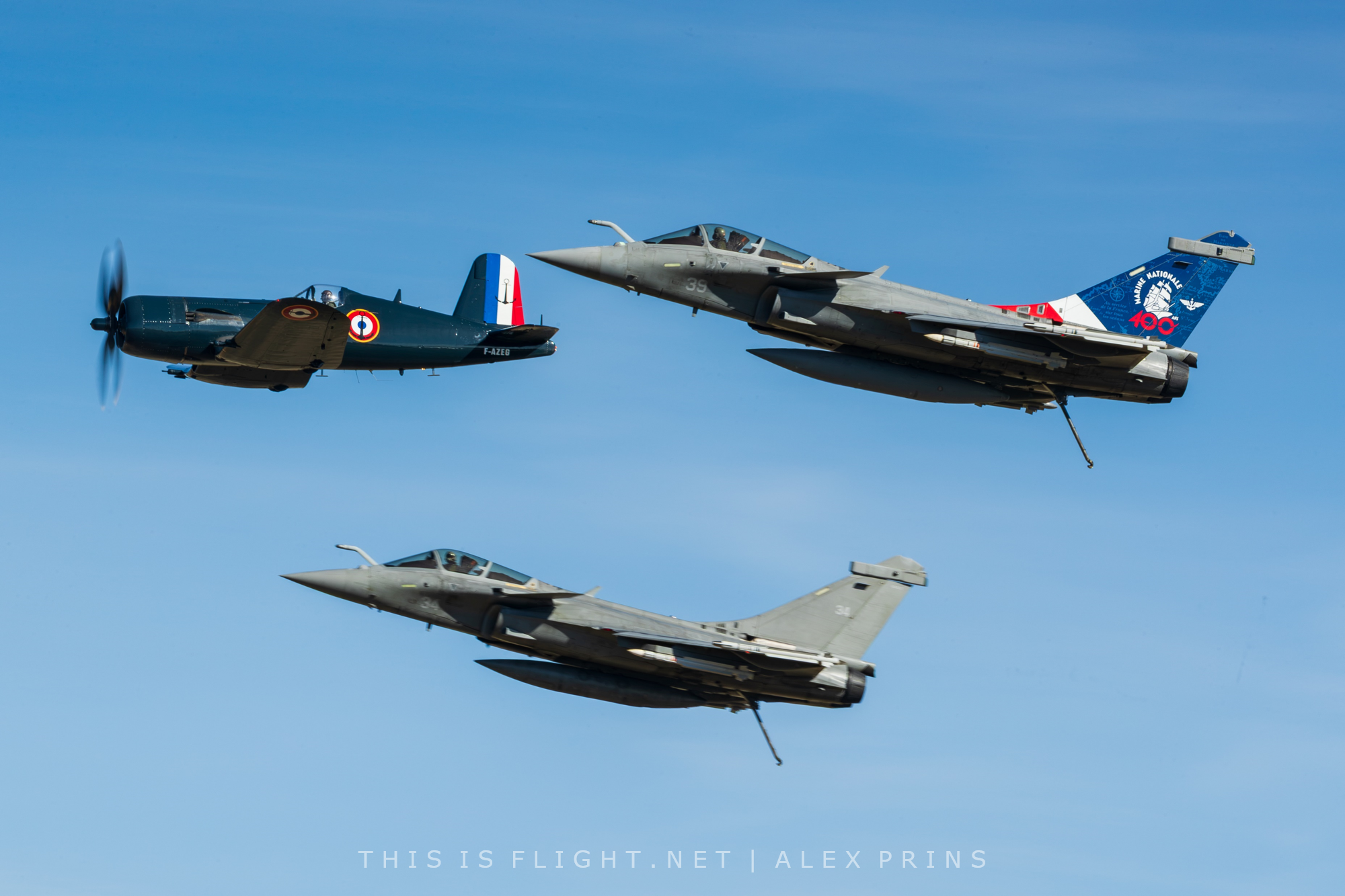
In yet another coup for Air Legend, this was the debut appearance of this particular Corsair in its current rather secretive ownership. Previously owned by the Salis family for many years, it is now owned by Prop & Jet Aviation, and has been repainted into a very smart French Navy scheme, replacing its familiar US Navy colours.

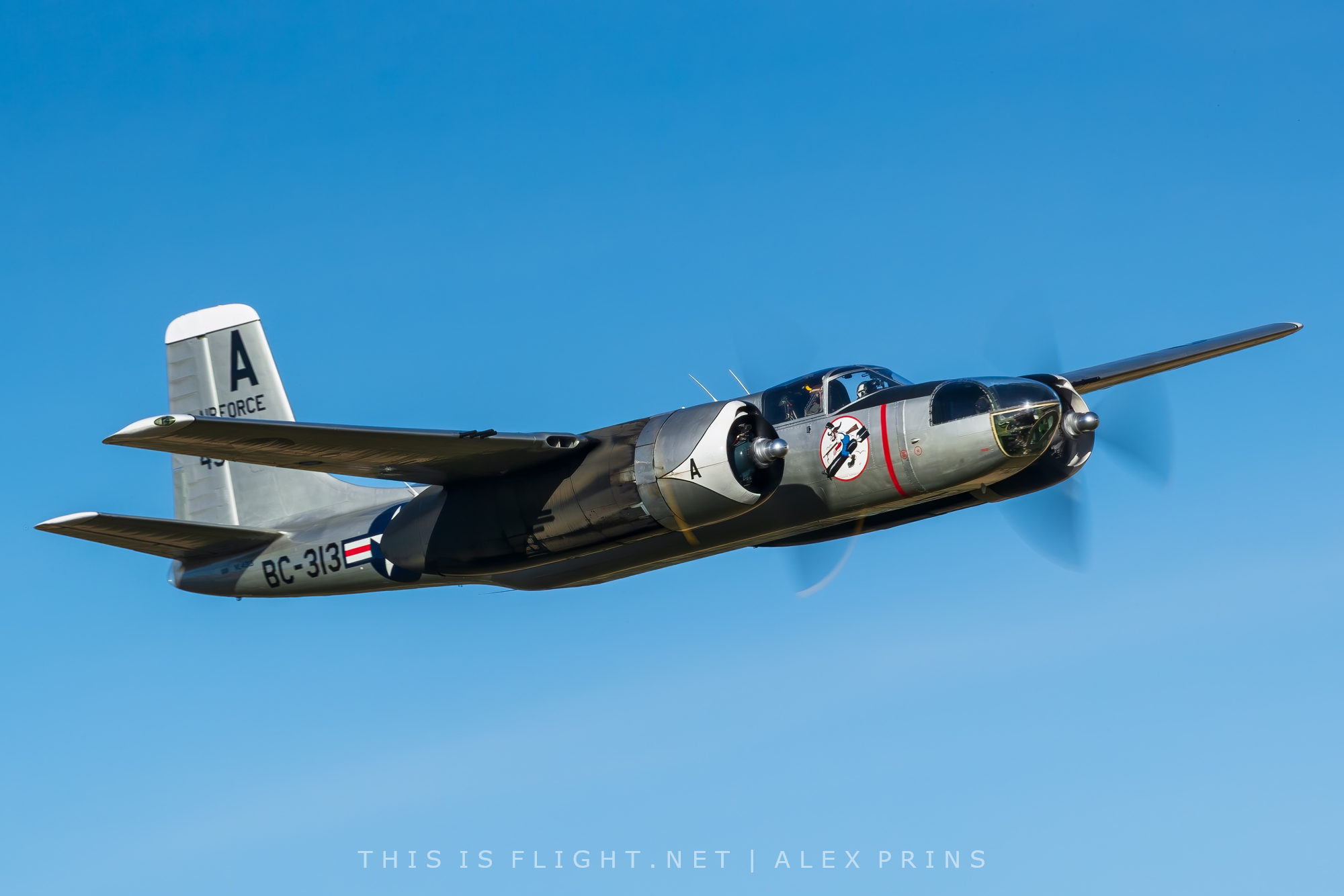
As far as American piston fighters were concerned, the Corsair was not alone, having been joined on the line up by two P-51D Mustangs, which performed deeply contrasting solo displays. The UK-based “Marinell”, flown by Isabel Rutland, performed a low, slow and compact routine, while Steve Stead in the Czech-based “Little Rebel” kept his mount rather fast and high during a brief solo slot, having first done a few passes with Marcin Kubrak’s A-26C Invader “Sweet Eloise II.”

To describe the A-26 and Mustang as having flown in formation would be overly-generous – they were far enough apart that there was very little point the two aircraft having shared a display slot at all – but to see either was a treat nonetheless. The A-26 then performed a full-throated solo routine with veteran display pilot John Dodd at the controls, and while it didn’t feature the steep topside passes that made his recent appearances at Shuttleworth and Little Gransden so memorable, it was still a mightily fine piece of flying.
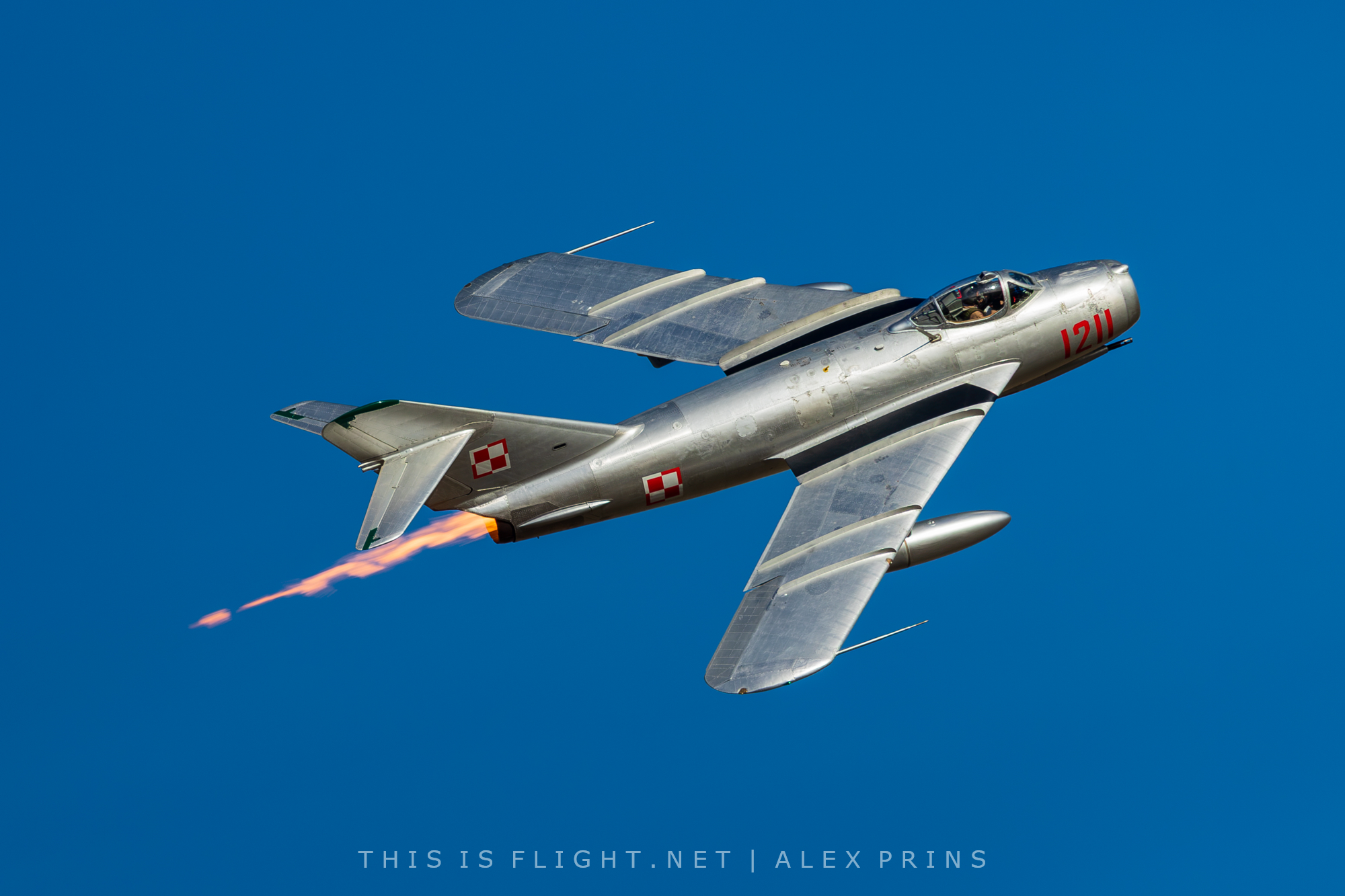
Poland is starting to become a major force in vintage aviation, and such is the demand for their aircraft at western European shows that not one, but two, Polish-based aircraft based themselves at Duxford in the UK for part of the 2026 season. The A-26 was one, while the other was Fubar Aviation’s newly-restored Lim-5, which became the first MiG-17F to fly in private hands in Europe when it returned to flight in April of this year. The breakout star of the season so far, particularly in its temporary home of the UK, the MiG made its one and only Gallic foray of the year when it visited Air Legend, flown by Mateusz Strama.
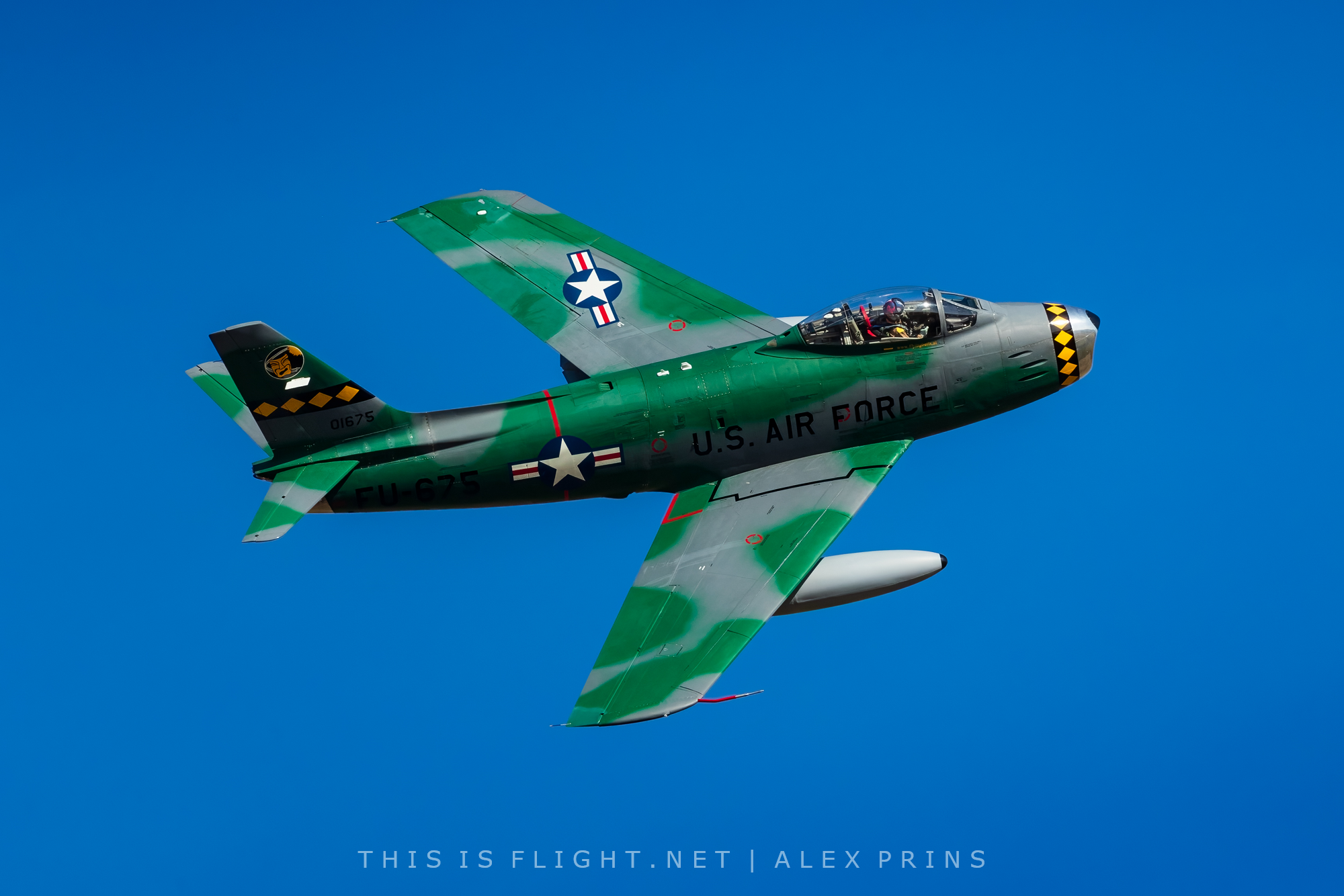
Technically, a further French airshow debut came in the form of the Flying Bulls’ CL-13B Sabre Mk.6. This jet was based in France until earlier this year, owned by Frédéric Akary. In his ownership, it was an Air Legend regular. Though now owned by the Austrian energy drink manufacturer, very little has actually changed (it’s still Fred flying, and his display routine is unaltered). Nonetheless, it was still a pleasure to see him fly, partly on account of his very enjoyable display, and partly because the process of changing owners has kept the Sabre on the ground for most of the summer, limiting the aircraft to just three events, of which this was its only appearance in France.
Air Legend this year featured no fewer than three DC-3 derivatives in the flying display. One, a part of the Classic Formation Team, flew a formation routine with an Expeditor 3NM and an Expeditor 3NMT, both offshoots of the Beech 18. Sadly, this display – besides being rather high – felt like it dragged on for too long and was not nearly as engaging, nor as sophisticated, as the fabulous four-ship displays that the team has staged in the past.
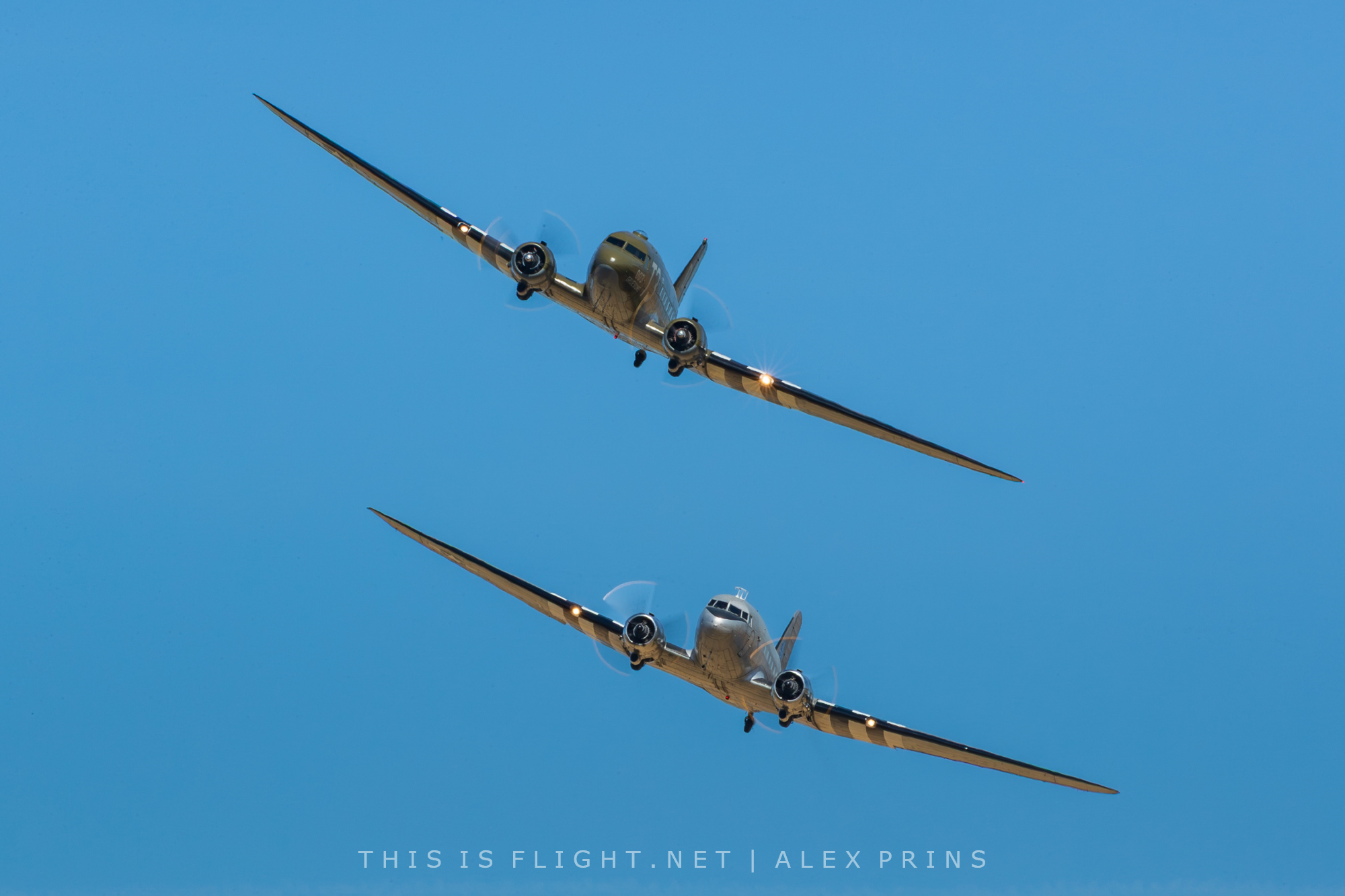
They were outshone by a considerable margin by a pairing of Chalair’s DC-3C and the Musée Aéronautique de Bretagne’s C-53D Skytrooper, known as “Gruesome”, which performed several pleasingly low formation passes, including a topside, followed by a split and an opposition pass. On Saturday, Alex Valat performed one of his excellent DC-3 solo displays, packed with tall wingovers and topside passes, while on Sunday it was the turn of the C-53.
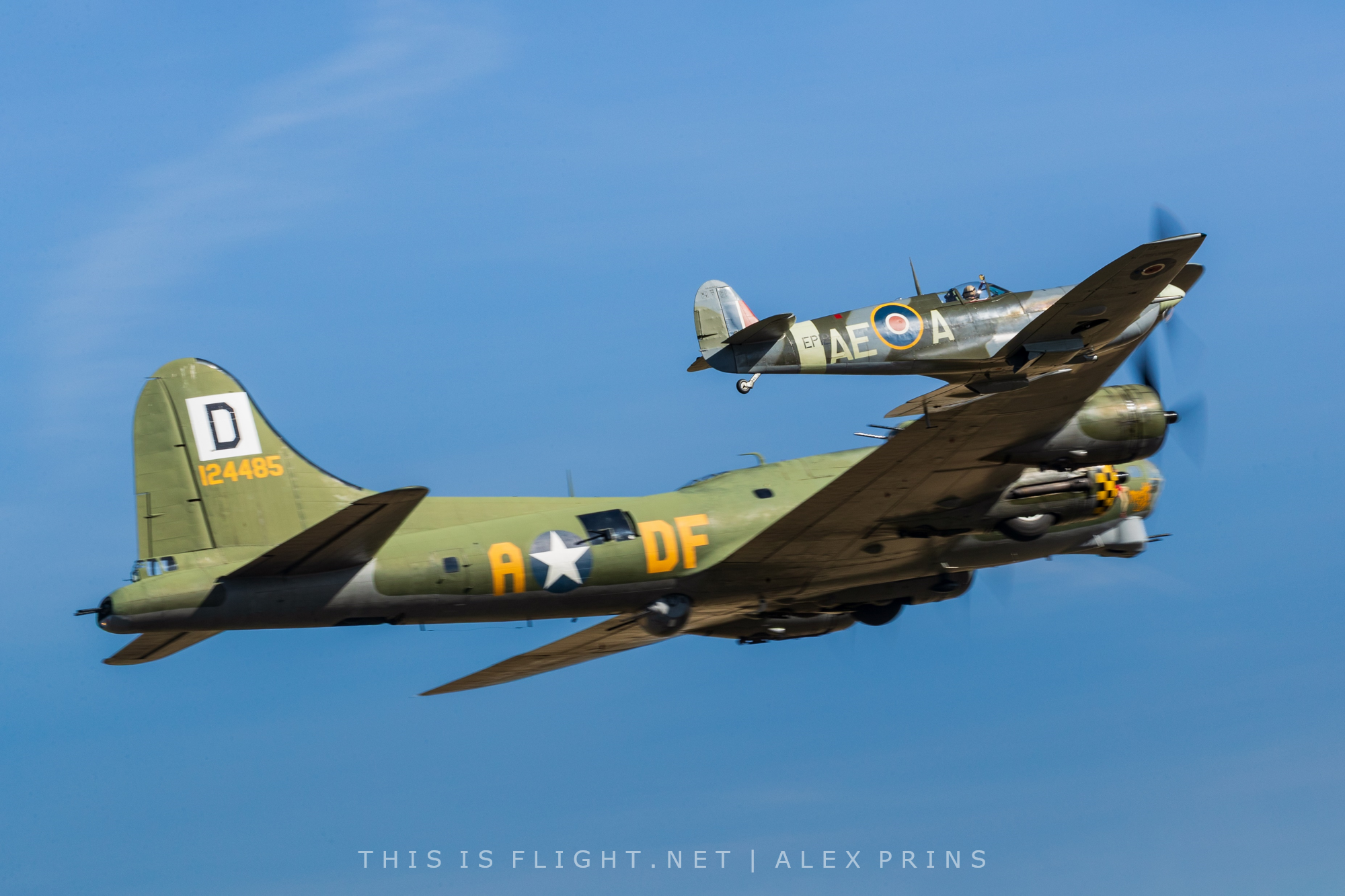
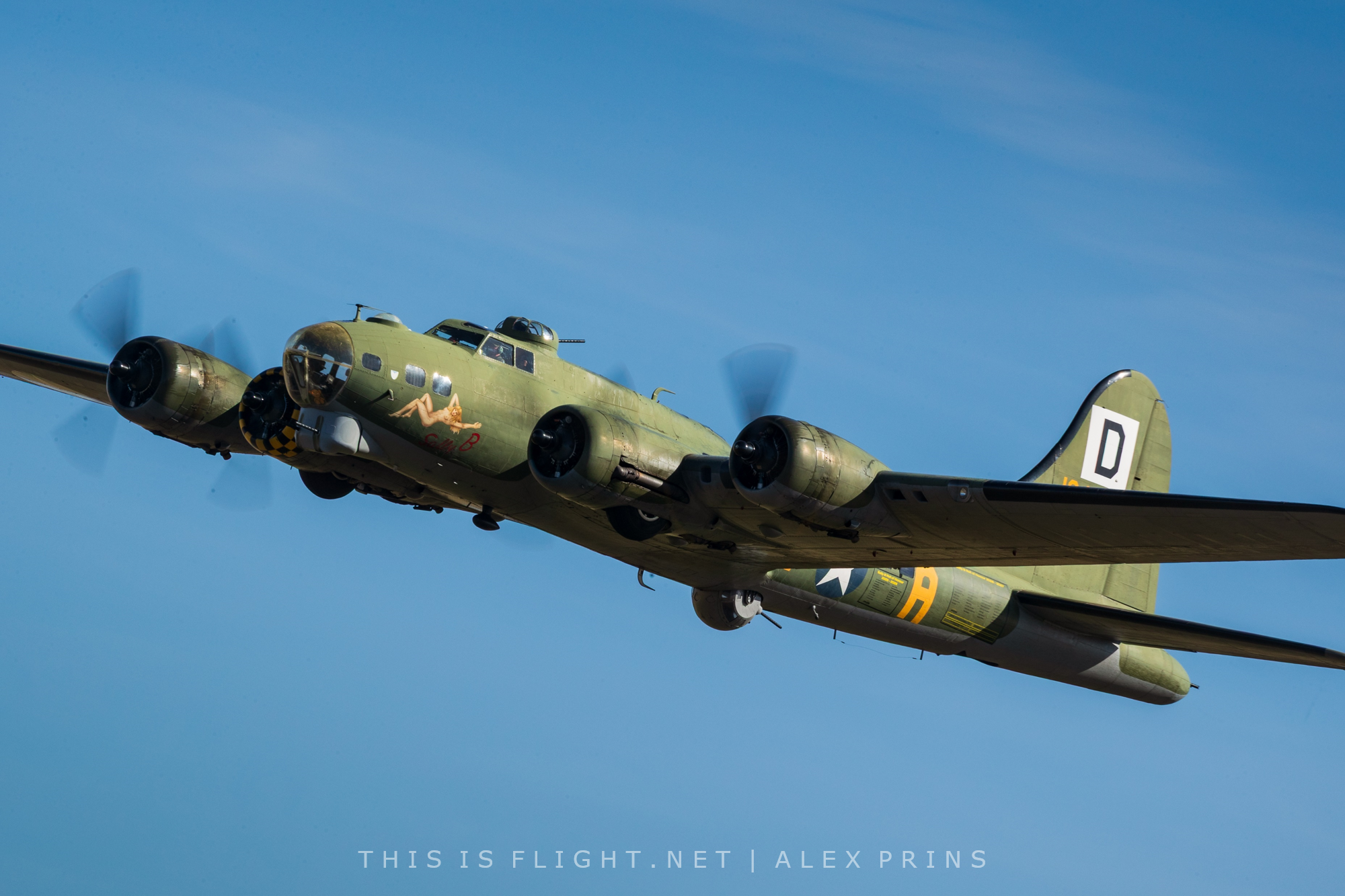
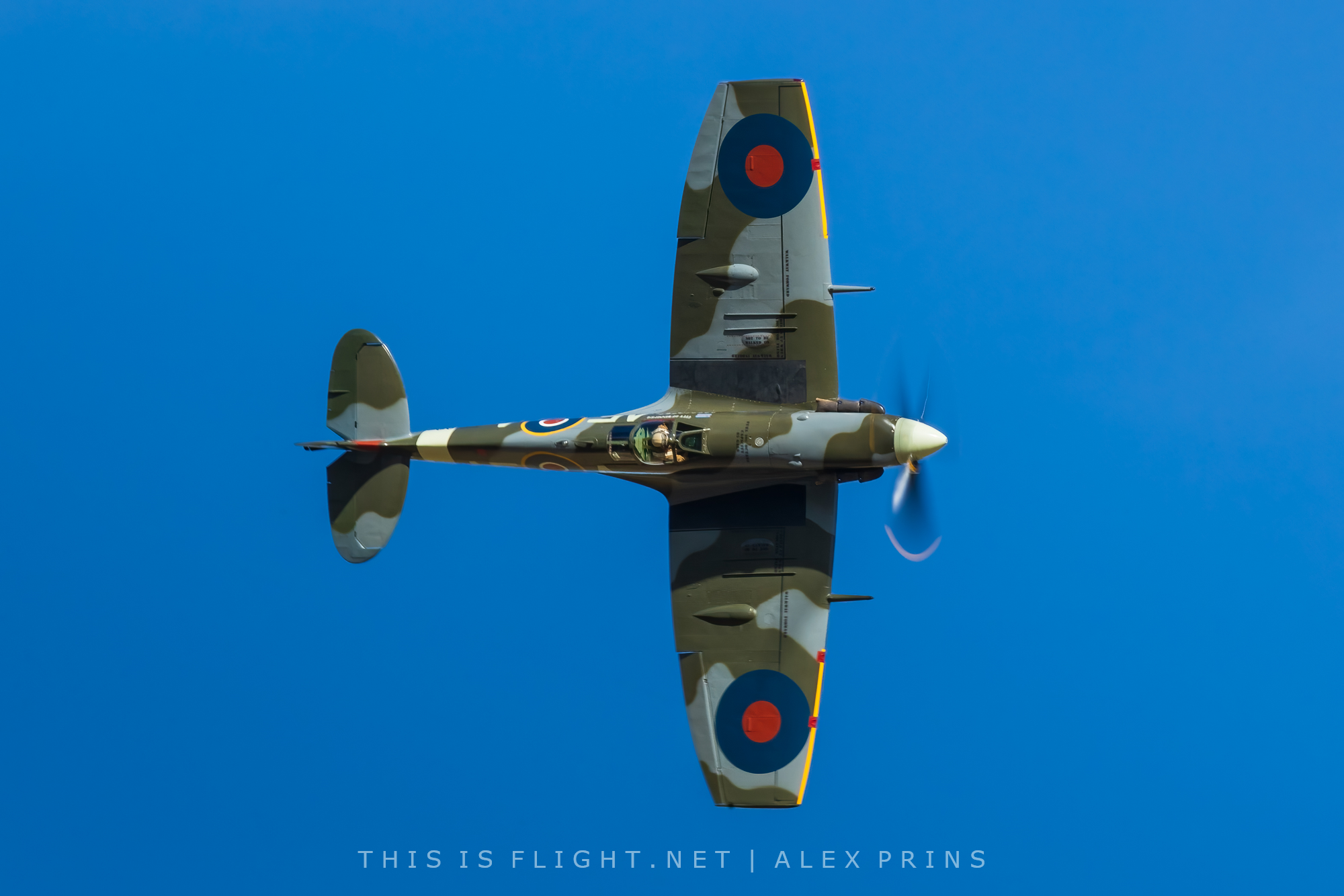
Two further ‘heavies’ came from the UK: The Catalina Society’s Canso A and B-17G Flying Fortress ‘Sally B’. This is Sally B’s second visit to Air Legend in the past few years, but that aside, the type has very rarely been seen in France since the grounding of “Pink Lady” in 2008, and its participation was clearly much-appreciated by the French crowd. After two formation passes with Spitfire V EP120 of the Fighter Collection, the Peter Kuypers put the B-17 through one of his much-acclaimed solo displays.
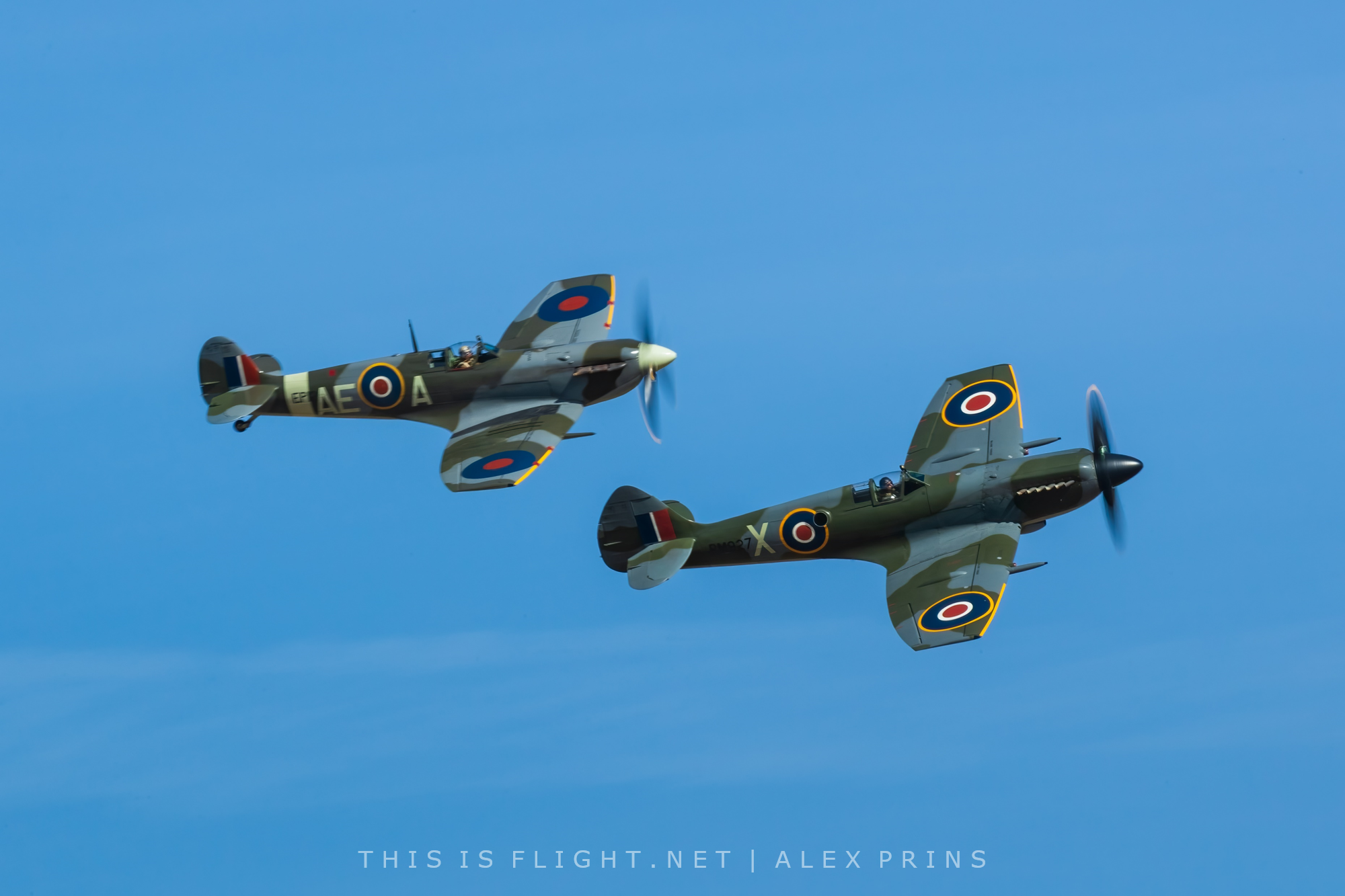
That wasn’t all, though, because while the B-17 displayed, EP120 joined up with Spitfire FR.XIV RM927 of the W-Air Collection, the aircraft being flown by Patrice Marchasson and Brice Ohayon respectively. The pair performed two steep topside passes in close formation, before splitting to fly individually. After splitting apart, RM927 performed a couple of solo manoeuvres with Brice’s trademark low entries, followed by a full solo display by EP120, and finally – on Sunday only – a full solo display by RM927. Both were among the best warbird solos of the day.
Aside from a smattering of trainers in the morning session, that concludes the warbird participation at Air Legend, but it was not the only vintage aviation participation of note. The organisers had secured the participation of the replica Caudron C.460, currently owned by Renault and restored to flight as part of a marketing campaign for their new Rafale SUV. The aircraft took to the air again earlier this year and will be retired to a museum next year; Air Legend was one of just two public events that it visited at all season, and will likely forever remain one of just a very small handful of airshows that it will ever fly at.

The C.460 had been supposed to do a single three-ship formation pass with the Staggerwing and Spartan Executive of Patrouille Air Déco (indeed, this was practiced on Friday), but the Spartan suffered a technical problem thereafter. This allowed the C.460 to perform a greater number of passes with the Staggerwing in a more nimble two-ship configuration before both aircraft performed very pleasing solos, the Caudron flown by Bruno Ducreux and the Staggerwing by Arnaud Bazin.
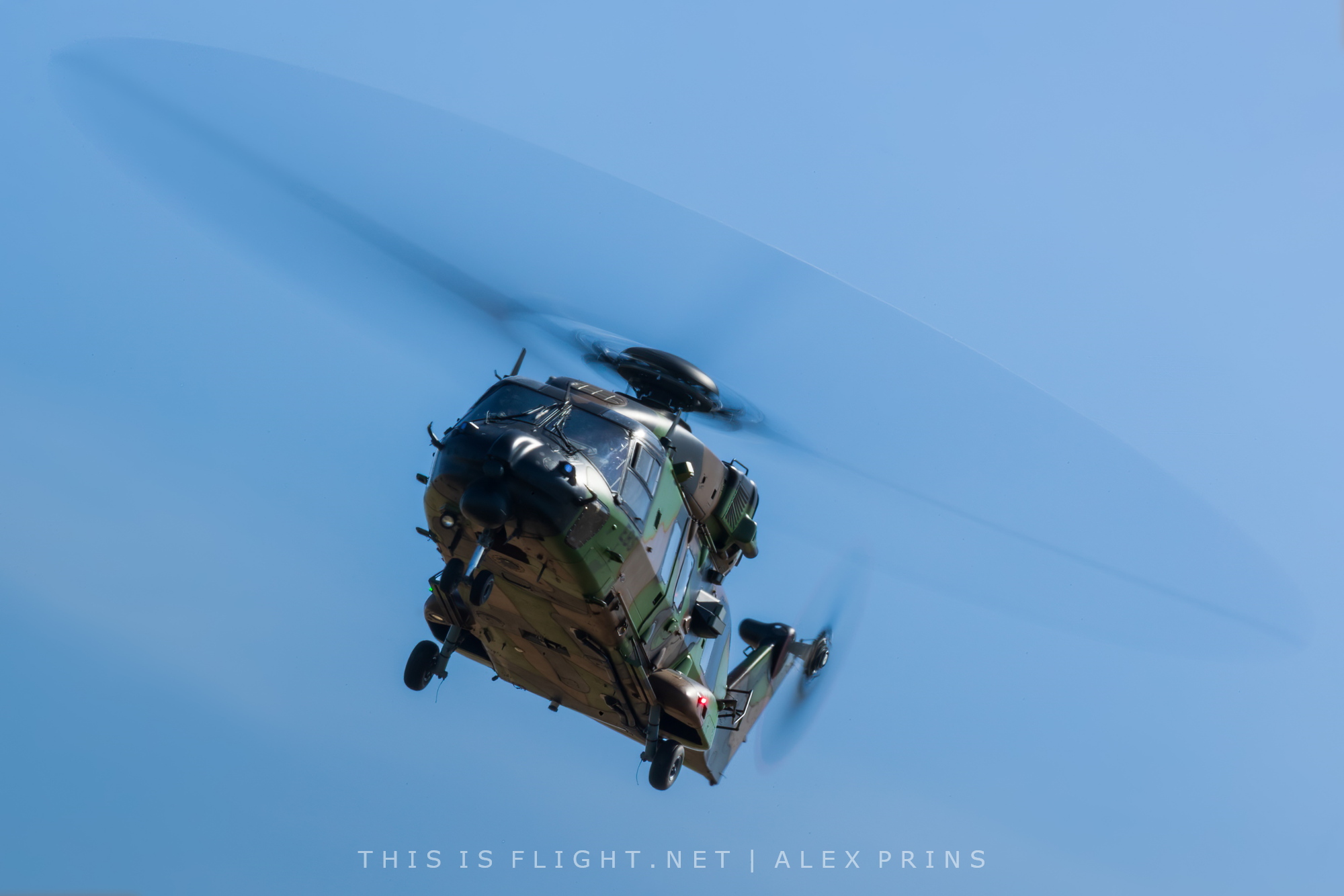
Modern military participation came from all three branches of the French Armed Forces. Army Light Aviation provided no fewer than three displays: a rarely-seen solo by a TBM 700A, the more familiar but unmemorable sight of a Caïman (NH90 TTH) in the morning session, and the best of the bunch, the Tigre HAD, in the afternoon. It is often surprising how differently the same rotorcraft can be displayed by different air arms; while the French Tigre display doesn’t include the same level of aerobatic manoeuvring seen from, say, the Germans on the same type, it does show off to extremely good effect the Tiger’s exceptional pitch and yaw responsiveness to a far greater degree than their German counterparts. This is a helicopter display of the very highest calibre.

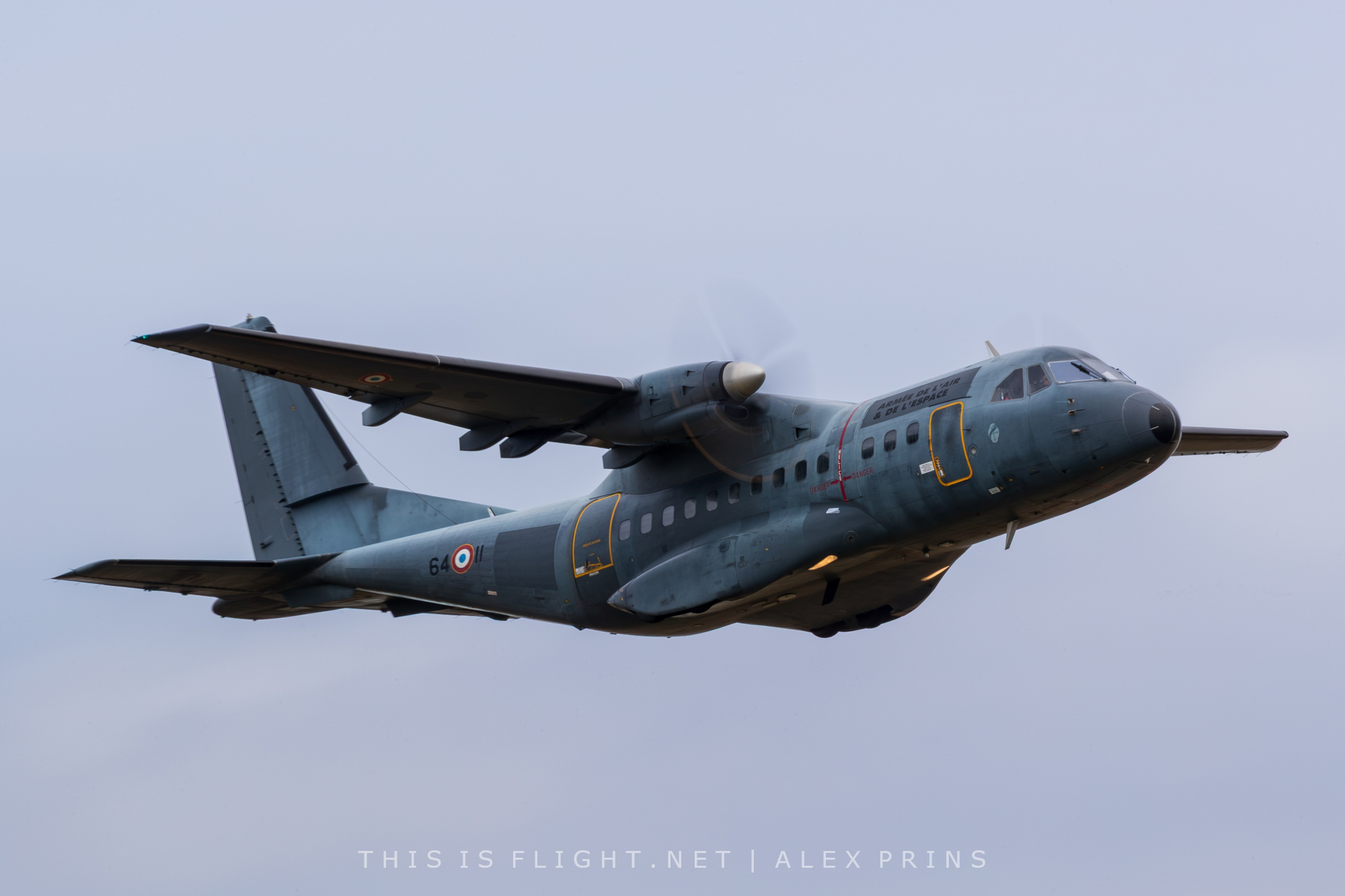
The French Air & Space Force sent four displays, including the aforementioned Equipe de Voltige, a four-man parachute drop from Team Phénix (plus a flypast on Sunday from their rather dilapidated CN-235 jump ship), a Saturday-only display from the Patrouille de France and an appearance from the much sought-after Couteau Delta.
The Patrouille de France’s 2026 display has been considerably simplified compared to a typical year (I assume this is because most of their best manoeuvres do not comply with FAA regulations, and thus needed to be removed from the show given the team’s US tour; a similar situation occurred in 2017). There are also a couple of long gaps while the team repositions. It is like watching a completely different team compared to their spellbinding routine of 2023, for example, but one should not complain: at least, unlike many teams they do refresh their show each season, and not every year can be the best ever.

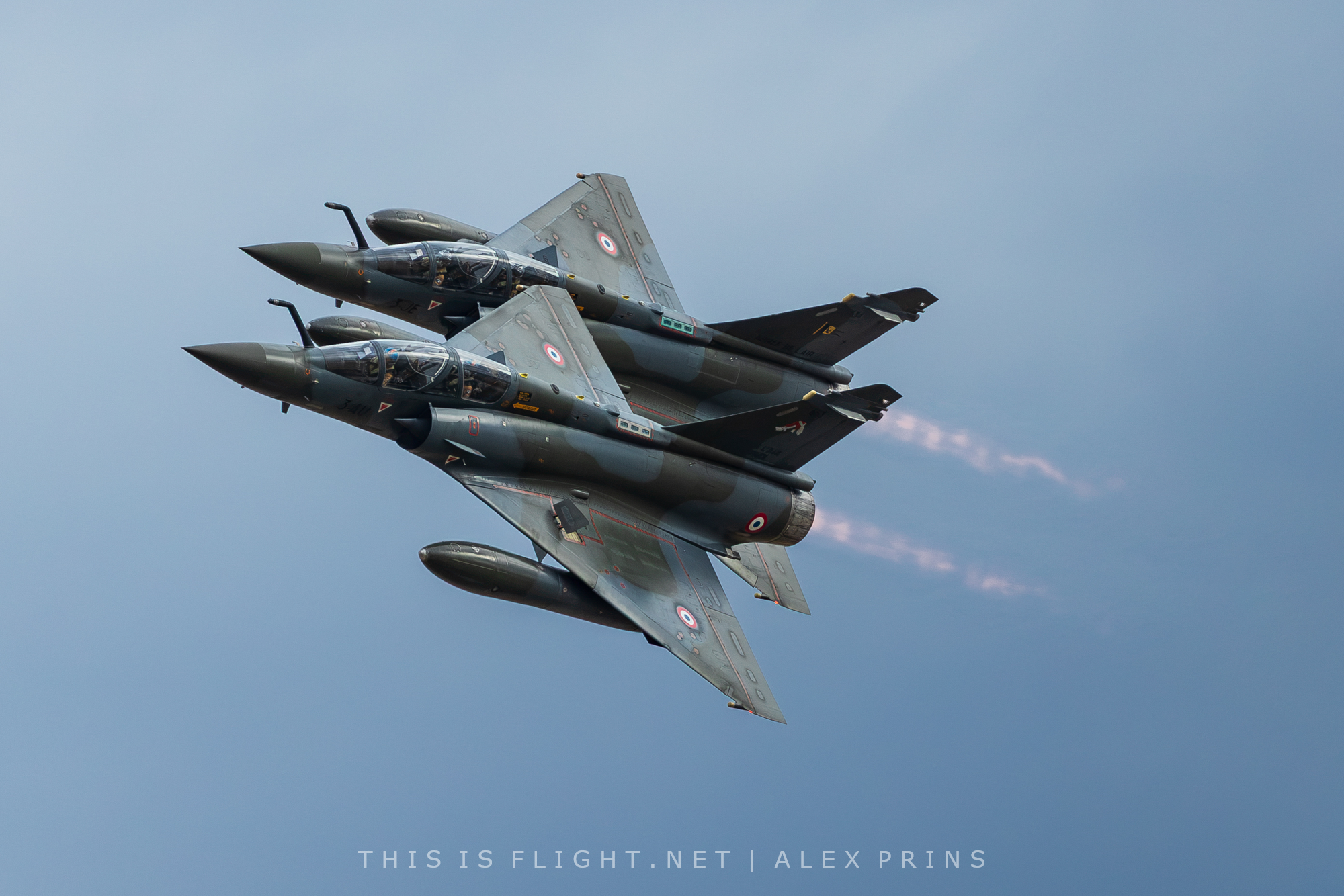
A similar bitter-sweet impression was gained from Couteau Delta. Unquestionably, the display doesn’t pack the same punch as it did a few seasons ago, but to see two Mirage 2000Ds tailchasing around the sky is still quite the sight and there are fewer than half a dozen shows where anything comparable can be seen this year. No airshows with Mirage 2000s in the flying display can be a bad one!
Probably the best military display of the weekend came from the French Navy, which sent no fewer than three Rafale Ms to take part in the flying display. One came from the elusive CEPA, the Navy’s flight test and evaluation department, while the other two came from the operational 17F squadron.
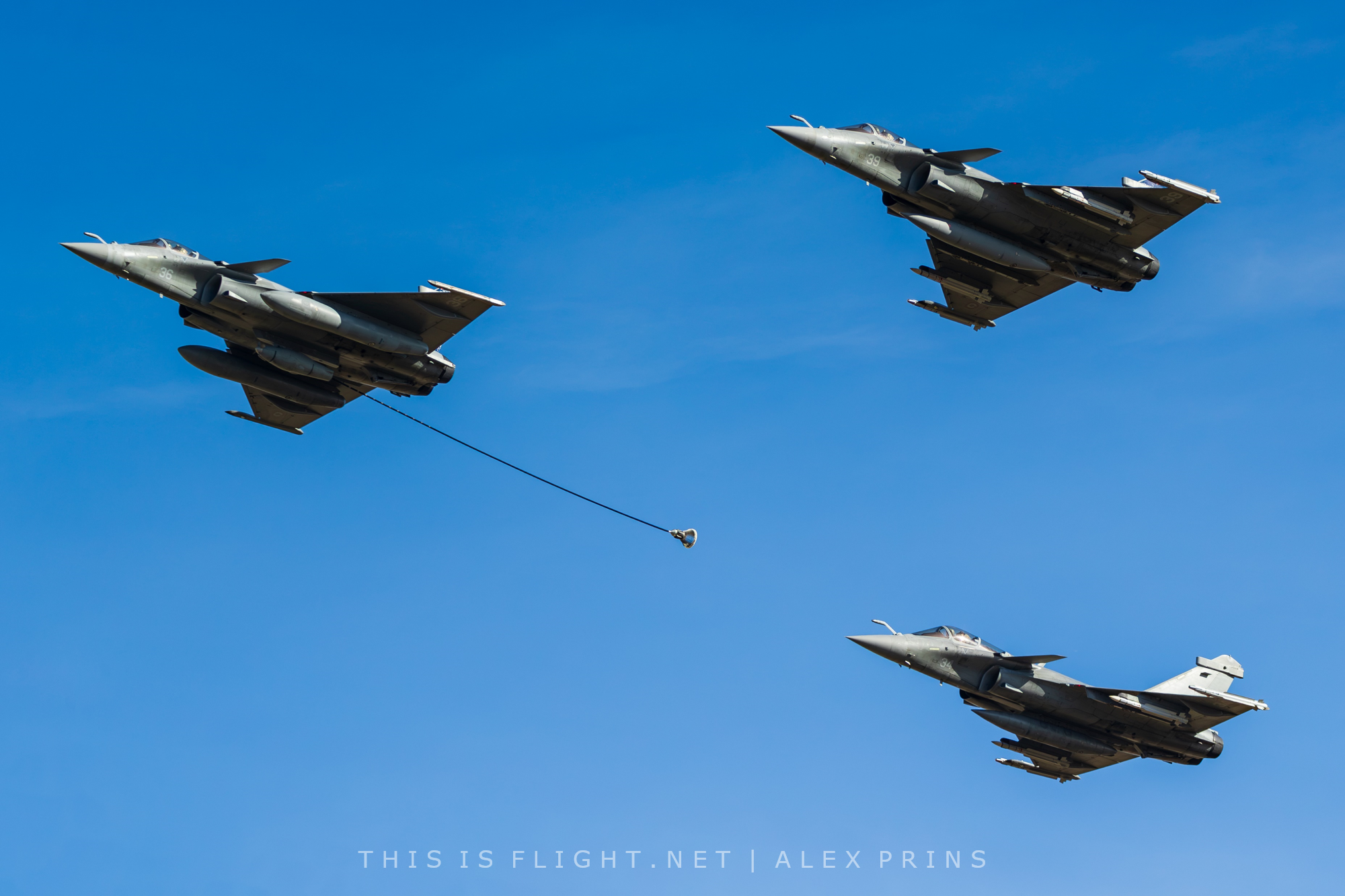
All three performed a couple of passes as a group, during which they demonstrated the art of buddy-buddy refuelling. The CEPA jet then headed to the hold while the 17F aircraft performed a two-ship tactical display of the highest quality, including close formation passes in a dirty configuration, a break, opposition passes in various speed regimes, and mock air-to-air and air-to-ground attack profiles. Any air force, unit or pilot interested in creating a multi-aircraft tactical display should look to this one for inspiration: it is the gold standard.

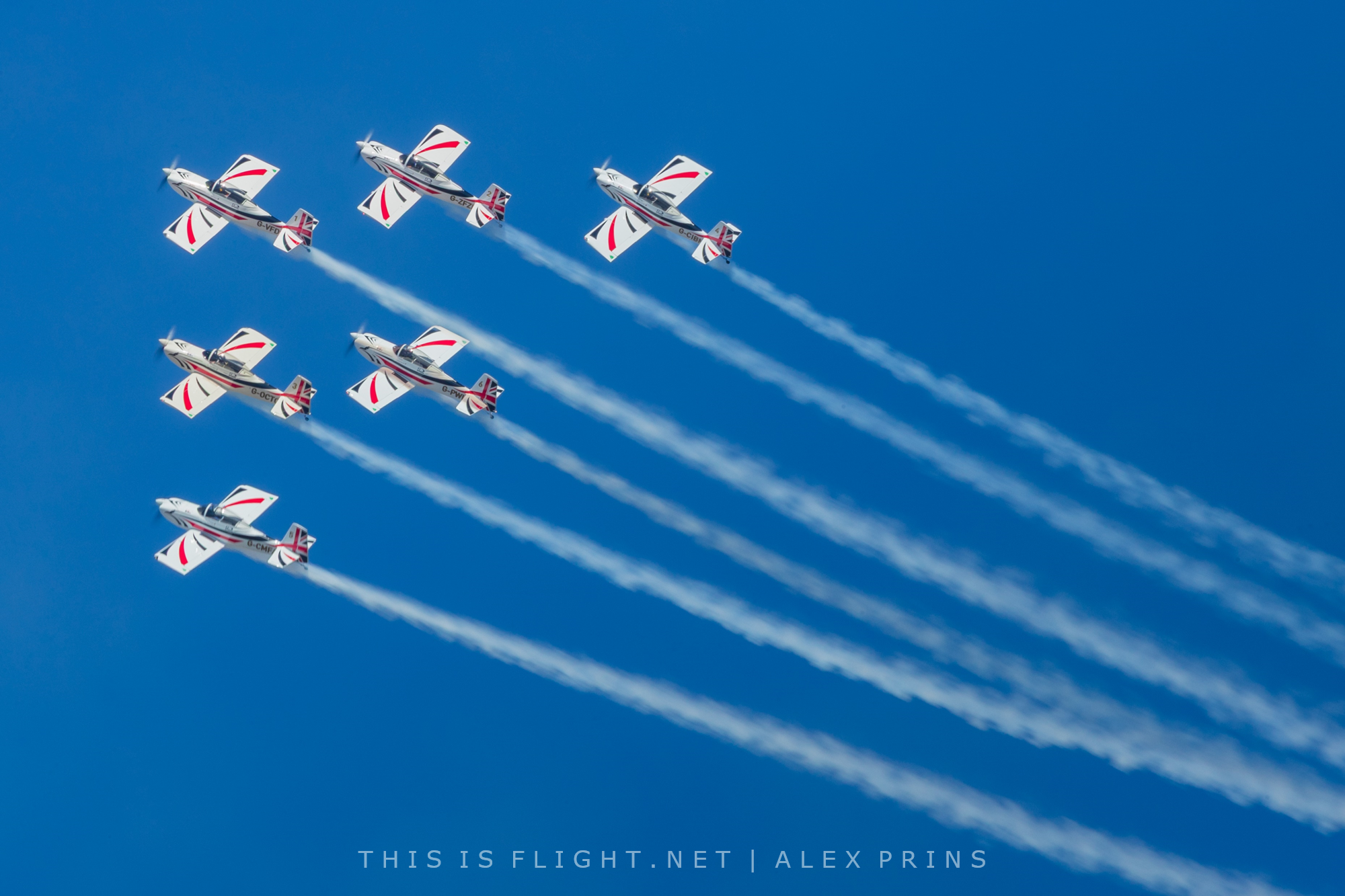
Air Legend also welcomed its first ever foreign military participation in the form of the Royal Jordanian Falcons, flying four Extra 330LXs. The team put on their usual very accomplished display, nicely complementing the very distinct routines flown by the Patrouille de France and by UK civilian outfit Team Raven. The Jordanians also practiced some very photogenic formation passes with their British counterparts on the Friday, but this was not repeated during the airshow itself. Sadly, this was a bit of a theme; Air Legend in the past had made a name for itself by combining aircraft into mixed-type formations, but very few could be seen this year. That is not for lack of trying; a number of interesting ideas had been pencilled into the flying programme, but none came to fruition.

The inclusion of some more only-at-Air-Legend formations would have undoubtably lifted the whole show to another level, and that wasn’t the only area for potential improvement. The first hour of the flying display contained several displays that did not add anything to the wider event, while the display did to an extent tail off a bit towards the end, with many of the best, loudest and most colourful displays taking place in the middle of the programme. In general, the scheduling felt odd; the DC-3 pair and Classic Formation Team were scheduled to display back-to-back, which felt like a misstep, and the same went for the Royal Jordanian Falcons and Team Raven (presumably to facilitate the cancelled joint flypast). Granted, these are relatively minor criticisms of what was, in the most part, an excellent two days of flying.
On top of the flying displays itself, part of Air Legend’s appeal lies in the fact that the whole event is so very pleasant. The light is favourable, especially towards the end of the day, the display area is uncluttered and the crowd can get exceptionally close to the flying display assets on the ground. The show has also introduced an excellent feature which much added to the enjoyability of the day: a dedicated quiet zone at the southern tip of the crowd line. With no speakers to be seen or heard, and with few spectators willing to walk this far, the quiet zone was an oasis of calm and watching the show from that area didn’t feel like attending a public airshow at all.

Finally, factor in good public transport connections, including a very efficient shuttle bus from Melun railway station and easy access to both of Paris’ international airports, and this event becomes not just very enjoyable, but also very practical. It is reasonably-priced, too, with tickets selling for €35 online or €40 on the gate. Try beating that at any large or mid-sized British show! Against that context, Air Legend is more than just a terrific show for the Île-de-France, but a compelling and very viable proposition for foreign visitors too.
Air Legend is still settling into its new ownership, with publishing group Editions Larivière now at the helm. Nevertheless, the spectator experience feels remarkably polished and complete. As for the quality of the flying display, the next year or two will prove whether 2026 was an exception or the norm under Editions Larivière’s stewardship; if it is the norm, then the show has a very bright future ahead of it.