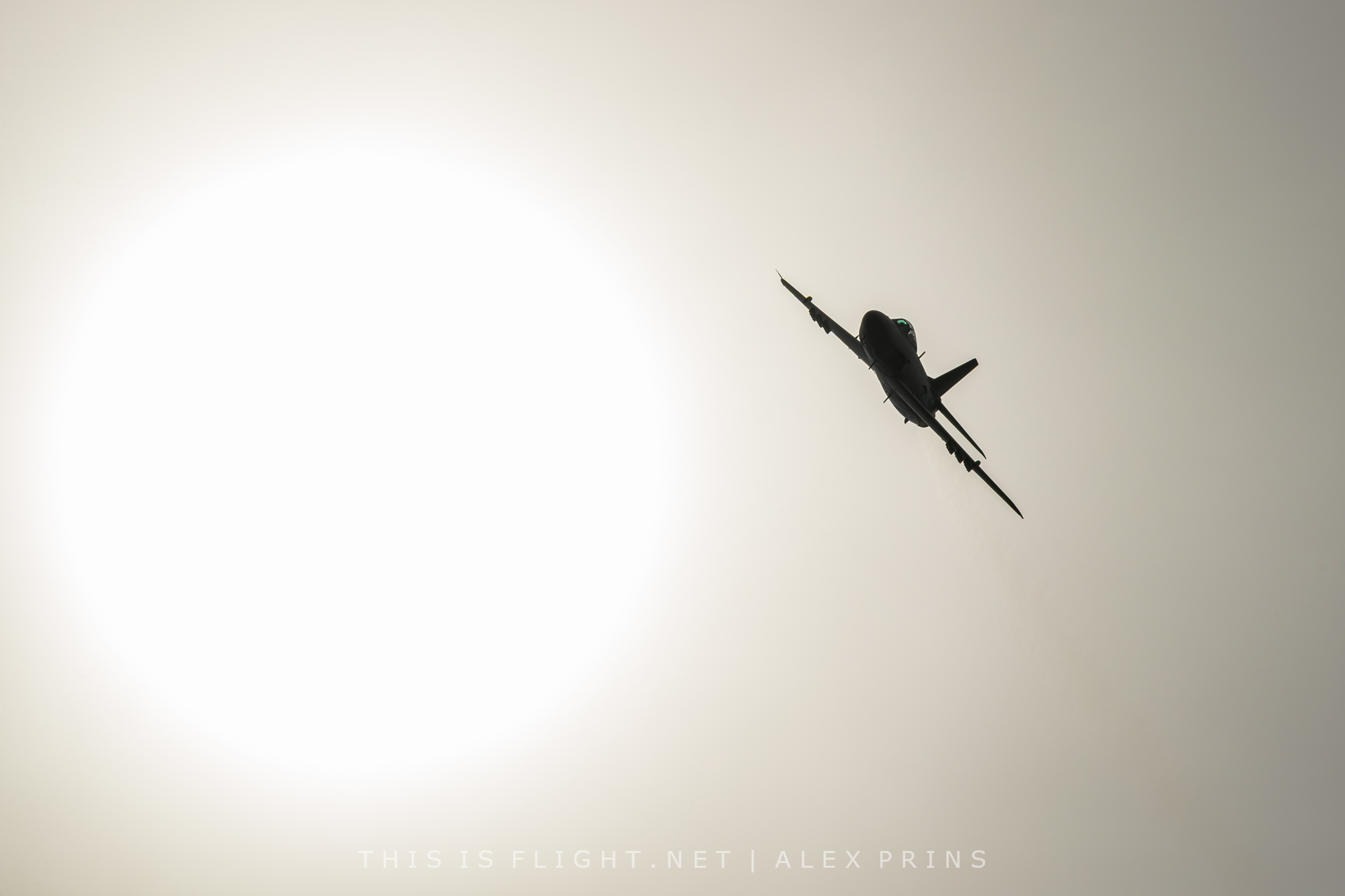
WORDS: ADAM LANDAU | PHOTOS: ALEX PRINS
Rarely has writing an airshow review posed a greater challenge than this one. The Swedish Air Force centenary was one of those events that was at once fabulous and fatally flawed; it would be possible for ten different people to attend this show and come back having had ten totally different experiences. For some, it will have been the airshow of the decade, and for others it will have been the most frustrating, disappointing aviation events they have ever attended.
The centenary celebrations of a major air force is always likely to draw a massive crowd, but few air forces hold more allure in this regard than Sweden’s. With its long and proud history of developing its combat aircraft domestically, many of which have been kept alive post-retirement in private hands, this show offered the tantalising potential of staging a flying display quite unlike any other. Little wonder that 230,000 people flocked to Malmen Air Base in Linköping on the 22nd and 23rd of August.
In some ways, Linköping was the obvious choice to host this event. It is the home of Saab and the Swedish Air Force Museum, it hosted Sweden’s first ever flying school and is the site of one of the oldest military air bases in the country. All these things count in its favour. Its suitability as an airshow venue, on the other hand, does not.
Herein lies the first, biggest and most ruinous flaw of the Swedish Air Force centenary airshow: its site layout. It was as if those responsible for the ground layout of the event and those responsible for the flying displays had never once spoken to each other. Visitors arrived on site to be greeted with a seemingly normal airshow crowdline: a long fence parallel to the runway, facing east, complete with with speakers and big screens. At any other airshow in the world, the crowd would assemble along this fence, facing east, and the flying displays would take place in that direction. But in Malmen, most of the flying displays took place to the south, over the top of an industrial complex.
This diabolical arrangement – never before have I seen such a preposterous airshow layout – pleased nobody. Those who assembled as normal along the crowdline found they were facing the wrong way, and potentially literal miles from the display line itself. Those who pressed themselves into the southern part of the site to try and get as close to the display line as possible found they had a face full of trees and buildings blocking the view. It didn’t work from a piloting perspective either; a number of teams quite reasonably felt unable to display over the buildings and pushed their displays even further south to avoid them, adding even more distance between themselves and most of the crowd. This was not an airshow by any normal definition: it was more like an air base open day allowing people to see the launches and recoveries for an entirely separate flying display happening nearby.
The result of this is that it was borderline impossible to watch or photograph the displays from inside the official showground, and despite dire warnings of arrests, fines and police cautions, hundreds of spotters struck out into the farmland around the base to try and get a better view. I would never normally condone this, but on this occasion, I cannot blame them. It was a crisis of the airshow’s own making.
This is before we get on to some of the other flaws that made being in the official showground unpleasant or impossible. The number of toilets was woefully insufficient, as was the number of shuttle buses. I know of people who arrived in Linköping on the first morning train, waited several hours in a mass of spectators that cannot possibly be described as a queue, and gave up entirely, either walking to the show or returning to Stockholm without having seen any of it. For what it’s worth, the traffic management for those arriving by car was actually very good indeed, but the organisers implored visitors to use the shuttle bus instead, promising a double-decker bus would run every ten minutes. If we assume a generous capacity of 100 passengers per bus, that means it would have taken some 16 days to get the crowd on-site had all 230,000 heeded the show’s advice. Of course, it wasn’t that bad, but queues still lasted for many hours on a day when fewer than 75 minutes came between the opening of the gates and the first of the flying displays. The inadequacies of the system were so blatantly foreseeable.
I’m afraid the Swedish hospitality also fell short. In advance of the show, information was confusing and contradictory, with no consensus on whether to bring cash or cards, only the most vague of aircraft participation lists and limited guidance about the available transport. Practical information often had to be obtained via one-on-one email exchanges with members of staff, leading to swirling rumour mills online as people re-posted the latest emails they had received on social media and forums. Then came the show itself, when despite the right words and sentiments being communicated, actual handling of spectators on the ground was sometimes irrational and unkind. On Saturday, armed guards started clapping, shouting and shooing people towards the exit while the last flying display item was still displaying. A friend of mine attempted to use the toilet on the way to the exit gate and was prevented from doing so, even though the next opportunity might be hours away. I had to walk with one shoelace undone because I was told in no uncertain terms that I needed to keep moving when I bent down to try and retie it.
Thus, enjoyment of the show was wholly dependent on the time, initiative and resources of each individual visitor. A single-day visitor who blindly followed the official advice to use the shuttle bus and leave the car at home, set up camp on the normal crowdline, tried to buy food on site and at some point needed to empty their bladder will have had an awful day. Those who had spotter passes, their own car and their own food will have faired better. Those who experimented with various spots over multiple days, including off-site locations in the surrounding fields, likely had a fabulous time, albeit taking such risks should never have been necessary in the first place.
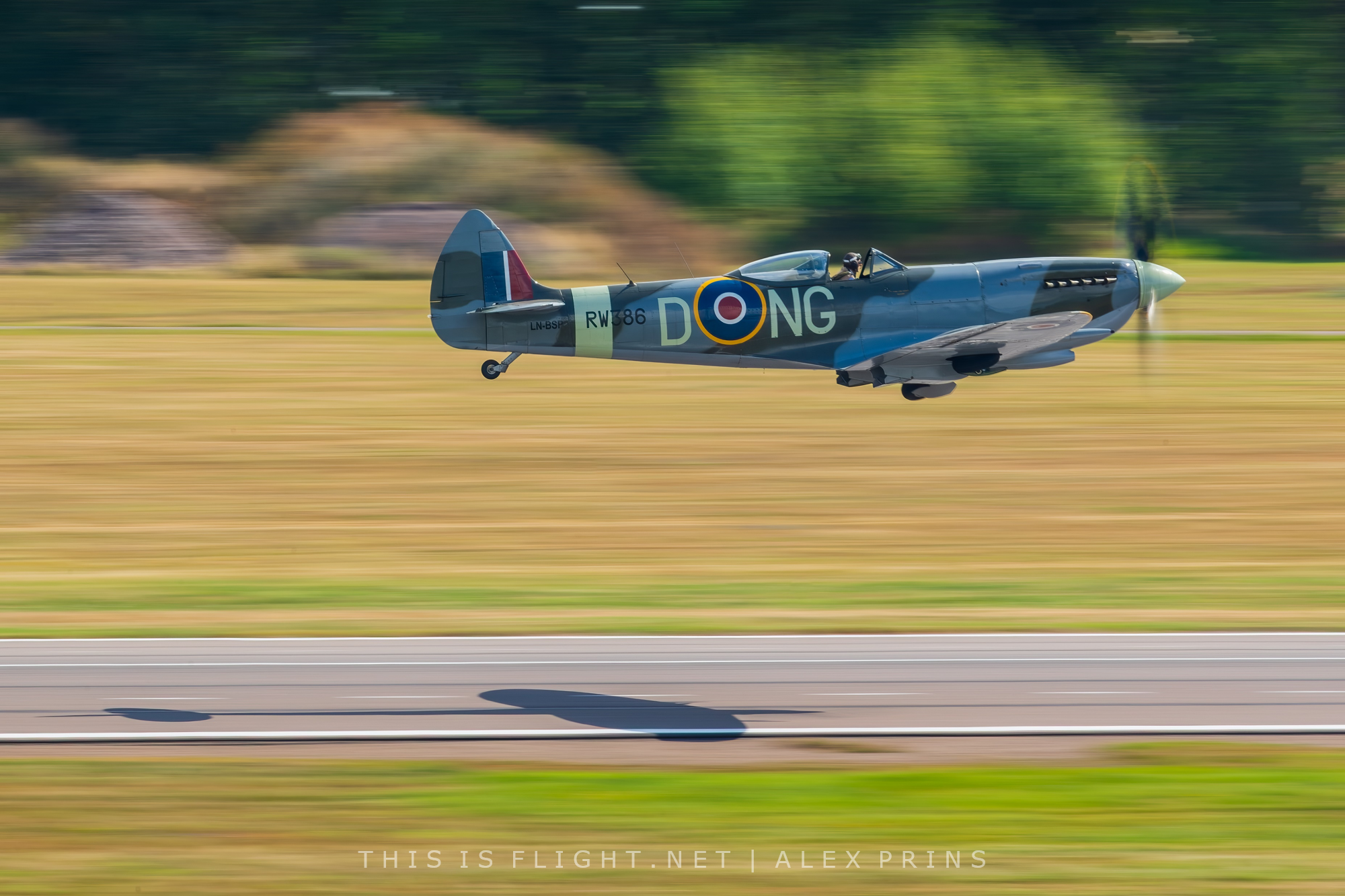
The flying display ran from around 09:00 to 17:30 each day, with a short break at lunchtime. If the aim was to tell the story of the Swedish Air Force in the most complete way possible, it was a resounding success. Mikael Carlson flew his replica Thulin A (Swedish-built Bleriot XI) to represent the dawn of Swedish aviation and his Ö1 Tummelisa, one of the original types operated by the Swedish Air Force when it was first formed in 1926. Gaggles of trainers of the 1930s and 40s represented the pre-war and Second World War eras. Then came the early Cold War era, represented by the Rolls-Royce Heritage Flight’s Spitfire PR.XIX in temporary Swedish markings, dressed up rather convincingly as an S 31. There was also a pairing of DC-3C and PBY-5A Canso A, representing an infamous incident of 1952 in which a Swedish Air Force Tp 79 and Tp 47 were shot down by a Soviet MiG-15.
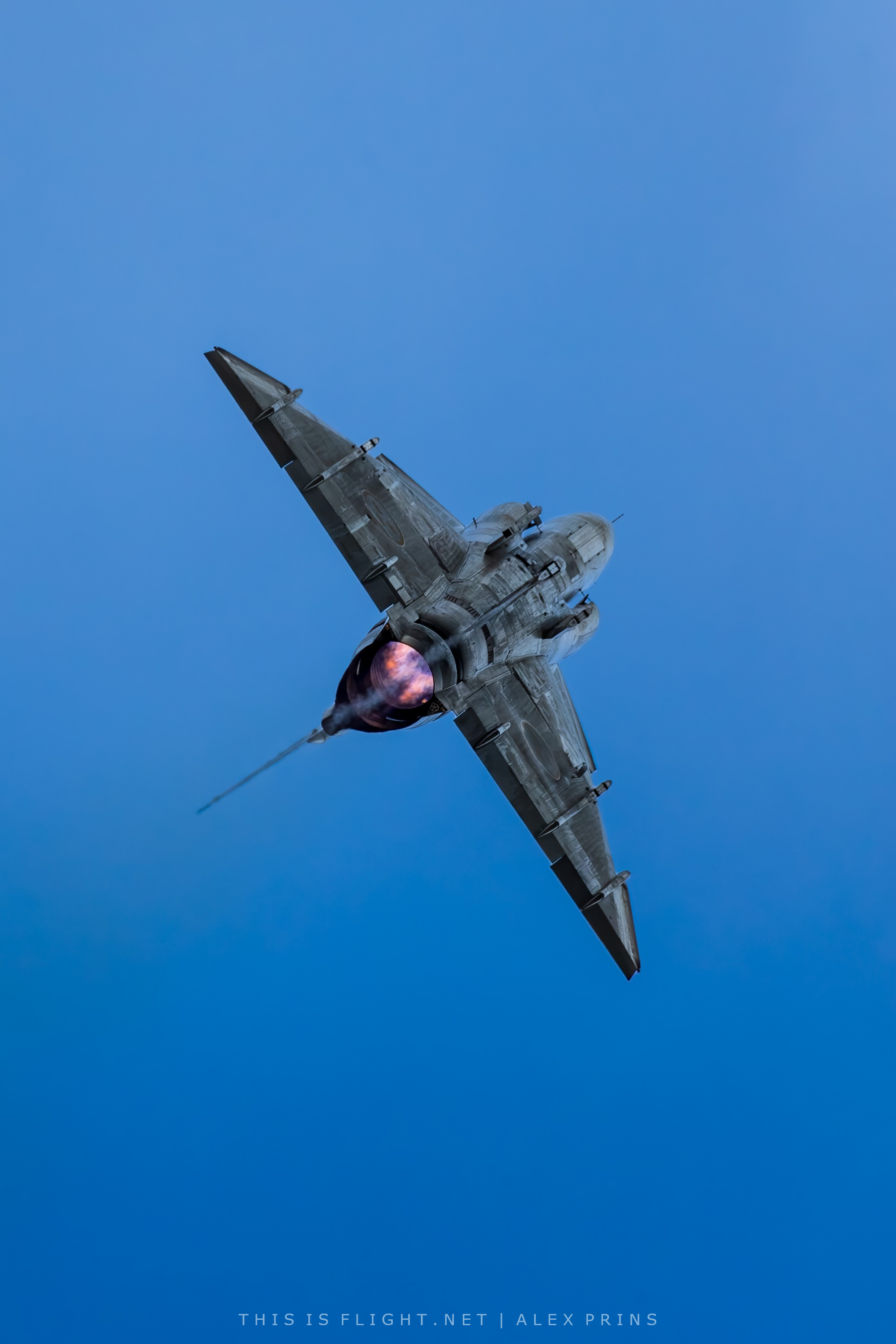
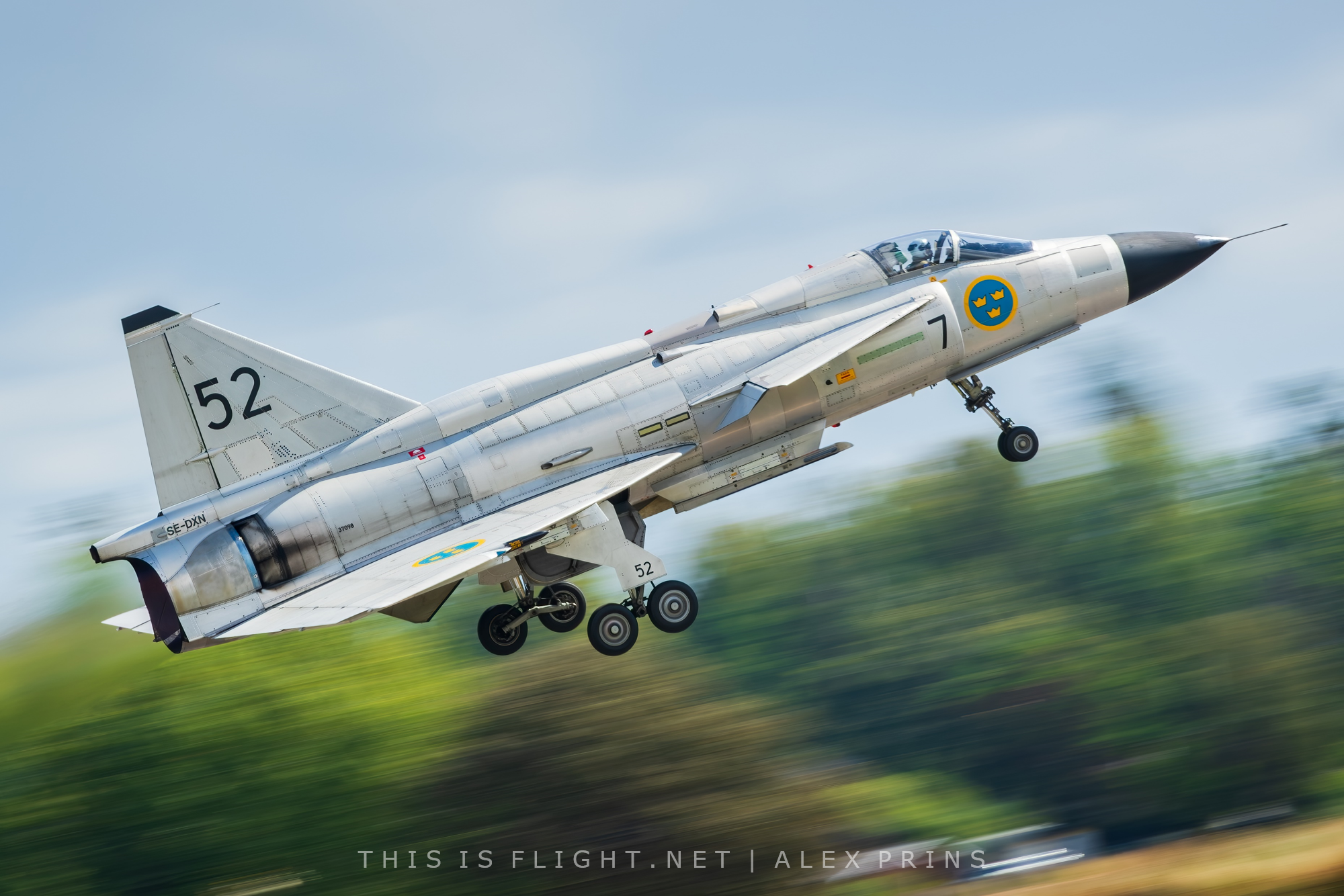
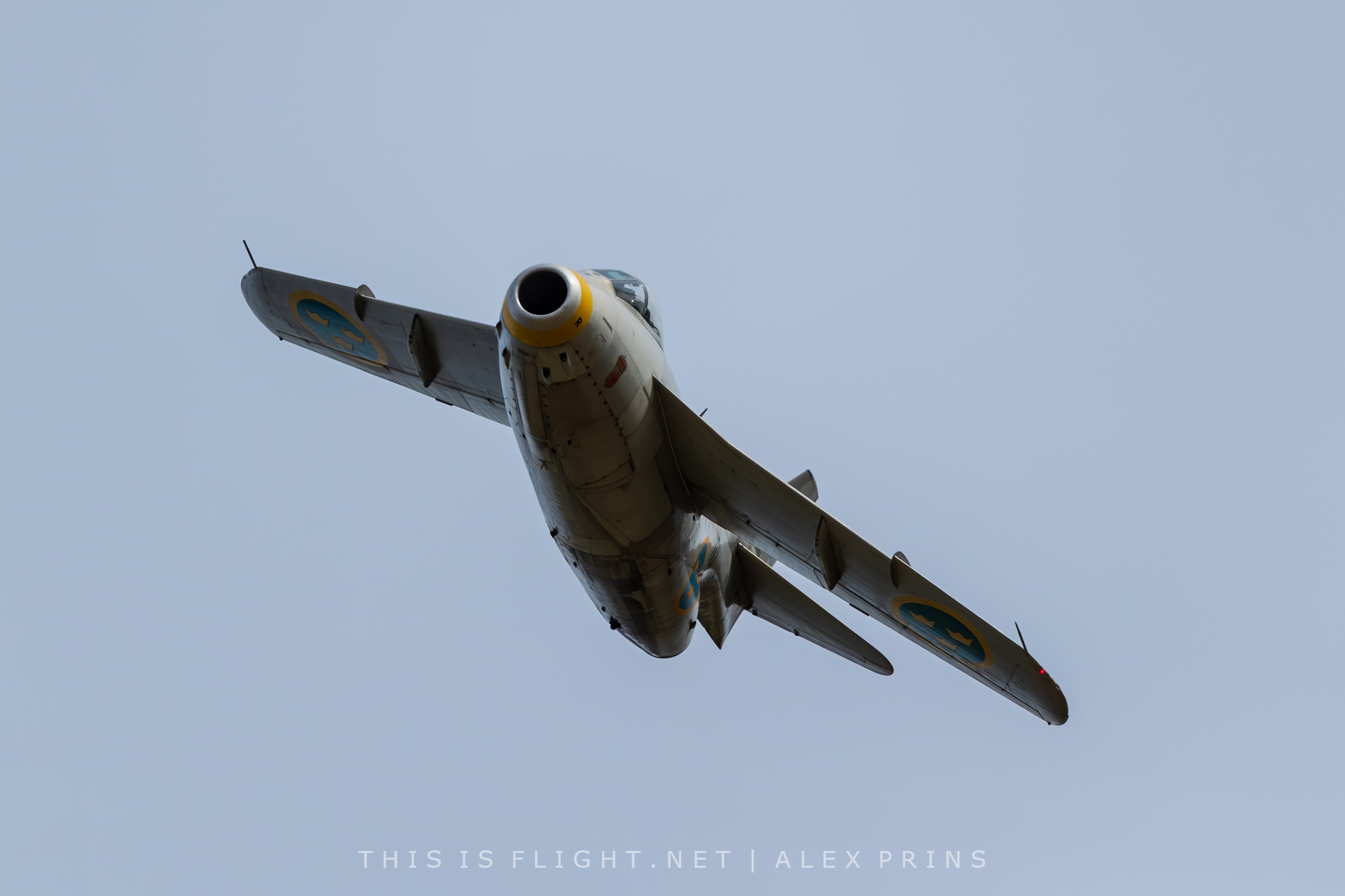
Of course, the Swedish Air Force Historic Flight presented the star attractions. They provided four solo displays with the Saab B 17A, J 29, J 32 Lansen and AJS 37 Viggen. Of these, it is the Lansen that seemed to garner the most praise: an often-overlooked aircraft but a very compelling airshow performer. The Viggen’s showing, by contrast, felt a little weak – especially compared to the display we had witnessed by the Flight’s Sk 37E at Leszno in June – though there was still plenty of reheat and even the odd trace of vapour.
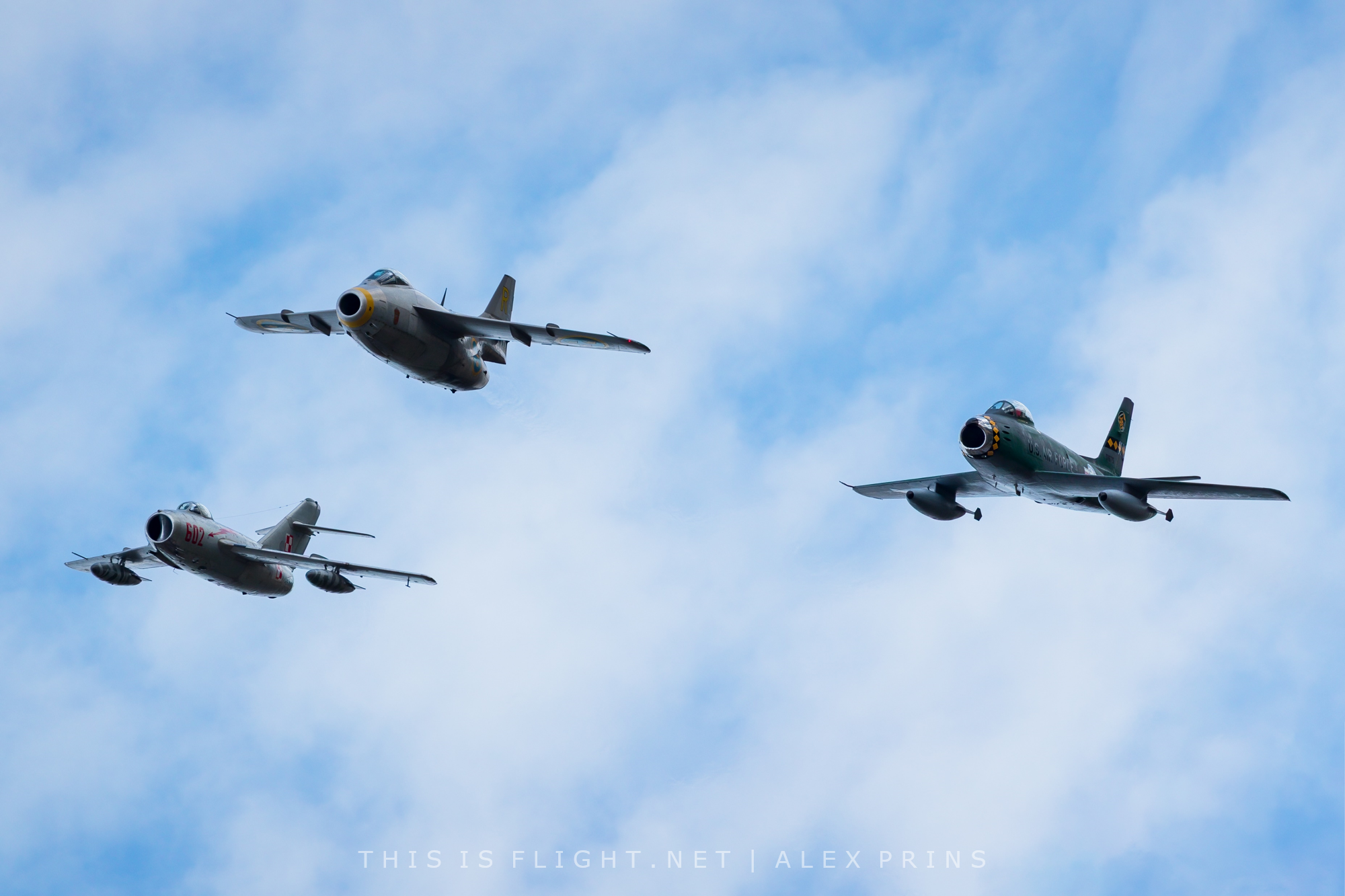
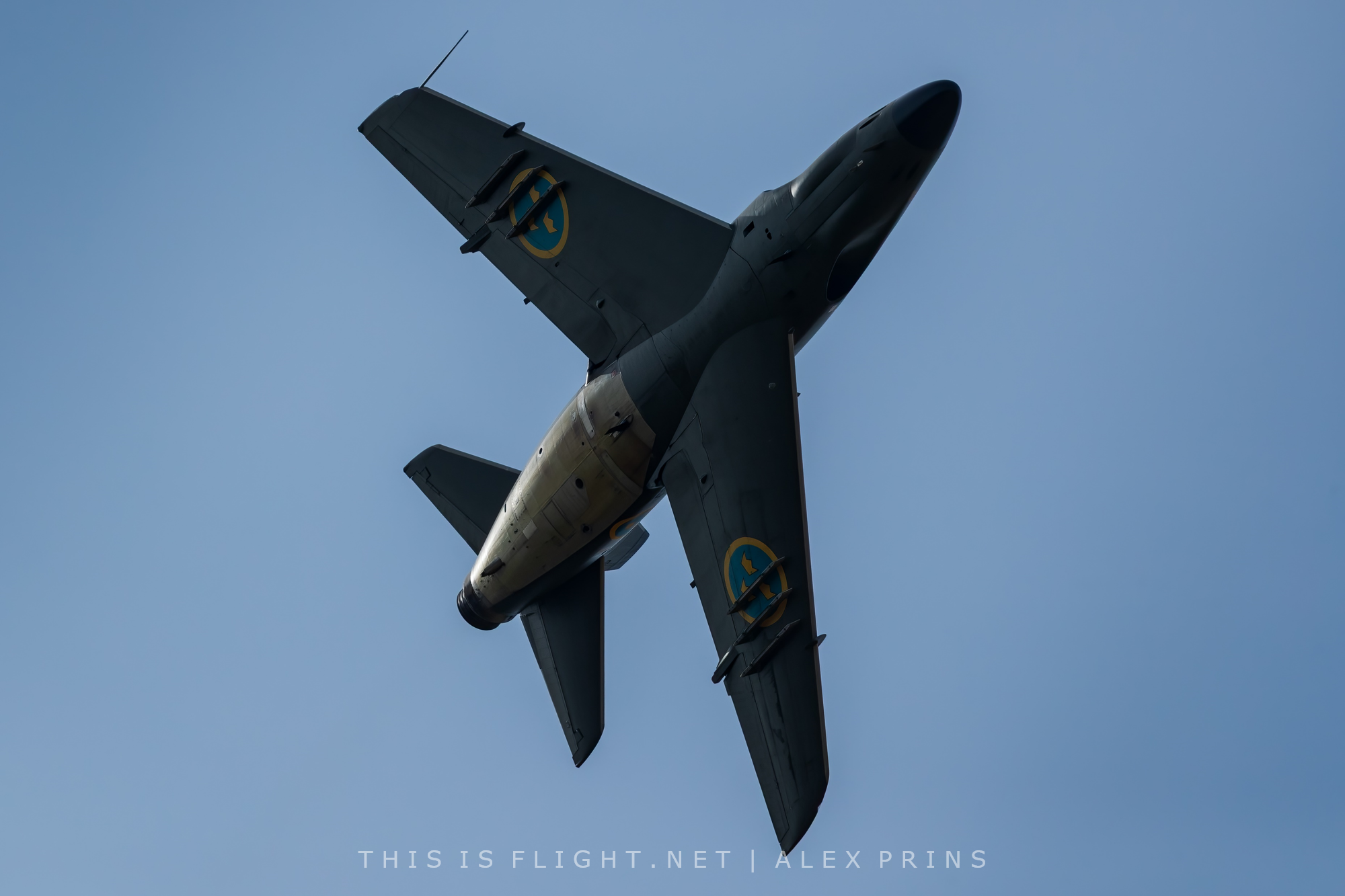
For very good reasons, the Sk 60 and J 35 Draken were unable to perform solo displays (the Draken lacked a current display pilot and the Sk 60W had only gained certification for civil operation a few days prior), but both flew in mixed formations. The J 29 flew with Fubar Aviation’s Lim-2 (Polish-built MiG-15bis) and the Flying Bulls’ CL-13B Sabre Mk.6, a Canadian version of the F-86. The three Cold War contemporaries performed several flypasts together before the MiG and Sabre broke into a tailchase which was sadly so far away from the crowd as to have been virtually pointless.
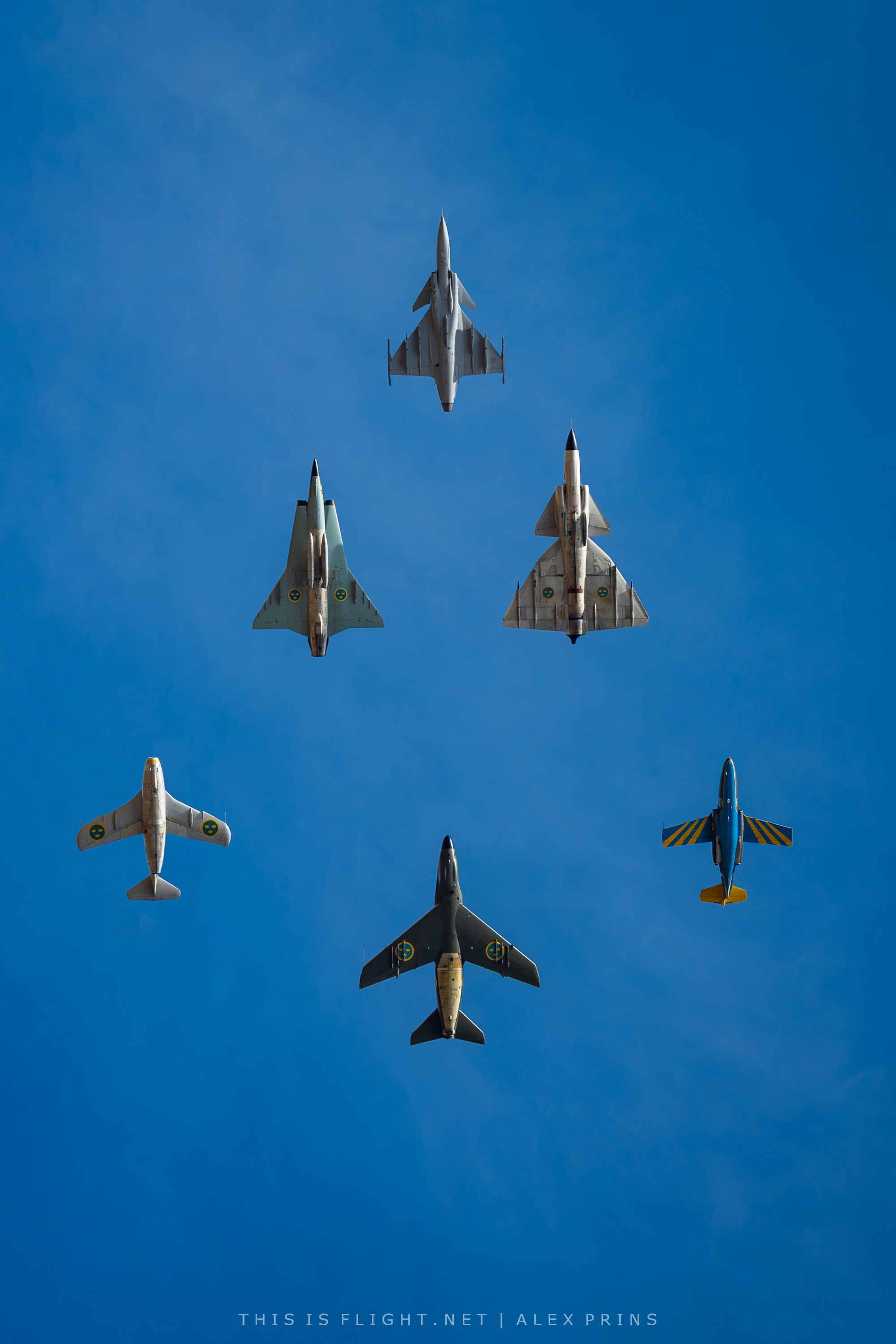
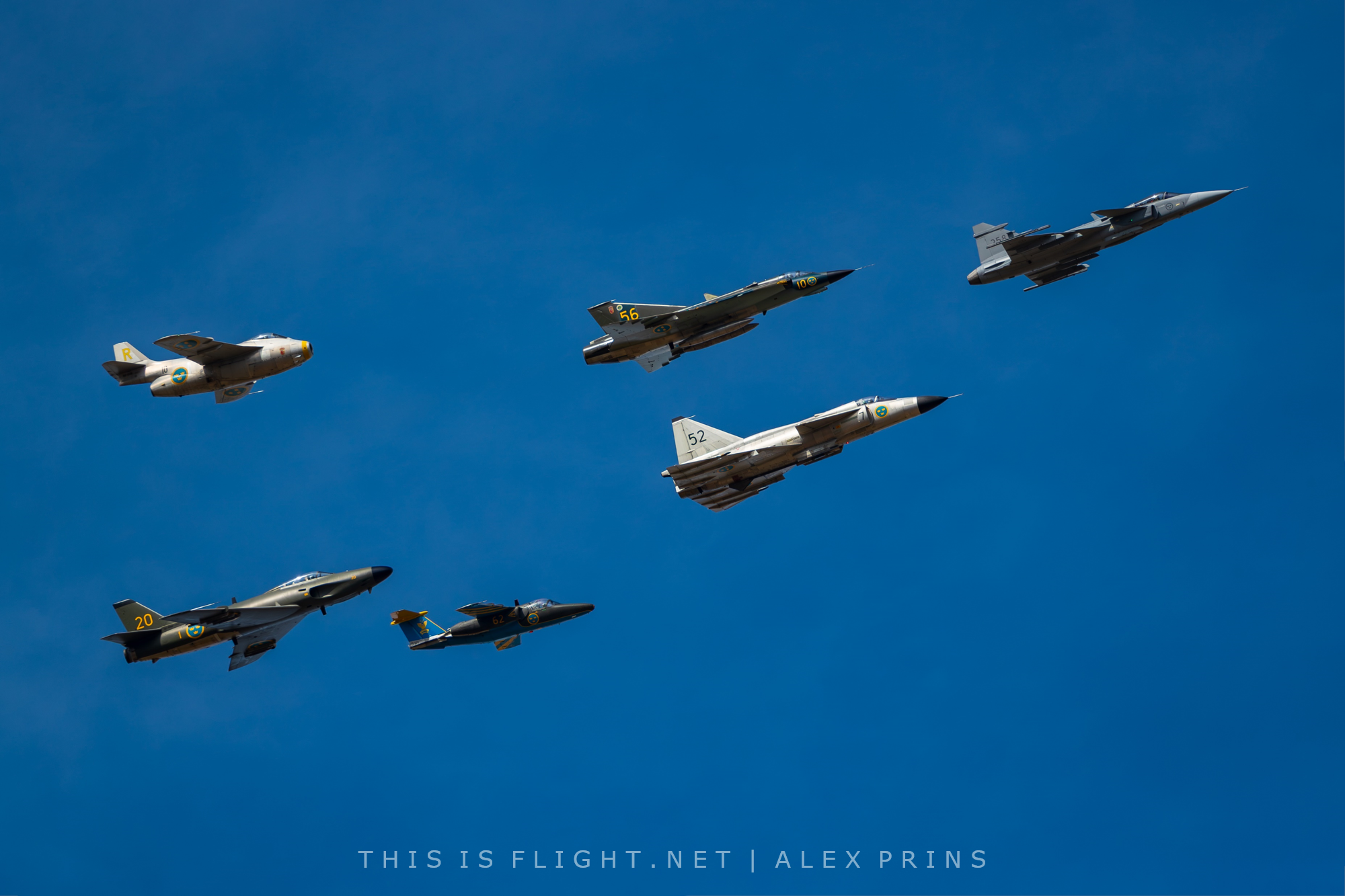
On a happier note, the show did feature the one item that enthusiasts from around the world had been craving more than anything else: a joint flypast of all the Saab historic jets together. The Swedish Air Force Historic Flight’s J 29, J 32 Lansen, J 35J Draken, AJS 37 Viggen and Sk 60W joined up with a modern JAS-39C Gripen in a spectacular formation, conducting a full orbit of the crowd that functionally served as a 360-degree topside pass. A couple of more conventional passes followed. This was bucket list stuff, and for a brief moment, all the ills of the show were forgotten.
Two further interesting formations took place. The show was opened with a group of current and former trainers from the 1930s to date, including a representative of the current Sk 40 fleet, the Sk 60W and a Swedish-marked Vampire T.55 (though the Vampire sadly lost its canopy on take-off during the second show day). This segment was very much of the frustrating ‘parade’ genre much-maligned at shows like Oshkosh, with the aircraft too close together to do anything interesting or be appreciated individually, yet too far apart to be called a “formation”.
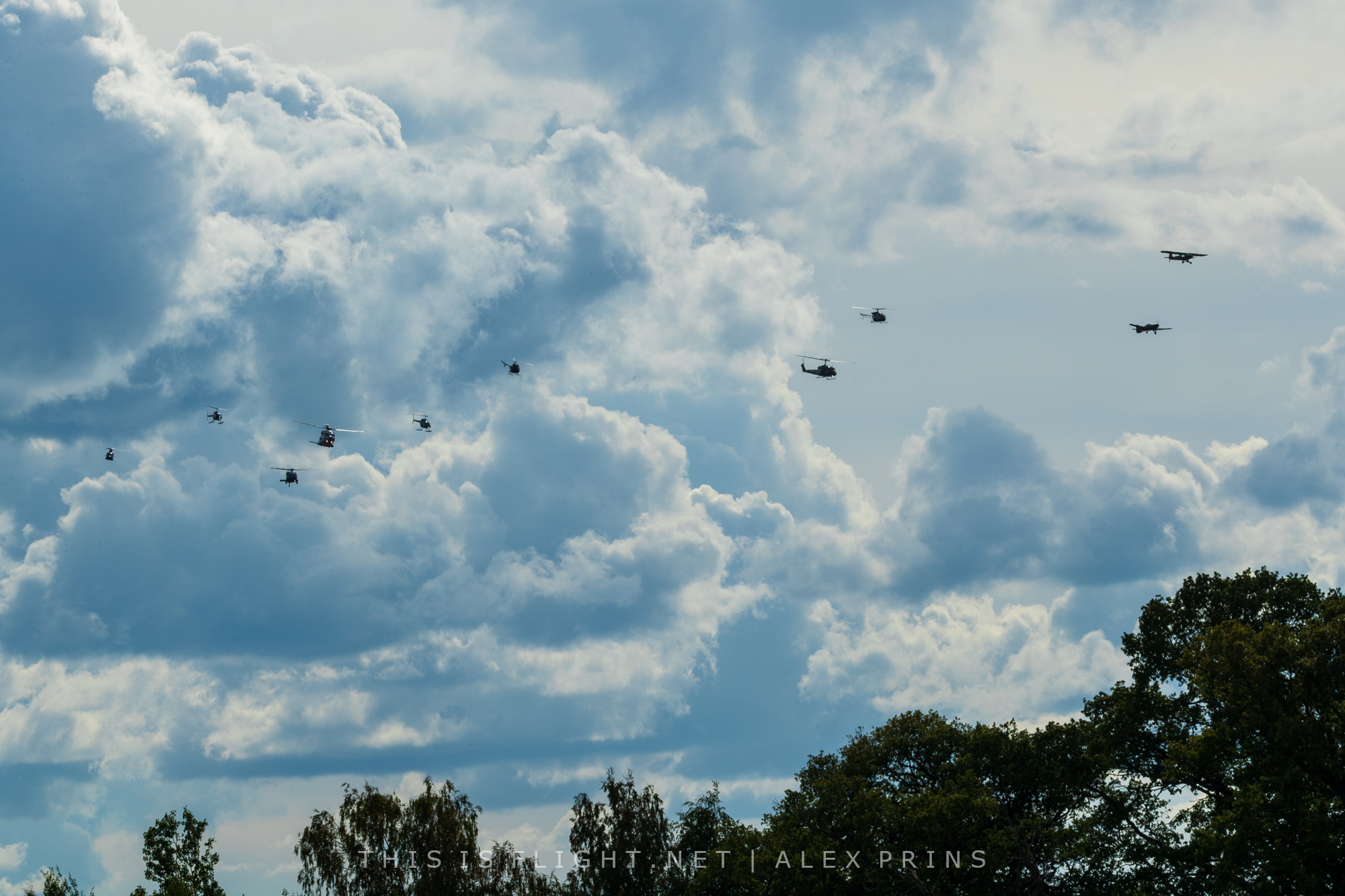
Later, a more compelling mass flypast took place, bringing together Army and rotary types from the F 51 (Piper Cub) through to the likes of the modern Hkp 14 (NH90). This ten-strong group conducted two passes in an impressively tight formation, then the helicopters hover-taxied past the crowd.
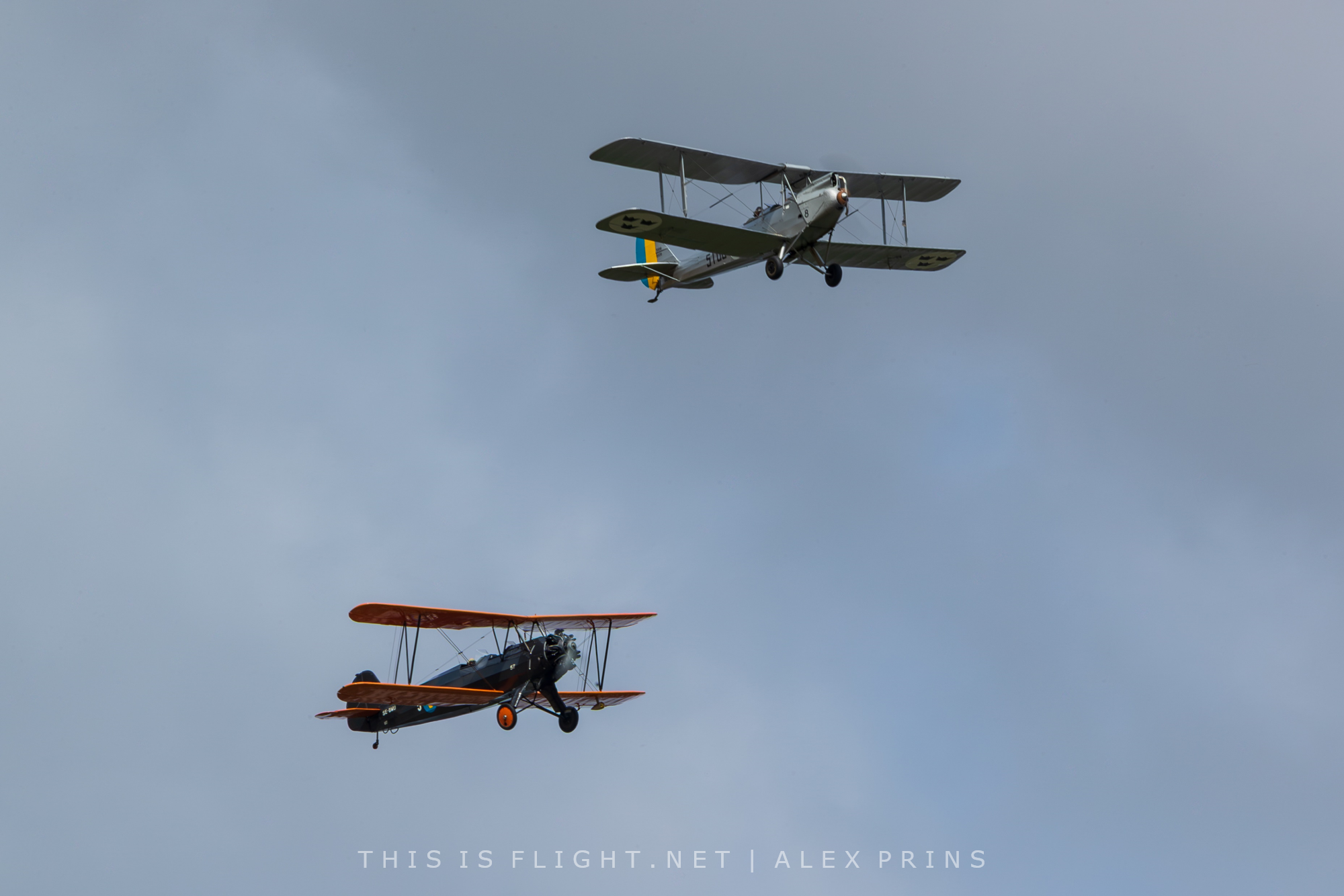
Epic though much of this was, it is the lighter displays that I remember particularly fondly: those by Mikael Carlson, and energetic aerobatic solos by the Fw44 and DH.60. I don’t know if this is because they were genuinely outstanding displays, or if I had simply become delirious due to the display line and fell head-over-heels in love with the small minority of acts that were able to display in a slightly more conventional manner. One item that was wholly worthy of praise, though, was a fabulous and totally unannounced pair of Hkp 5As (Hughes 269s) from the Swedish Air Force Museum, which did just about the best pairs helicopter routine you’ll ever see.
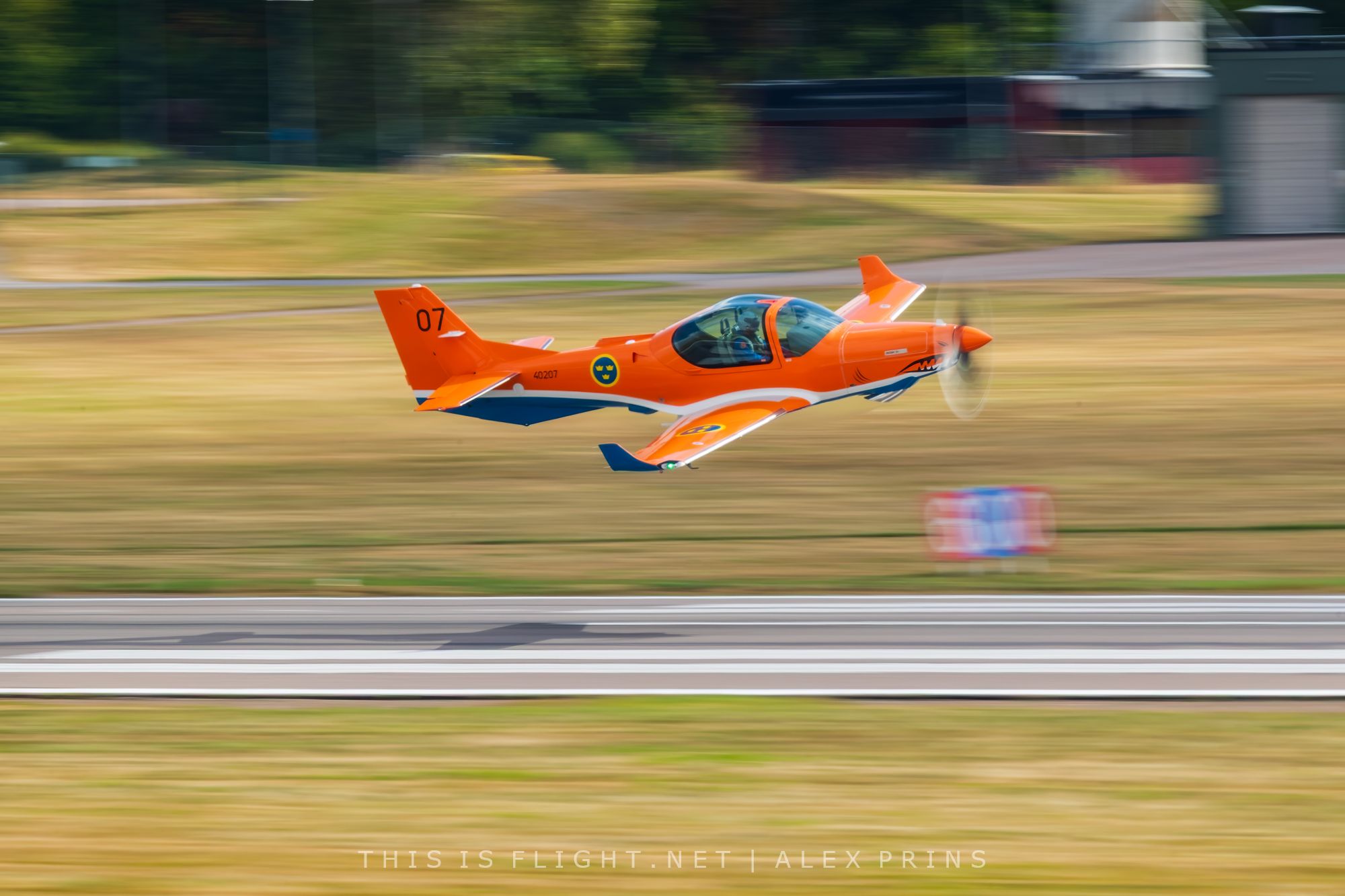
The story thus moves on to the modern Swedish Air Force. And this was represented in a surprisingly low-key manner. Only four modern Swedish types took part in the flying display. The Sk 40 (Grob 120TP) was flown not by a Swede, but by Polish test pilot Dariusz Stachurski. Then, there was a solo display from the Hkp 15 (AW109) and various solo and combined displays by the Hkp 16 (UH-60M Blackhawk) and JAS-39C Gripen. No special paint schemes and no mass flypasts were to be found, nor any representatives of Sweden’s airlift or AEW&C capability. In other words, little beyond what would normally be seen at the Swedish Air Force’s annual flight day.
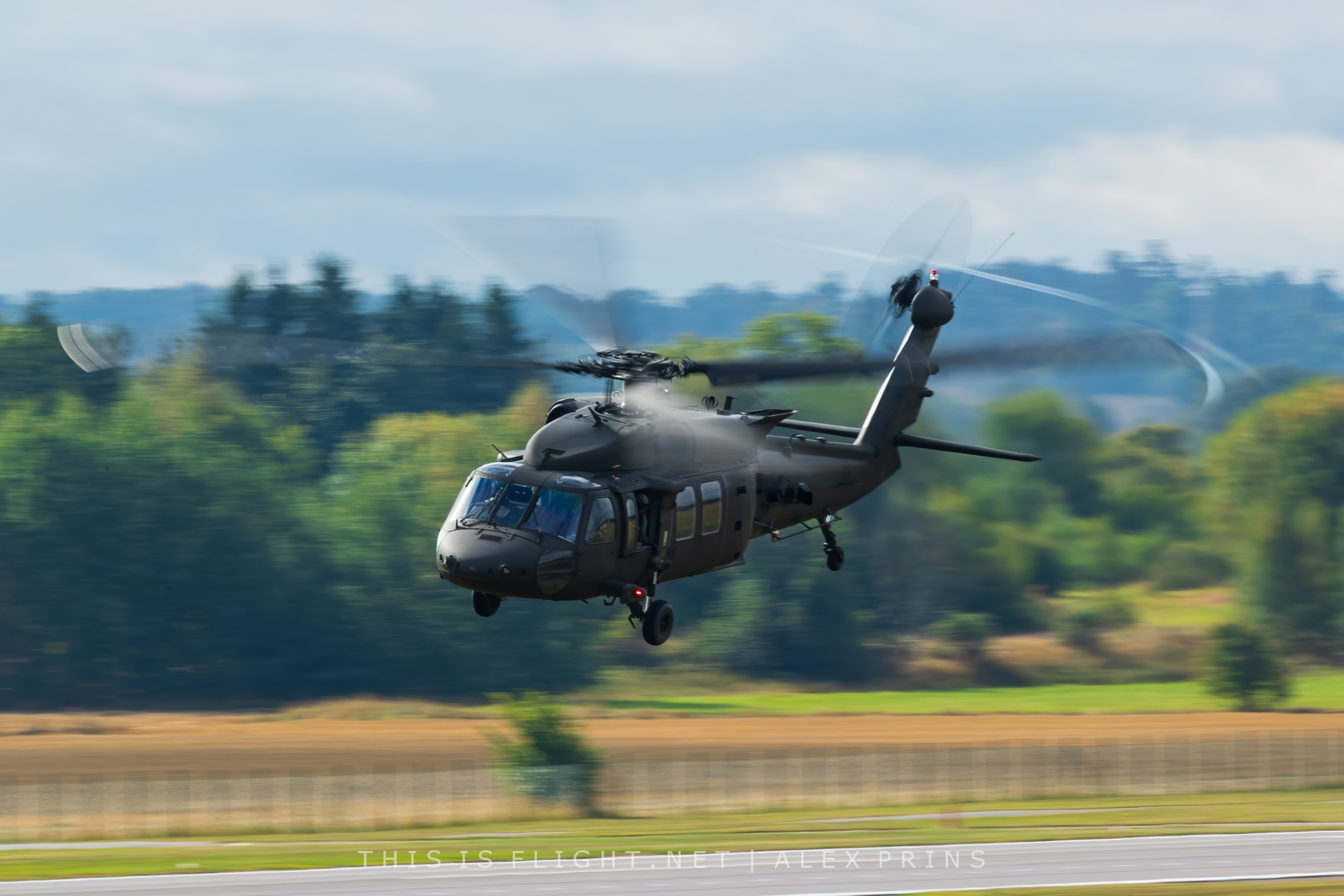
The Hkp 16’s participation came in the form of a typically-spirited solo display and two tactical demonstrations. These demonstrations were lacking any real depth, lasting just a couple of minutes each: in one case, three helicopters arrived with an underslung load, lowered them onto the ground and flew off with them again. In the other, a helicopter arrived, picked up some troops, and departed. These was nothing more to it than that, save for a final Hkp 16 which performed some low passes while firing blanks and then sat in a high hover throughout, providing top cover.
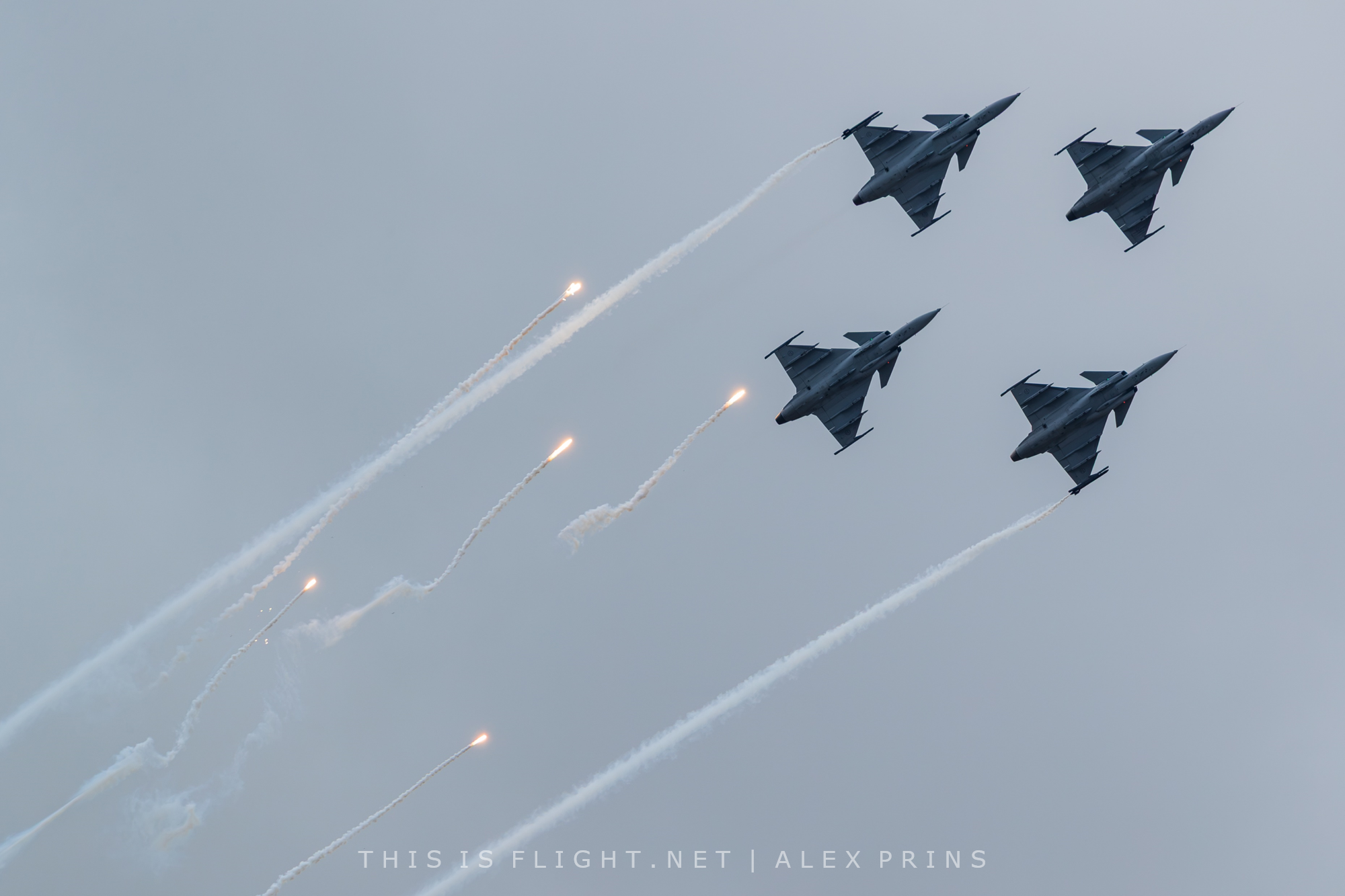
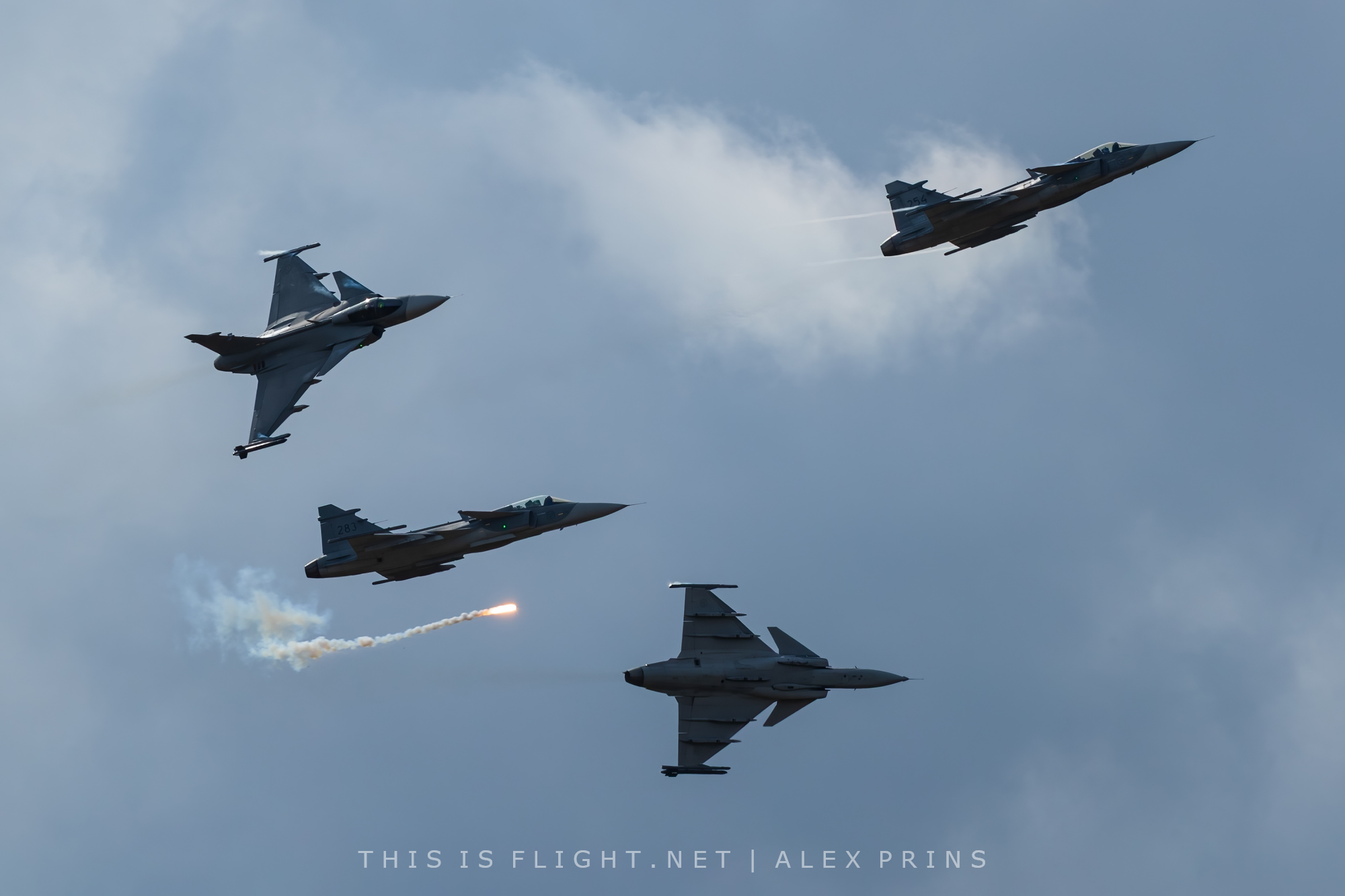
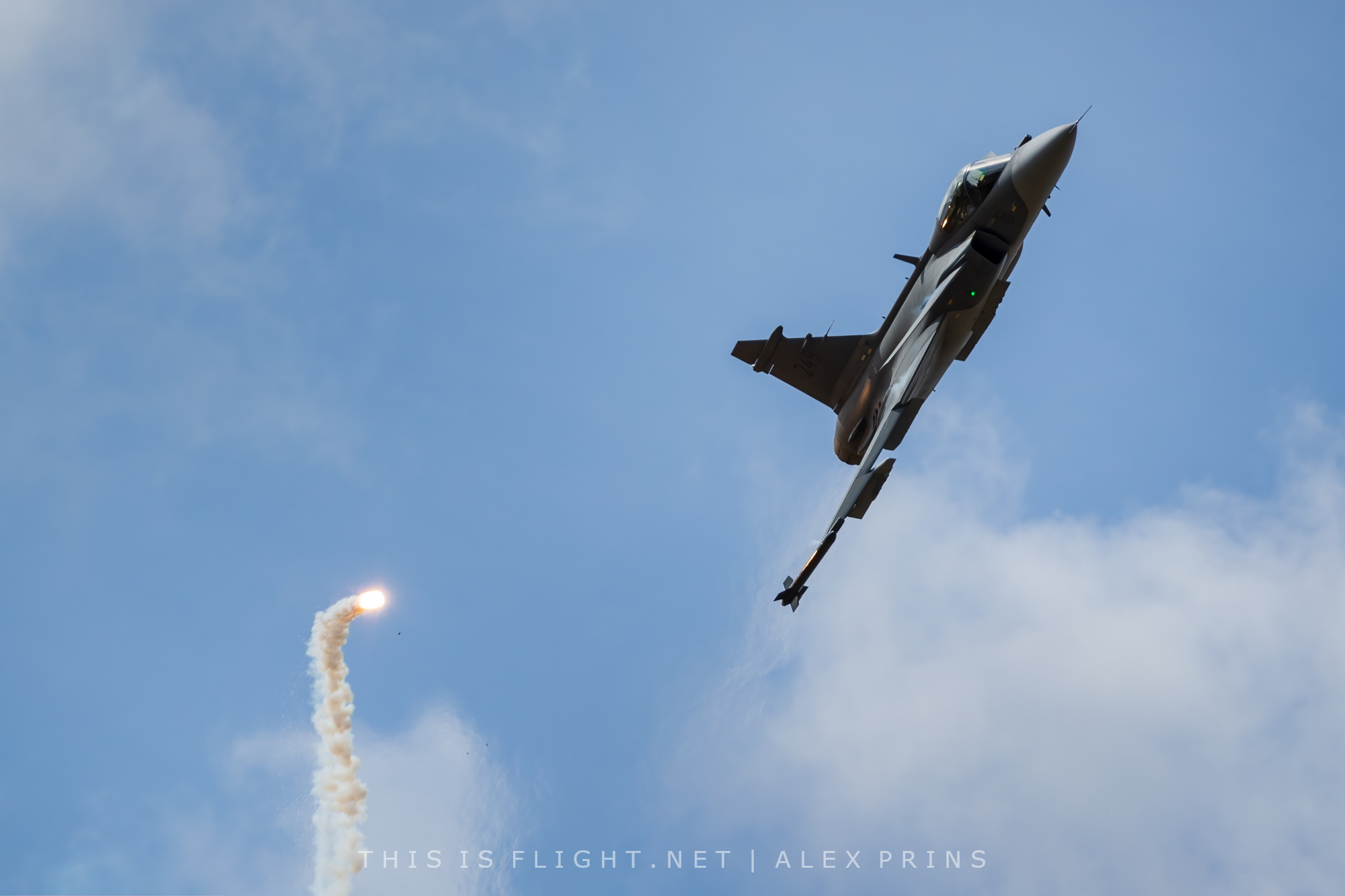
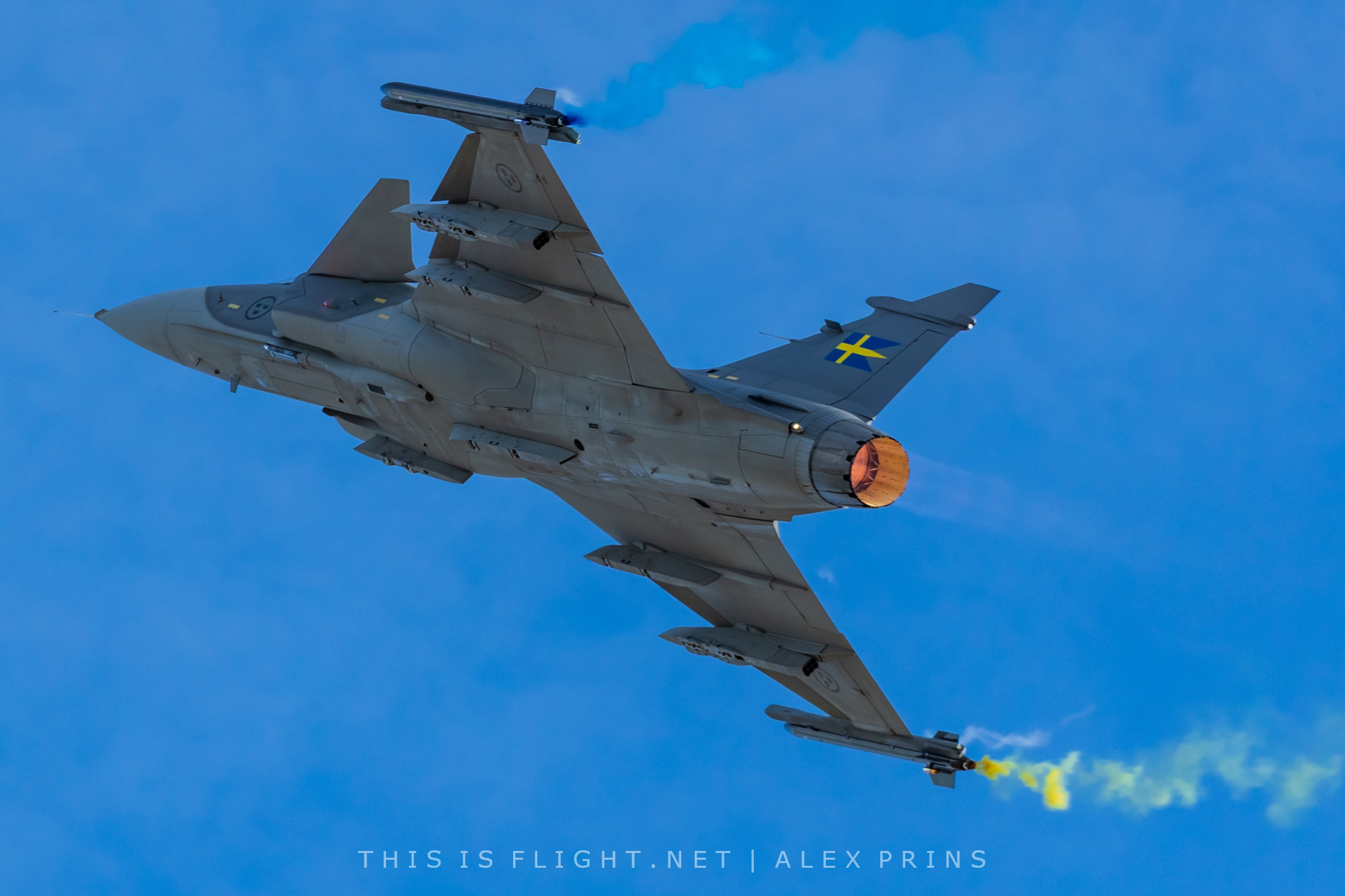
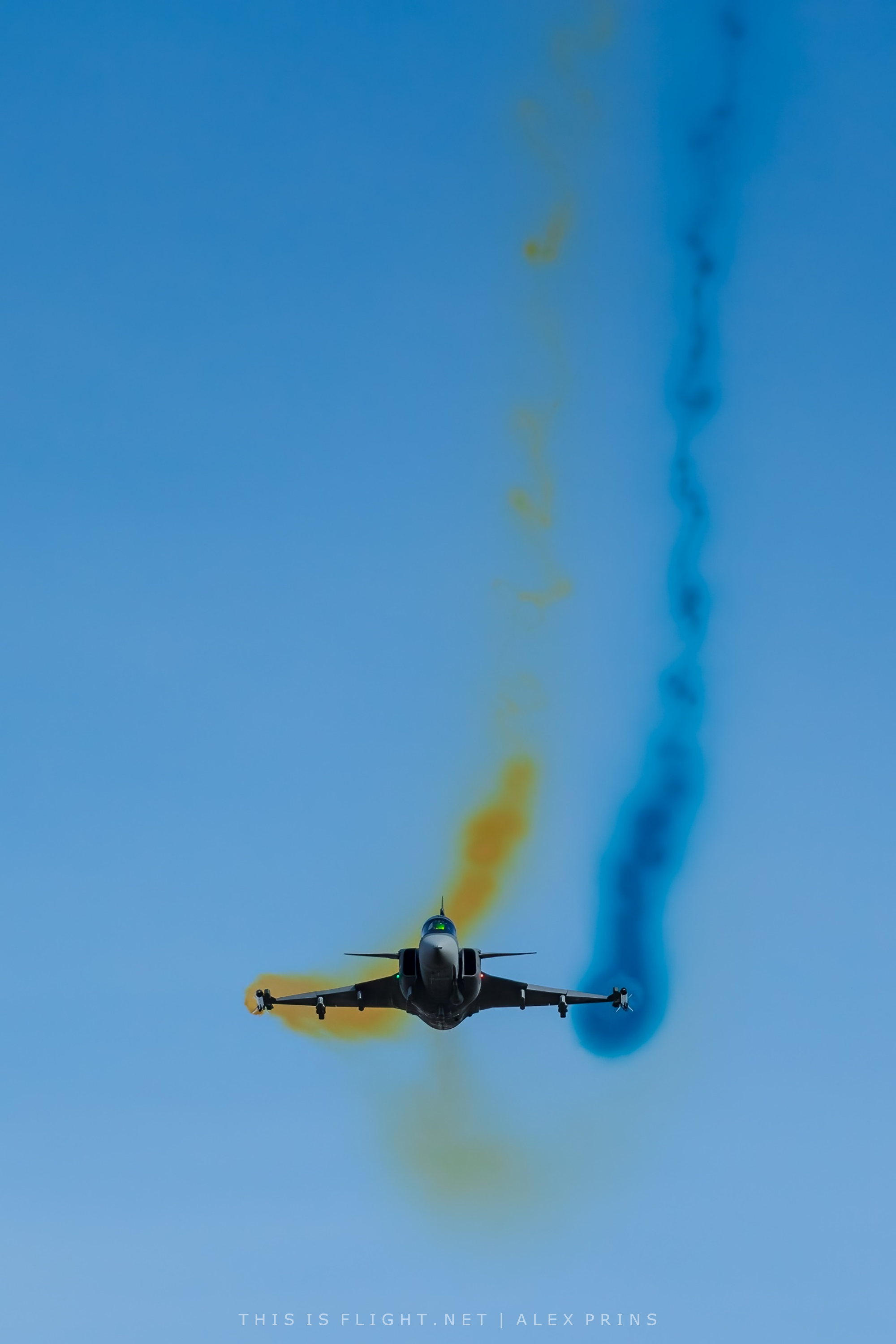
The Gripens were presented in a much more compelling fashion. One performed a solo display with blue and yellow smokewinders, two conducted a flypast with a NATO A330 MRTT and launched into a fascinating twisting, turning low-speed tailchase with plenty of flares and crossovers, and four from the F21 wing, calling themselves the Urban Cowboys, conducted a formation aerobatic routine with enough flares to make the Patrouille Suisse blush. Though not an official aerobatic team, the quartet’s sequence including wingovers, a couple of barrel rolls and a photogenic bomb burst at the end.
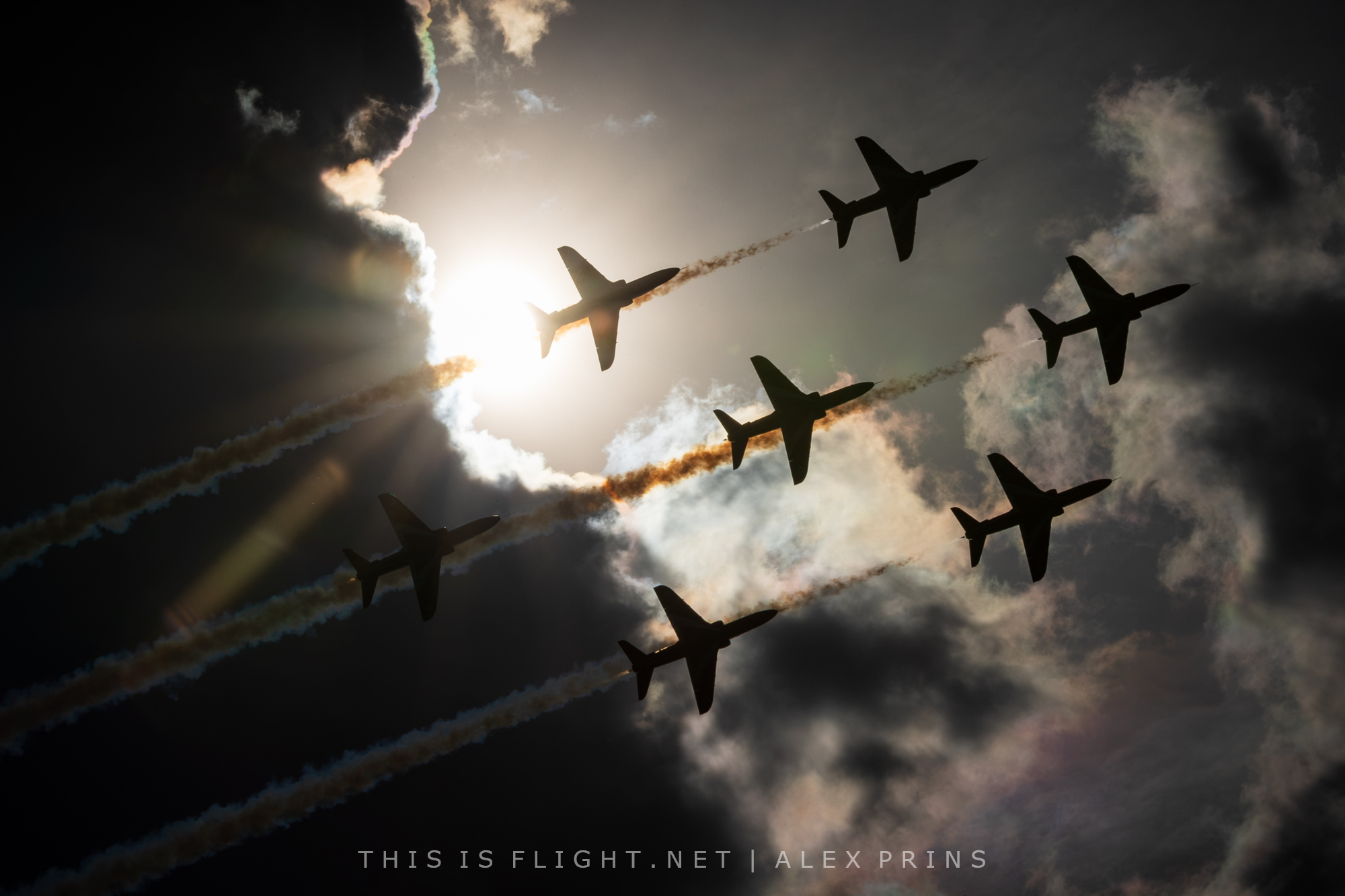
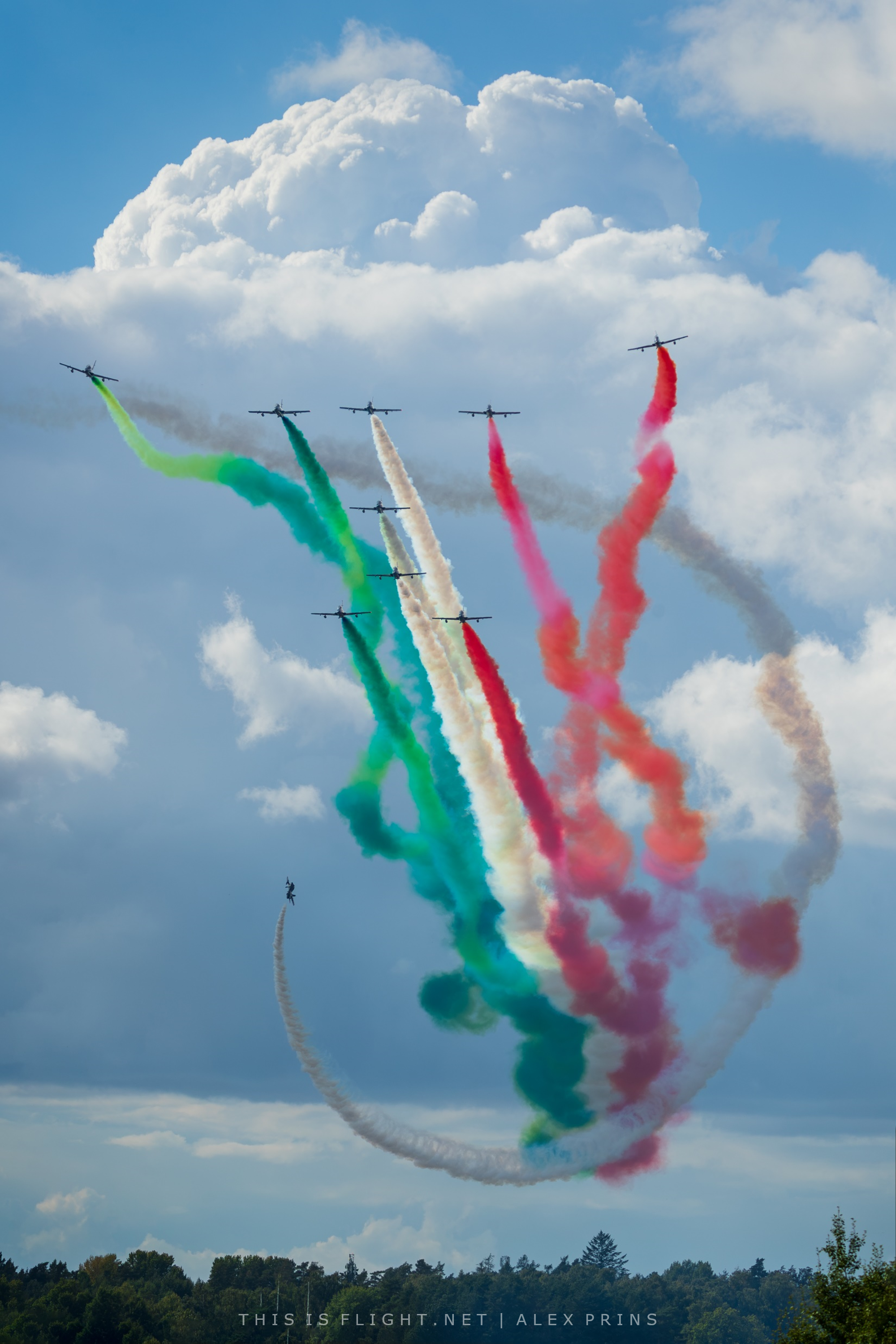
NATO’s newest member state benefitted from a modest but mostly high-quality selection of foreign military acts as it marked its 100th year, including three national aerobatic teams: the Red Arrows, Midnight Hawks and Frecce Tricolori. The Midnight Hawks were the weak link, lacking their usual smoke, rarely straying especially close to the airfield and flying a noticeably imperfect show, with the slot pilot often falling out of position. The Frecce Tricolori, by contrast, seemed to be the clear favourite and are back to their ten-ship best after a tricky few seasons, filling the sky with colour, pizazz and panache that no other team could match.
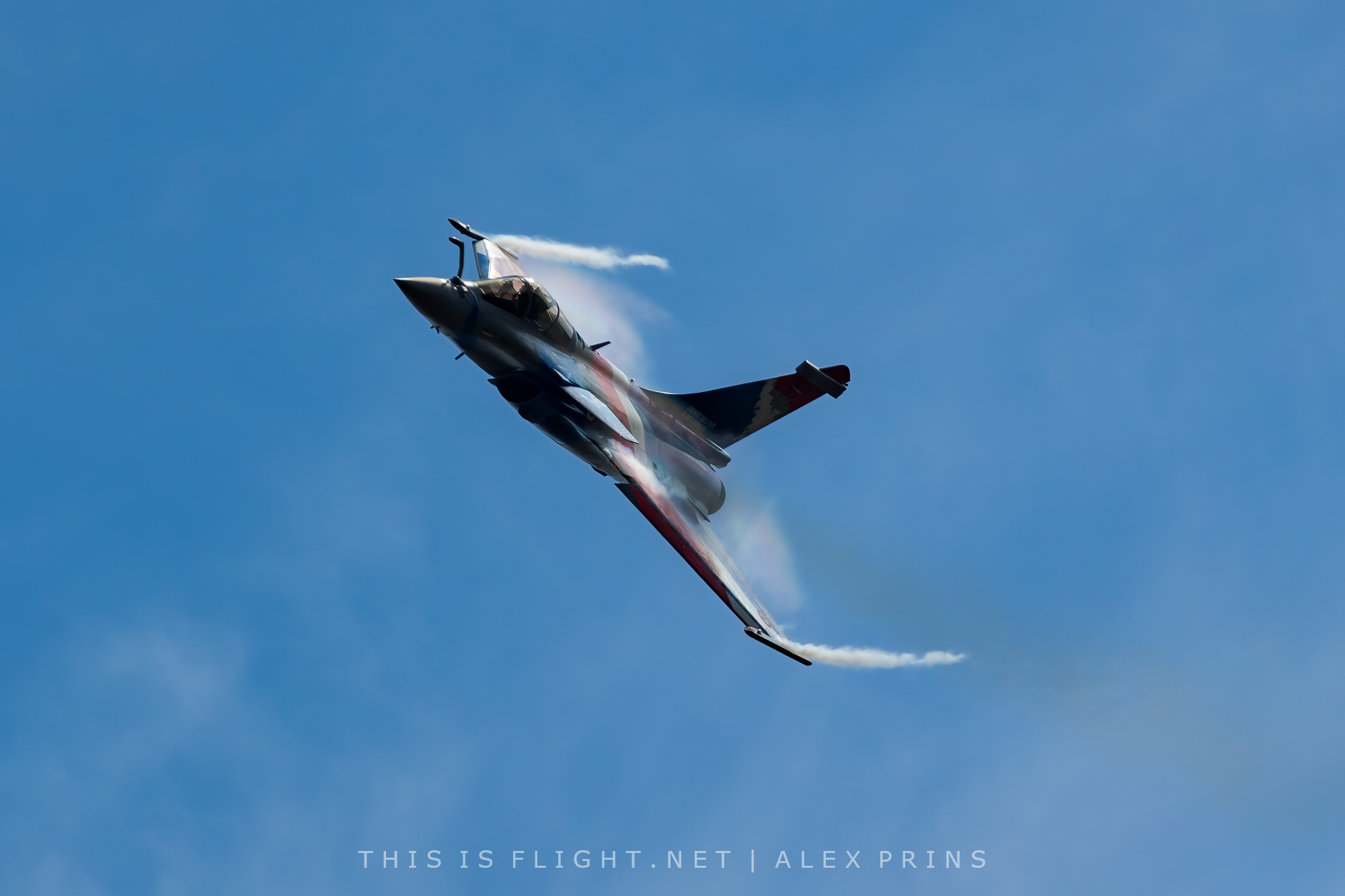
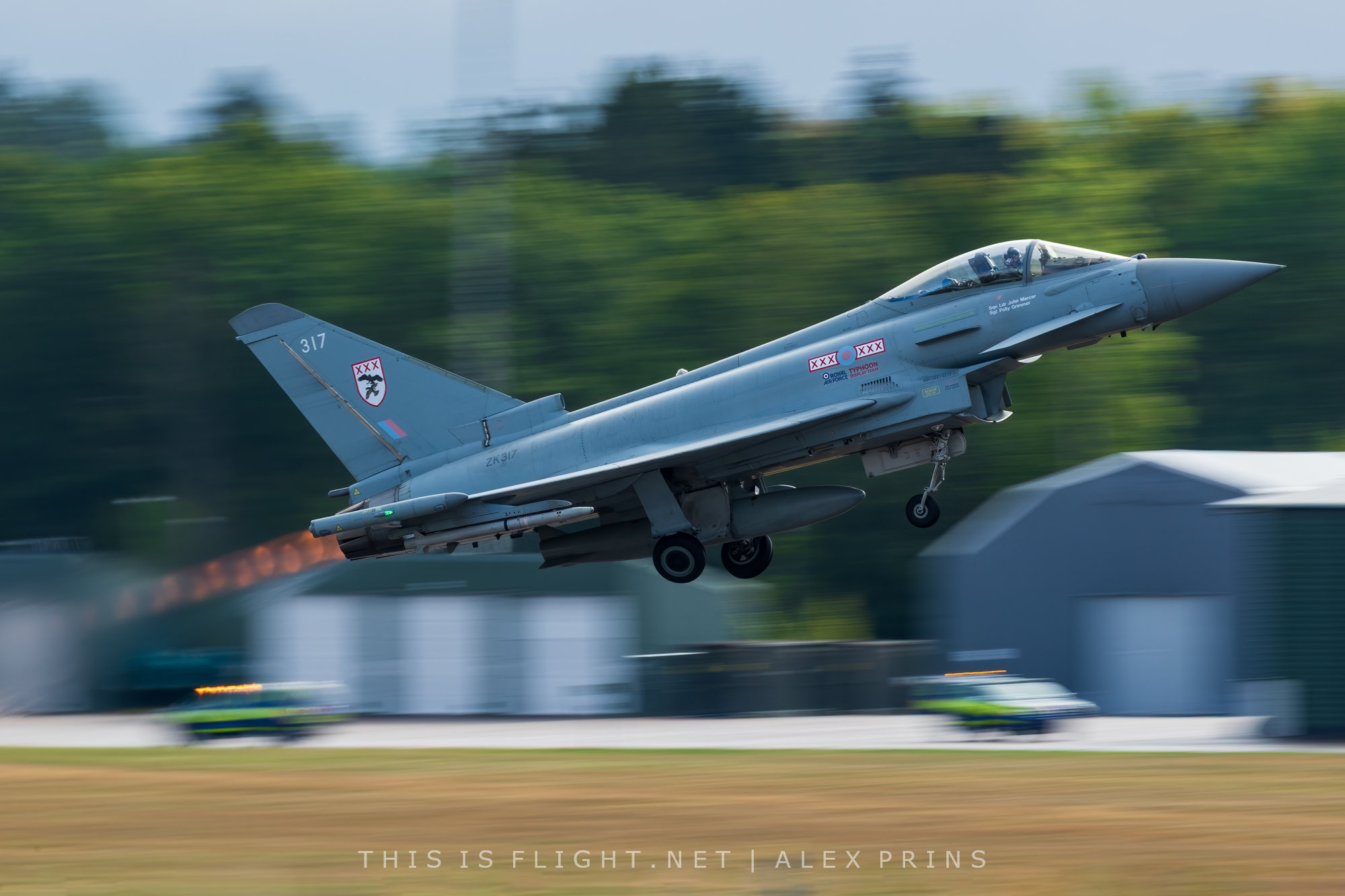
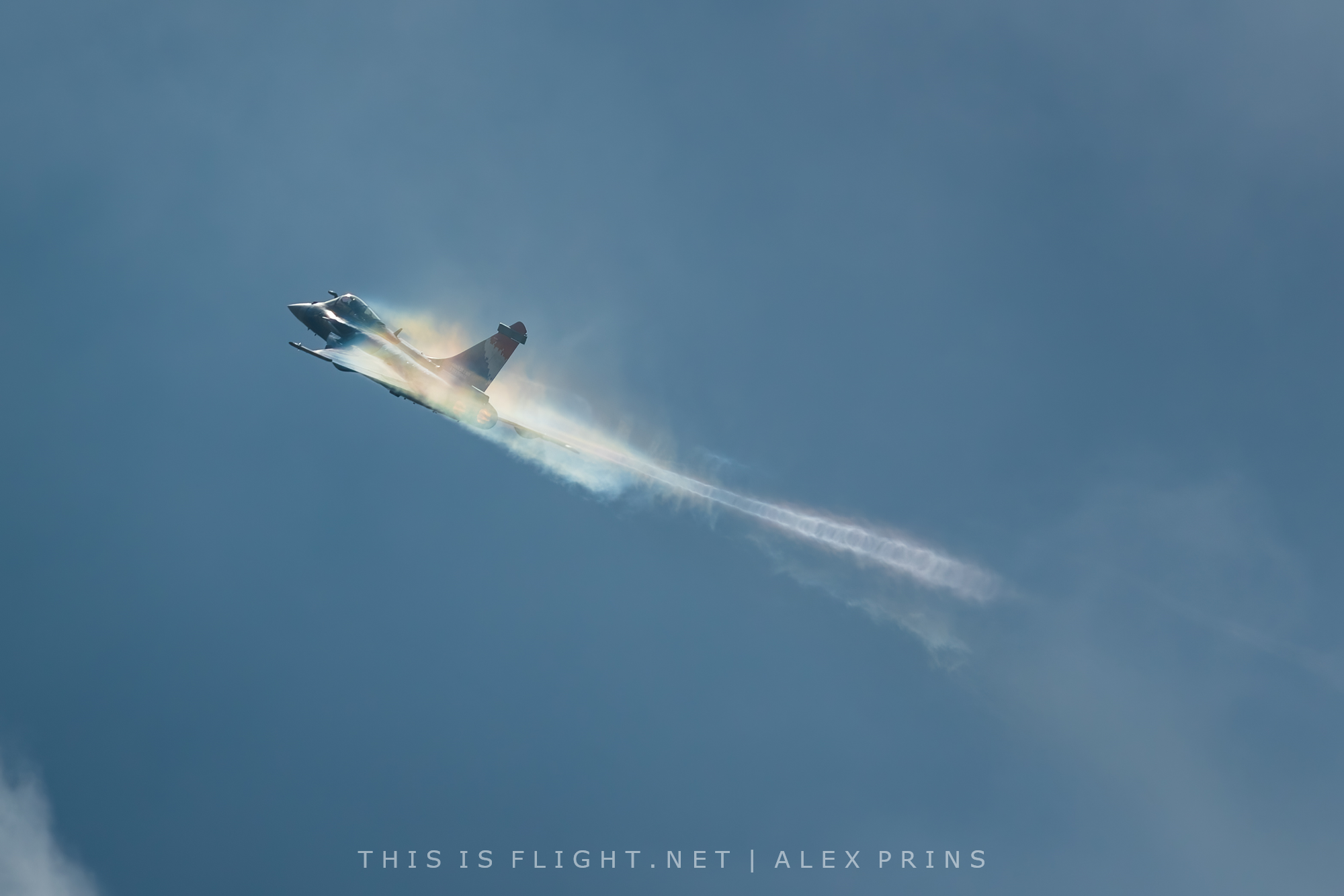
Just as there were three visiting teams, so too were there three visiting solo displays. The noticeably distant RAF Typhoon couldn’t hold a candle to the other two, which are arguably the best non-thrust-vectoring jet solos in the world at the moment; the French Air & Space Force’s Rafale C darted around the sky in its own inimitable fashion, while the Finnish Air Force’s F/A-18C Hornet also brought its very distinctive brand of display flying, typified by some very abrupt changes in pitch.
Not exactly a visiting solo display, one more fast jet routine of note came from Saab’s JAS-39E Gripen, based just up the road at Linköping City Airport. It may not have been as sophisticated as either of the aforementioned show-stealers, but it was assertive and, most importantly, close to the crowd – another rare flash of normality at a show that otherwise felt so downright weird and frustrating.
The upshot of all this is that this most peculiar of events may not have lived up to every expectation, but for anybody wanting to see aircraft of the Swedish Air Force both past and present, this was just about the best opportunity to do so. It will probably never be repeated or bettered. But when my fellow travellers and I think back to the Swedish Air Force’s centenary airshow ten years from now, it won’t be those epic Saab jets that are forefront of our mind, it will be the shared memories of navigating the organisational quirks and failures that made the show so challenging to enjoy. “Ah, yes,” we’ll muse, with raised eyebrows and a wry smiles. “I remember it well. That was the show where everything was completely, diabolically mad.”