Some of Australia’s best-loved vintage jets are to be retired from flight, as 100 Squadron Royal Australian Air Force rationalises its fleet.
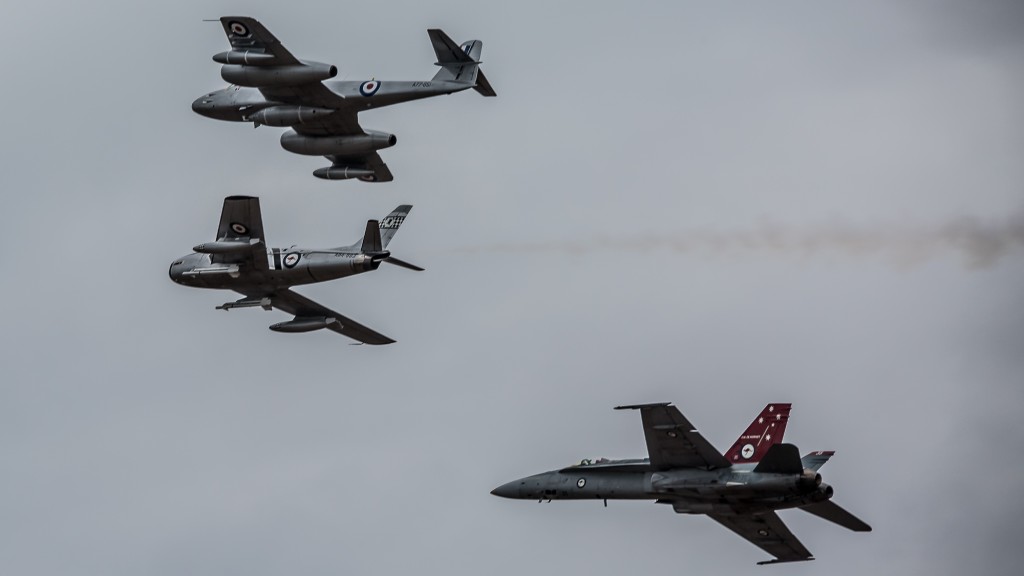
Photo: William Reid
100 Squadron was set up by the Royal Australian Air Force in 2021, with the intention of operating a wide variety of vintage aircraft that tell the story of Australia’s military aviation history. Partnering with several civilian warbird operators, the squadron took ownership of many of Australia’s airworthy warbirds, including the Temora Aviation Museum’s fleet. Almost half of their aircraft are now to be grounded or returned to its original owners.
The RAAF said: “Streamlining the fleet will allow 100 Squadron to maintain quality heritage displays, engage communities, and protect the long-term viability of Air Force’s heritage capability. As aircraft age, upkeep becomes increasingly complex, especially for flying displays. Reducing the fleet will allow 100 Squadron to focus on operating a select group of historic aircraft for ceremonial duties and flying displays, maintaining a living connection to Air Force traditions.”
Chief of Air Force, Air Marshal Stephen Chappell DSC, CSC, OAM, added that “withdrawing aircraft is never easy” but rationalising the fleet was the best way to ensure that stories of service and innovation continue to be told.
Continuing to fly are 100 Squadron’s Temora-based Hudson Mk.III, Spitfire Mk.VIII, Spitfire Mk.XVI, CA-13 Boomerang, CA-3 Wirraway and DH.82 Tiger Moth, as well as a Point Cook-based Tiger Moth, CA-25 Winjeel, CA-18 Mustang Mk.23 and Sopwith Pup.
Eight aircraft are to be “transitioned with dignity” to other operators or put on static display. Their CA-27 Sabre Mk.31, CT/4A Airtrainer and replica RAF RE8 are all to be axed from the squadron, likely for static preservation. Five aircraft are to be handed back to their former owner, the Temora Aviation Museum: a Meteor F.8 and Vampire T.35, neither of which have flown in their five years with 100 Squadron, a Ryan STM-S2, and their fully airworthy A-37B Dragonfly and Canberra TT.18. The Canberra is the only flying example of its kind in the world.
Temora Aviation Museum CEO Peter Harper said: “After a joint review, a new sustainable heritage fleet has been confirmed so we can continue honouring Australia’s aviation history for generations to come. Some aircraft will be respectfully retired, with original Temora aircraft returning to the Museum in line with our long-standing agreements. Their stories will continue to be preserved and shared.
“This is a significant change to the agreement that we entered into, and we understand the rationale for the reduction in the 100 Squadron operational fleet. However, now that we understand what the future looks like, we will be conducting an internal review to find the best way forward. The focus will be to ensure that Temora Aviation Musuem prospers for the decades ahead.”